 Save
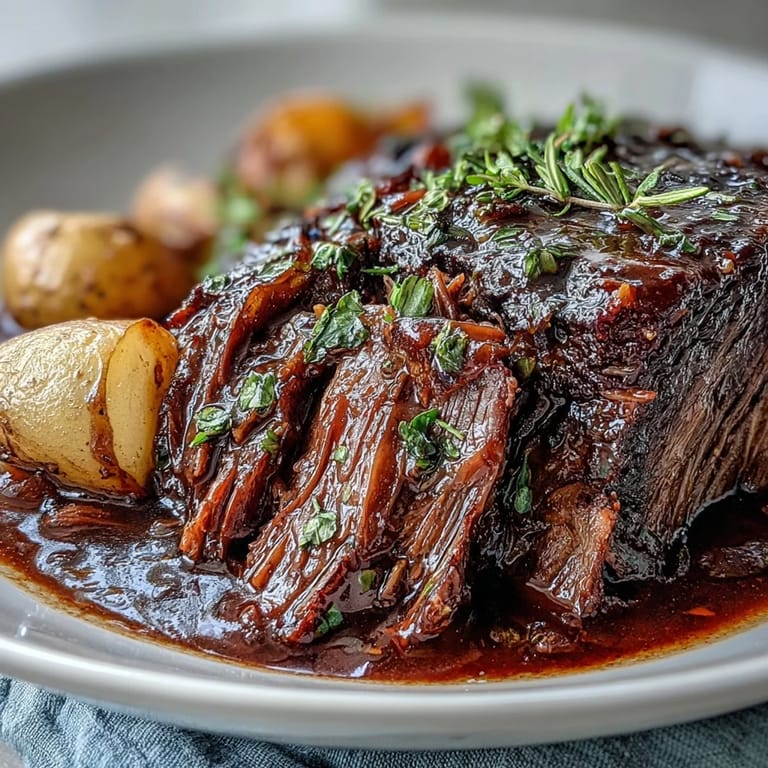
Save The Sunday my grandmother finally let me make pot roast solo, I hovered over that Dutch oven like it contained the secrets to the universe. My arms ached from searing, but the moment that first whiff of rosemary and red wine hit the kitchen, I understood why she'd been making this every winter for fifty years. Now it's the first thing I crave when the temperature drops below forty.
Last February, during that brutal snowstorm that trapped us inside for three days, this pot roast saved dinner twice. My sister who claims she hates cooked carrots actually asked for seconds, and my father ate the leftovers cold from the refrigerator standing up at midnight. Some recipes feed people, but this one gathers them.
Ingredients
- 3-3.5 lb beef chuck roast: Look for marbling throughout, those white streaks become pure tenderness during the long braise
- 1 ½ tsp kosher salt and 1 tsp black pepper: Season generously, this is your only chance to flavor the meat itself
- 2 tbsp flour: Creates that gorgeous crust and helps thicken the eventual gravy
- 3 tbsp olive oil and 1 tbsp butter: The butter burns slightly for nutty flavor, the oil prevents burning
- 1 large yellow onion, thick wedges: They practically dissolve into the sauce, providing incredible sweetness
- 4 cloves garlic, smashed: Smashing releases more oils than mincing, distributing flavor throughout the liquid
- 4 medium carrots, 2-inch chunks: Cut them larger than you think necessary, they shrink during hours of cooking
- 3 ribs celery, 2-inch chunks: Adds an aromatic backbone that keeps the beef flavor from becoming overwhelming
- 1 ½ lb baby potatoes: Small potatoes hold their shape better than cubed ones and look beautiful on the platter
- 2 tbsp tomato paste: Concentrated umami that deepens the entire flavor profile
- 1 cup dry red wine: Use something drinkable, the alcohol cooks off but the fruitiness remains
- 2 ½ cups beef broth: Low sodium lets you control the salt level yourself
- 1 tsp Worcestershire sauce: Secret ingredient everyone notices but cannot quite identify
- Fresh rosemary, thyme, and bay leaves: The holy trinity of braising herbs that scream comfort food
Tired of Takeout? 🥡
Get 10 meals you can make faster than delivery arrives. Seriously.
One email. No spam. Unsubscribe anytime.
Instructions
- Prep your oven and patience:
- Preheat to 300°F, this is going to take the better part of an afternoon, and that is exactly the point.
- Season and coat the beef:
- Pat the roast thoroughly dry, season with salt and pepper, then dust with flour.
- Build the foundation:
- Heat oil and butter until foaming subsides, sear the roast 4-5 minutes per side until deeply browned on every edge.
- Create aromatic base:
- Cook onions until softened and golden, add garlic until fragrant, then stir in tomato paste until it darkens slightly.
- Deglaze and build the braising liquid:
- Pour in wine and scrape up every browned bit, add broth and Worcestershire, then tuck in rosemary, thyme, and bay leaves.
- The first long cook:
- Return the roast to the pot, bring to a gentle simmer, cover tightly, and cook for 1 ½ hours.
- Add vegetables and continue:
- Turn the meat, arrange carrots, celery, and potatoes around it, cover and cook another 1 ½ to 2 hours until beef yields easily to a fork.
- Rest and thicken the gravy:
- Remove meat and vegetables to a platter, skim excess fat, and simmer the liquid with cornstarch slurry until thickened.
- Final assembly:
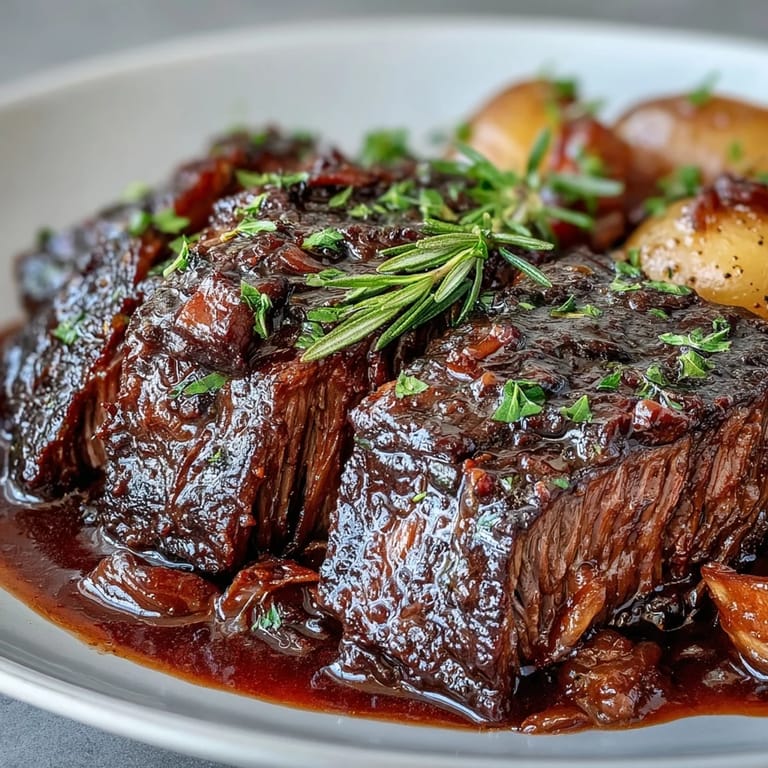
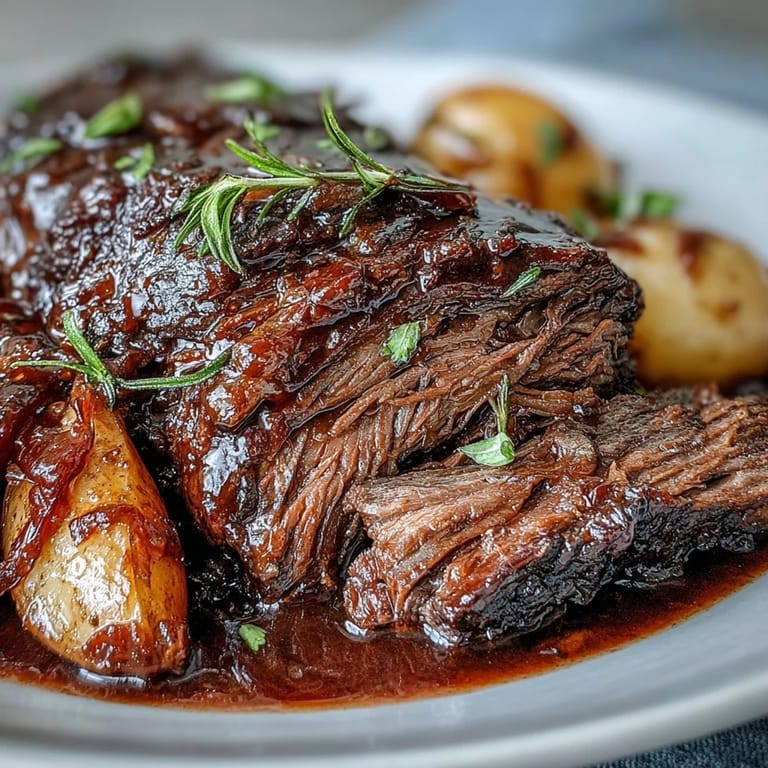
- Shred the beef into large chunks, return to the pot or arrange over vegetables, spoon that glorious gravy over everything.
 Save
Save My friend Sarah served this at her first dinner party last month and texted me at 11pm that night saying three people had already asked for the recipe. Something about putting a single pot in the middle of the table and watching everyone help themselves feels so intimate and old-fashioned, in the very best way.
Making It Your Way
After years of making this on repeat, I have learned that pot roast forgives almost everything except rushing. Use whatever vegetables you have on hand. I have added parsnips, turnips, and even bell peppers when that was what the crisper drawer offered. The method stays the same, the flavors shift subtly with every variation.
The Slow Cooker Shortcut
On weekdays when I cannot babysit a stove, I sear everything in batches and transfer it all to the slow cooker. Eight hours on low produces nearly identical results. The one difference is the sauce does not concentrate quite as much, so I remove the lid for the last hour and let it thicken naturally.
Leftovers Worth Planning For
The second day, this transforms into something entirely different. The flavors have married overnight, the beef has absorbed more of the braising liquid, and the texture becomes almost silky. I always make a full roast even when cooking for two people, just for what follows.
- Shred leftover beef and mix with barbecue sauce for incredible sandwiches
- Chop everything together and serve over polenta for an Italian twist
- The gravy freezes beautifully for those nights you need comfort food in fifteen minutes
 Save
Save There is something profoundly satisfying about a dish that rewards patience so generously. In a world that demands everything instantly, pot roast refuses to be rushed, and maybe that is exactly why we need it now more than ever.
Cooking Questions & Answers
- → What cut of beef works best for pot roast?
Chuck roast or blade roast are ideal choices because they contain good marbling and connective tissue that breaks down during slow braising, resulting in tender, flavorful meat. Look for a 3-3.5 lb roast with visible fat marbling throughout.
- → Can I make this in a slow cooker instead?
Yes, after searing the meat and sautéing the aromatics, transfer everything to a slow cooker. Cook on low for 8-10 hours or high for 5-6 hours. Add vegetables halfway through cooking if you prefer them firmer.
- → Why is searing the meat important?
Searing creates a deep brown crust through the Maillard reaction, which adds complex flavors and rich color to both the meat and the final gravy. It's an essential step that shouldn't be skipped for maximum flavor depth.
- → How do I know when the pot roast is done?
The roast is ready when it's fork-tender and easily pulls apart or shreds with minimal pressure. This typically takes 3-3.5 hours of braising. The internal temperature should reach around 190-205°F for optimal tenderness.
- → Can I make this ahead of time?
Absolutely! Pot roast actually tastes better the next day as flavors meld together. Store in the refrigerator for up to 3 days. Reheat gently on the stovetop or in a 300°F oven until warmed through.
- → What can I substitute for red wine?
Use additional beef broth for a non-alcoholic version, or try beef stock with a splash of balsamic vinegar for added depth. The wine adds acidity and complexity, so a small amount of vinegar helps replicate that balance.