 Save
Save There's something about the smell of roasted butternut squash that fills a kitchen with instant warmth, even on the greyest afternoon. I discovered this soup by accident, really—I had half a squash sitting on my counter that needed rescuing, and a vague craving for something comforting that didn't feel heavy. What emerged was this silky, naturally sweet bowl of golden goodness that somehow tastes like both autumn and comfort wrapped together. My roommate walked in mid-blending and asked what smelled like a spice market had exploded, and honestly, that's the highest compliment this soup can receive.
I made this for my book club three winters ago, ladling it into mismatched bowls because I was still learning that matching dinnerware somehow matters. Everyone got quiet in that way people do when food actually tastes like something, and then someone asked for seconds before finishing the first bowl. That's when I knew this wasn't just a recipe—it was the kind of dish that makes people feel taken care of.
Ingredients
- 1 large butternut squash (about 1.2 kg / 2.5 lbs), peeled, seeded, and cubed: The roasting really does unlock something special here; don't skip it thinking boiling will work just fine because it genuinely won't give you the same depth.
- 1 medium yellow onion, chopped: This isn't about onion flavor taking over—it's about creating a savory base that lets the squash actually shine instead of being one-note sweet.
- 2 cloves garlic, minced: Added to the sautéed onions, it rounds out the soup with just enough umami to make people ask what that subtle something is.
- 1 liter (4 cups) vegetable broth: Quality matters here because this is mostly liquid; cheap broth will make even perfectly roasted squash taste thin and forgettable.
- 250 ml (1 cup) water: The water dilutes the broth slightly so the squash flavor stays front and center instead of getting buried under saltiness.
- 120 ml (1/2 cup) coconut milk or heavy cream: This is your finishing touch that makes it velvety; stir it in at the end so it creates beautiful swirls if you're being fancy.
- 2 tbsp pure maple syrup: Don't use pancake syrup—the purity of real maple syrup actually makes a noticeable difference in how the sweetness lands.
- 1/4 tsp ground nutmeg and 1/2 tsp ground cinnamon: These two together create that warm spice smell that makes people think you've been cooking all day even if you haven't.
- 2 tbsp olive oil: Divided between roasting and sautéing, it's not fancy but it's essential—each step needs its own bit for proper browning.
- Salt and freshly ground black pepper, to taste: Hold back on seasoning until the very end because roasting and simmering concentrate flavors in ways that surprise you.
- Toasted pumpkin seeds, maple syrup drizzle, and fresh thyme for garnish: These aren't just pretty additions; the pumpkin seeds add texture and the thyme brings a fresh note that cuts through the richness.
Tired of Takeout? 🥡
Get 10 meals you can make faster than delivery arrives. Seriously.
One email. No spam. Unsubscribe anytime.
Instructions
- Heat your oven and prep the squash:
- Preheat to 200°C (400°F) while you cube your squash—and yes, peeling it raw is annoying, but it's easier than waiting for it to cool after roasting. Toss your cubes with one tablespoon of olive oil, salt, and pepper until they're all glistening and ready to caramelize.
- Let the oven work its magic:
- Spread the squash on a baking sheet in a single layer and roast for 30–35 minutes, stirring once halfway through so nothing sticks or burns on the edges. You'll know it's done when the cubes are fork-tender and the edges have turned golden brown—that's where the flavor actually lives.
- Build your flavor base:
- While the squash roasts, heat your remaining tablespoon of olive oil in a large pot over medium heat and sauté the chopped onion for 4–5 minutes until it softens and turns translucent. Add the garlic and let it cook for just one minute more—longer than that and it starts to taste bitter.
- Combine everything and simmer:
- Dump the roasted squash into the pot with the onion and garlic, then pour in your broth, water, maple syrup, nutmeg, and cinnamon. Stir everything together, bring it to a boil, then immediately drop the heat and let it simmer gently for 10 minutes so all those spices have time to actually infuse into the liquid.
- Blend until it's silky:
- Using an immersion blender, purée the soup right there in the pot until it's completely smooth and creamy—you want no chunks, just velvety texture. If you're using a countertop blender, work in batches and be careful because hot soup can splash, which is both dangerous and sad when it ends up everywhere except your bowl.
- Finish with richness and taste:
- Stir in your coconut milk or cream, then taste and adjust seasoning with salt and pepper until it feels balanced—not too sweet from the maple, not too savory from the broth. If the soup seems too thick, thin it with a splash more broth or water; if it's too thin, well, that's fine too because soup is forgiving.
- Serve with intention:
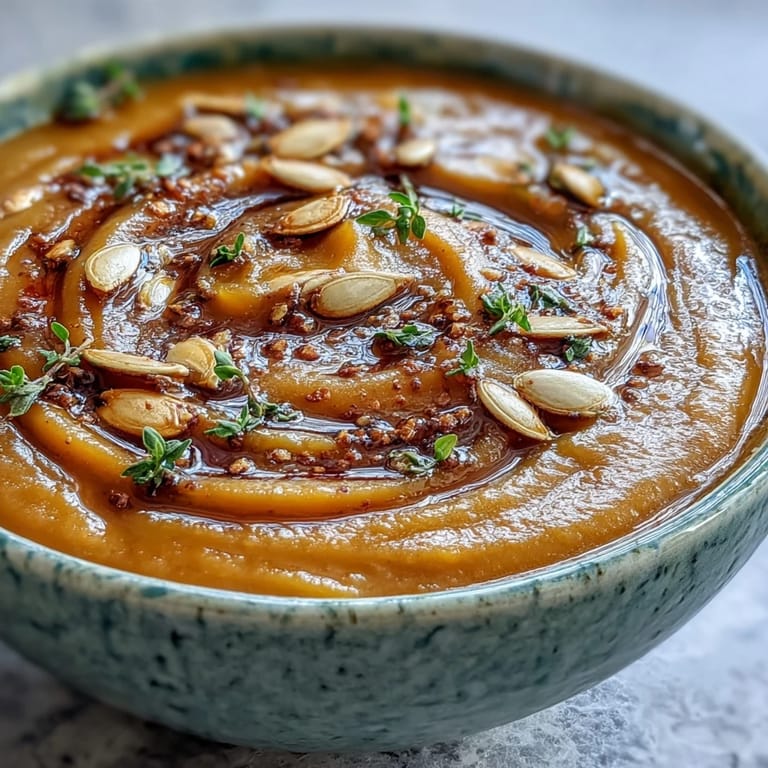
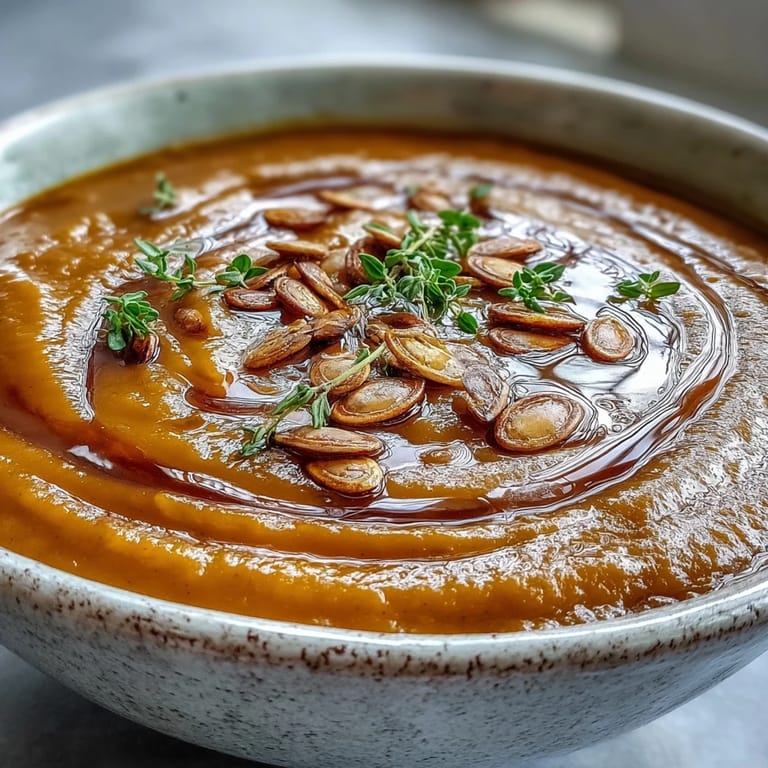
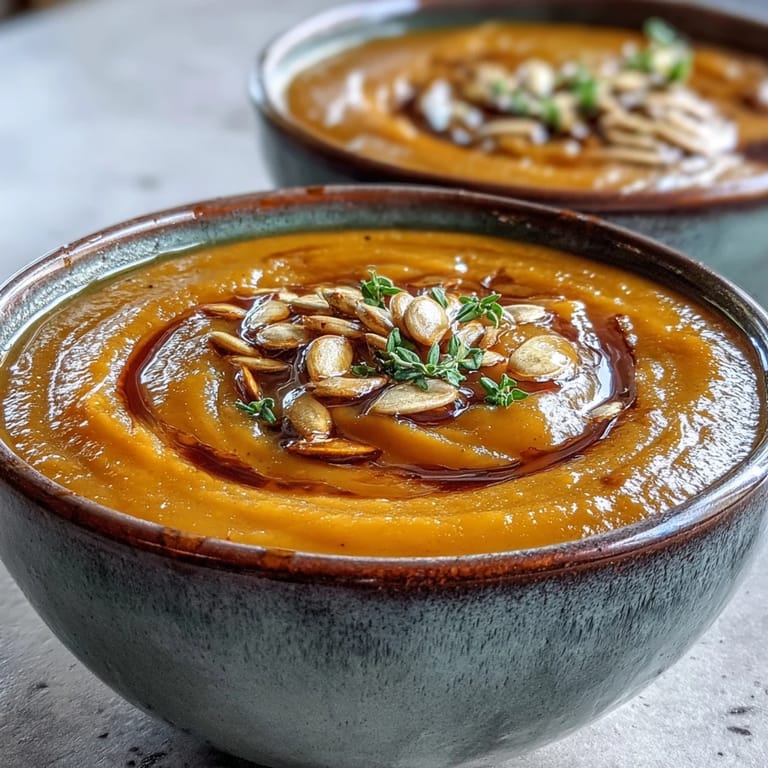
- Ladle into bowls and top with toasted pumpkin seeds for crunch, a drizzle of maple syrup for sweetness, and fresh thyme leaves for brightness. The garnishes aren't optional if you want the full experience—they're what transform a bowl of soup into something memorable.
 Save
Save There was a Tuesday evening when I made this soup for someone who'd had a terrible week, and watching them take the first spoonful and just close their eyes felt like I'd given them something bigger than dinner. That's when I understood that some recipes are just vehicles for care, and butternut squash soup happens to be one of the best ones.
The Roasting Truth
I used to think roasting was just extra steps, but then I made this soup both ways in the same week and the difference was undeniable. The roasted version had this caramelized sweetness that felt sophisticated, while the boiled version tasted like I was making baby food. Roasting takes 35 minutes but it's mostly oven time where you're just existing nearby, maybe reading or catching up on dishes, so it's not actually stealing your evening.
Cream Versus Coconut Milk
The first time I made this I used heavy cream because that's what the recipe called for, and it was luxurious and rich and exactly what I wanted. Then I got curious about the coconut milk version and was surprised to find it's actually different in a good way—lighter, somehow letting the squash flavor ring out more clearly instead of being muffled under dairy. Neither is better; they're just expressions of the same soup, which means you can choose based on what you're craving that day or what you have on hand.
Seasoning and Spice Balance
The cinnamon and nutmeg combination is what makes this soup feel special, but I learned the hard way that overseasoning at the beginning is a one-way ticket to a soup that tastes like a candle smells. The magic is in restraint—the measurements given are already perfect, so trust them and then taste at the very end when everything has mingled together. If you want to experiment, try adding just a pinch of cayenne pepper or ginger for complexity instead of just relying on sweetness to make it interesting.
- Always taste before adding more spice because you can always add but you can't take it back.
- Fresh spices taste noticeably better than ones that have been in your cabinet since 2019, so this is the moment to replace those old jars.
- Grinding your own nutmeg from whole seeds feels fancy but honestly makes a real difference in how the soup tastes.
 Save
Save This soup has become my go-to when I want to feel like I'm doing something kind for myself or someone else, which is really what good food is about anyway. Make it once and you'll understand why it keeps showing up on tables when comfort matters.
Cooking Questions & Answers
- → Can I make this soup ahead of time?
Absolutely. This soup actually develops deeper flavors when made ahead and refrigerated for up to 3 days. Reheat gently over low heat, stirring occasionally, and add a splash of broth if it has thickened too much. The dairy-free version reheats particularly well without separating.
- → What's the best way to achieve the smoothest texture?
Roasting the squash until thoroughly caramelized is key, as it breaks down fibers for easier blending. Use an immersion blender directly in the pot for convenience, or work in small batches using a countertop blender—never fill past halfway when blending hot liquids to prevent dangerous pressure buildup.
- → Can I substitute the maple syrup?
Honey or agave nectar work beautifully as alternatives, though honey adds a slightly different floral note. For a refined sugar-free version, simply omit the sweetener entirely—the roasted squash provides sufficient natural sweetness for most palates.
- → How can I add more protein to make it a complete meal?
Stir in rinsed white beans or lentils during the last 10 minutes of simmering. Alternatively, serve with crusty whole grain bread topped with melted cheese, or add shredded chicken during reheating. For vegan protein options, hemp hearts or pumpkin seeds make excellent garnishes.
- → Is freezing recommended for this soup?
This soup freezes exceptionally well for up to 3 months. Cool completely before transferring to airtight containers, leaving some headspace for expansion. Thaw overnight in the refrigerator and reheat slowly, adding additional liquid if needed. Note that coconut milk versions may separate slightly after freezing but will re-blend smoothly when reheated.