 Save
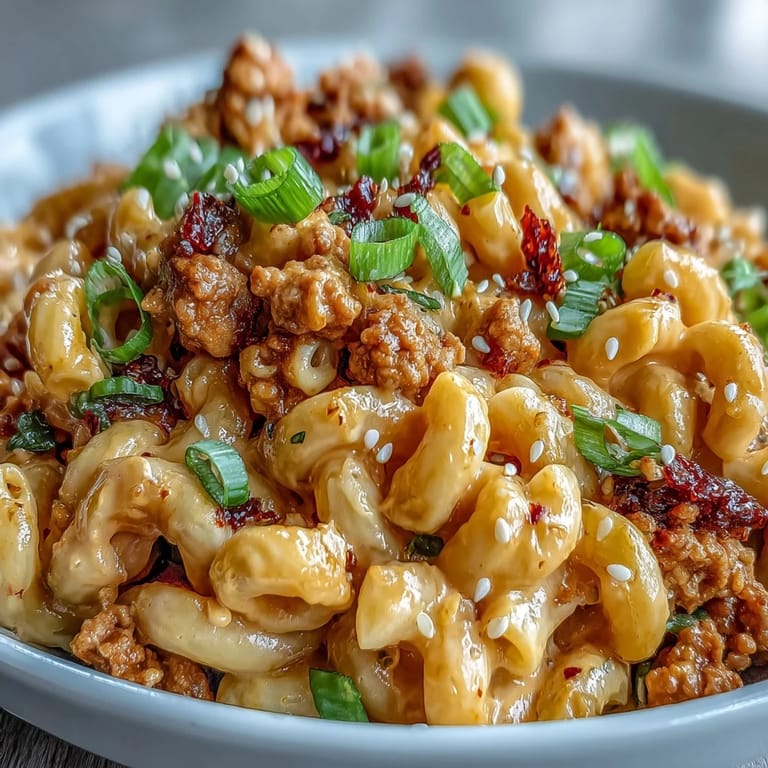
Save Last Tuesday, I was standing in my kitchen wondering what to do with a pound of ground turkey when my roommate mentioned craving mac and cheese—and suddenly, I remembered the gochujang paste sitting in my fridge from a Korean cooking phase that never quite took off. What if I combined them? That question led to an afternoon of experimentation, whisking cream sauce while the sweet and spicy turkey sizzled in another pan, and by dinner we were both convinced we'd stumbled onto something special. This Korean-style turkey mac and cheese became the bridge between two completely different comfort food traditions, and honestly, it's been my go-to ever since.
I made this for my sister's potluck last spring, and watching everyone's faces when they tasted that first bite was worth every dirty dish. She kept asking what was in it, convinced I'd added some secret ingredient, and when I told her it was basically mac and cheese with Korean turkey, she laughed and went back for thirds. It became the recipe she texted me for weeks after, and now it's apparently her go-to when she wants to impress people without spending hours in the kitchen.
Ingredients
- Elbow macaroni (12 oz): The classic shape holds onto sauce beautifully—don't skip the salted water, it seasons the pasta as it cooks.
- Whole milk (2 cups): This is your base for creamy sauce, and honestly, skimping here shows in the final dish.
- Unsalted butter (2 tbsp): The roux foundation that transforms flour and milk into something luxurious.
- All-purpose flour (2 tbsp): Your thickening agent—don't rush the cooking, let it toast slightly for better flavor.
- Sharp cheddar cheese (1.5 cups): The backbone flavor; sharp varieties have more character than mild, which matters when you're adding other bold ingredients.
- Mozzarella cheese (0.5 cup): It adds creaminess and stretch, helping the sauce coat every noodle evenly.
- Kosher salt and black pepper: Season boldly—the turkey brings heat, so your base needs backbone.
- Ground turkey (1 lb): Lean but flavorful when cooked with aromatics and gochujang paste.
- Gochujang (2 tbsp): Korean chili paste that brings sweetness, heat, and umami—this is your secret weapon, and yes, it's worth buying.
- Low-sodium soy sauce (1 tbsp): Adds saltiness and depth without overpowering the dish.
- Honey (1 tbsp): Balances the heat and chili paste, creating a sweet-savory profile.
- Toasted sesame oil (2 tsp): A little goes a long way; it carries the aromatics and ties everything together.
- Garlic and ginger (2 cloves and 1 tsp): Bloomed in sesame oil, these build the foundation for your turkey seasoning.
- Red pepper flakes (optional, 0.5 tsp): Add this only if you like heat—gochujang already brings the spice.
- Scallions (4, thinly sliced): Fresh and sharp, they're the final brightness that makes every bite feel alive.
- Toasted sesame seeds (optional, 1 tsp): A garnish that adds texture and a nutty finish.
Tired of Takeout? 🥡
Get 10 meals you can make faster than delivery arrives. Seriously.
One email. No spam. Unsubscribe anytime.
Instructions
- Boil your pasta foundation:
- Bring a large pot of salted water to a rolling boil, then add your elbow macaroni and cook according to package directions. You want it tender but still with a tiny bit of resistance—overcooked pasta will turn mushy once it hits the warm sauce. Drain it well and set aside.
- Build your roux:
- Melt butter in a large skillet over medium heat, then whisk in flour and cook for about a minute, stirring constantly until it smells toasty and golden. This step matters more than you'd think—it removes the raw flour taste and creates the structure for your sauce. Don't walk away; stay present and stir.
- Create the silk:
- Slowly pour in your milk while whisking vigorously to avoid lumps, then keep whisking for another three to four minutes as it thickens into something silky and pourable. The sauce should coat the back of a spoon, but not be thick like pudding—you're aiming for that creamy, dreamy consistency.
- Melt in the cheese:
- Lower the heat to medium-low and stir in your shredded cheddar and mozzarella, stirring until completely melted and smooth, then season with salt and pepper. Taste it before you move on; this is where you catch any seasoning gaps. Keep it warm on low heat while you finish the turkey.
- Sear your aromatics:
- Heat sesame oil in a separate skillet over medium-high heat, then add your minced garlic and grated ginger and sauté for about a minute until fragrant and the kitchen smells incredible. This builds the flavor foundation that makes people ask what's in your dish.
- Cook the turkey:
- Add your ground turkey to the skillet and break it up with a spoon as it cooks, stirring occasionally until it's no longer pink, about five to six minutes. The meat should be in small, even crumbles—not clumpy, not shredded—so it distributes throughout every bite.
- Glaze with Korean flavors:
- Stir in your gochujang, soy sauce, and honey, coating all the turkey evenly, then cook for two to three minutes until the mixture looks glossy and caramelized at the edges. Add red pepper flakes now if you want extra heat, but remember gochujang already brings the spice.
- Bring it all together:
- Pour your cooked macaroni into the cheese sauce and stir until every noodle is coated and creamy, then fold in half of the turkey mixture so it's distributed throughout. Reserve the other half for topping so you get turkey in every spoonful.
- Plate and finish:
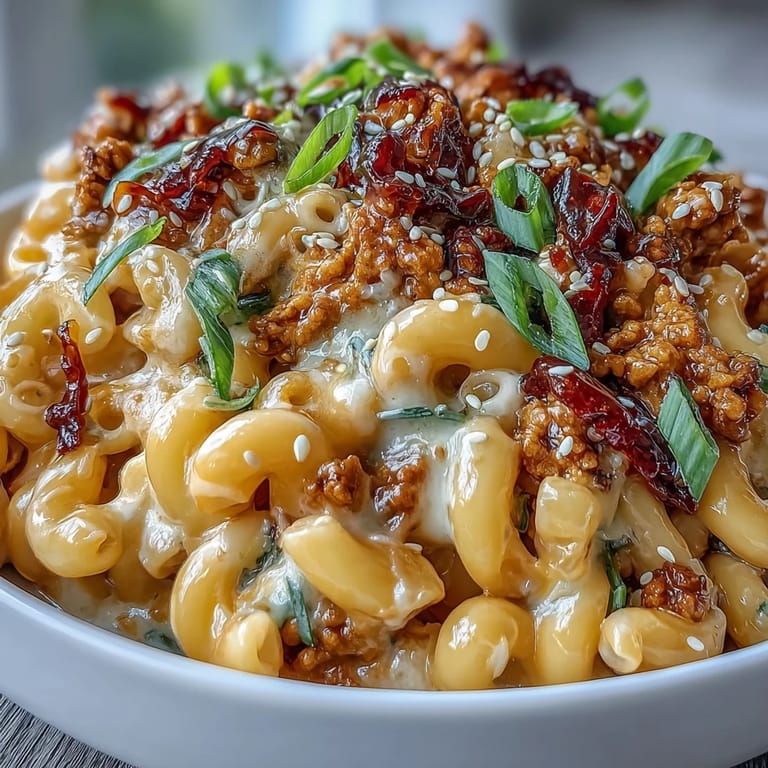
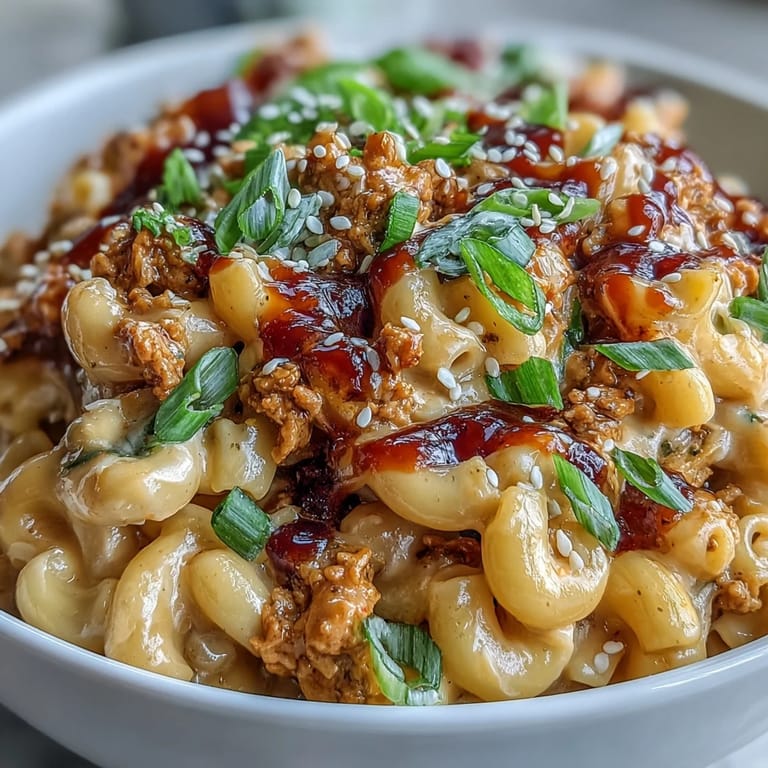
- Divide the mac and cheese among bowls, top with remaining turkey crumbles, fresh sliced scallions, and sesame seeds if you have them. Serve immediately while everything is still steaming and the cheese sauce is at its creamiest.
 Save
Save My partner took one bite and declared this was better than the Korean place down the street, which felt like the highest compliment given how much he loves their food. That moment made me realize comfort food doesn't have to choose sides—it can be messy, fusion-y, and completely honest about borrowing from everywhere that tastes good.
The Cheese Sauce Secret
The reason this tastes richer than regular mac and cheese is the combination of cheddar's punch and mozzarella's creamy texture—they work together in a way neither could alone. I learned this by accident when I ran out of cheddar once and used all mozzarella, which turned out silky but flat, so now I'm evangelical about the blend. The sharp cheddar gives you that edge you need, especially when you're pairing it with sweet and spicy turkey.
Why Gochujang Works Here
Gochujang sounds intimidating if you've never cooked with it, but it's honestly just fermented chili paste with sweetness built in—think of it as spicy, umami-rich ketchup. When you cook it with honey, soy sauce, and the earthiness of ground turkey, it transforms into something that tastes like it belongs in that bowl of creamy pasta. I've watched people who swear they don't like spicy food come back for seconds, so the heat is more suggestion than assault.
Serving and Variations
This dish stays best if you serve it immediately while the cheese sauce is still glossy and warm, but leftovers reheat okay in a low oven with a splash of milk stirred in. You can meal-prep the components separately and assemble them when you're ready to eat, which honestly makes weeknight cooking feel less frantic. The beauty of this recipe is how flexible it is—swap ground chicken if turkey feels boring, add steamed broccoli or sautéed bell peppers if you want vegetables, or dial down the gochujang if your crowd is heat-averse.
- Make it vegetarian by replacing ground turkey with crumbled tofu or cooked chickpeas seasoned the same way.
- A crisp lager or lightly chilled rosé pairs beautifully if you're looking to drink something alongside.
- Leftovers taste even better the next day once the flavors have time to get to know each other.
 Save
Save This recipe proved to me that the best dishes are the ones that don't apologize for mixing traditions, and the best meals are the ones that bring people back to the table asking what that amazing flavor was. Make this, watch people's faces light up, and trust that comfort food tastes even better when it surprises you.
Cooking Questions & Answers
- → Can I make this dish ahead of time?
The components can be prepared separately up to a day in advance. Store the cheese sauce and turkey mixture in airtight containers in the refrigerator. Reheat gently before combining with freshly cooked pasta for the best texture.
- → What can I substitute for gochujang?
Sriracha mixed with a small amount of miso paste works as an alternative. For a milder option, use red pepper flakes with a touch of tomato paste and brown sugar to approximate the sweet-spicy profile.
- → Is this dish very spicy?
The default level offers mild to medium heat with a balance of sweet and savory notes. Gochujang warmth builds gradually but remains family-friendly. Omit the optional red pepper flakes for a gentler version.
- → Can I use a different type of pasta?
Shells, cavatappi, or penne catch the sauce well and work beautifully. Short pasta with ridges or curves holds both the cheese sauce and turkey crumbles effectively.
- → How do I store leftovers?
Keep in an airtight container in the refrigerator for up to three days. The pasta will absorb some sauce, so add a splash of milk when reheating to restore creaminess. Reheat gently on the stovetop or in the microwave.
- → Can I make this dairy-free?
Use dairy-free cheese shreds and plant-based milk in the cheese sauce. Substitute butter with a vegan alternative or olive oil. The texture may differ slightly but the Korean-style turkey remains unchanged.