 Save
Save There's something about October that makes me crave this soup before I even realize summer's truly gone. One afternoon, while roasting vegetables for an entirely different dinner, the oven smelled so impossibly warm and sweet that I decided to just commit to butternut squash instead. What started as an improvisation became the thing I make whenever someone needs comfort in a bowl, and now I can't imagine fall without it.
I served this to my neighbor last November when she came home from the hospital, and she ate two bowls while sitting on my kitchen stool, telling me stories about her garden. Watching someone find warmth and appetite again in a simple bowl of soup felt like the whole point of cooking, honestly.
Ingredients
- Butternut squash (1 large, about 2 lbs): Choose one that feels heavy for its size and has a deep, even color. The roasting brings out its natural sugars, so resist the urge to add extra sweetness.
- Yellow onion (1 medium): This creates a savory backbone that keeps the soup from becoming one-note sweet.
- Garlic cloves (2): Don't skip these even though two seems modest, they mellow beautifully during roasting.
- Carrot (1 medium): Adds earthiness and a touch of natural sweetness that rounds everything out.
- Vegetable broth (4 cups): This is where your soup lives or dies, so use something with actual flavor, not the bland stuff.
- Olive oil (2 tbsp): Helps everything caramelize and catch those golden, crispy edges in the oven.
- Salt (1 tsp): Adjust at the end because roasting concentrates flavors more than you'd expect.
- Black pepper (1/2 tsp): Freshly ground if you have a grinder, it makes a real difference in the final taste.
- Ground nutmeg (1/2 tsp): This is the secret ingredient that people taste but can't quite name.
- Cayenne pepper (1/4 tsp, optional): Just a whisper of heat to make everything taste sharper and more alive.
- Heavy cream or coconut cream (1/4 cup, optional): Adds richness at the end, but the soup is lovely without it too.
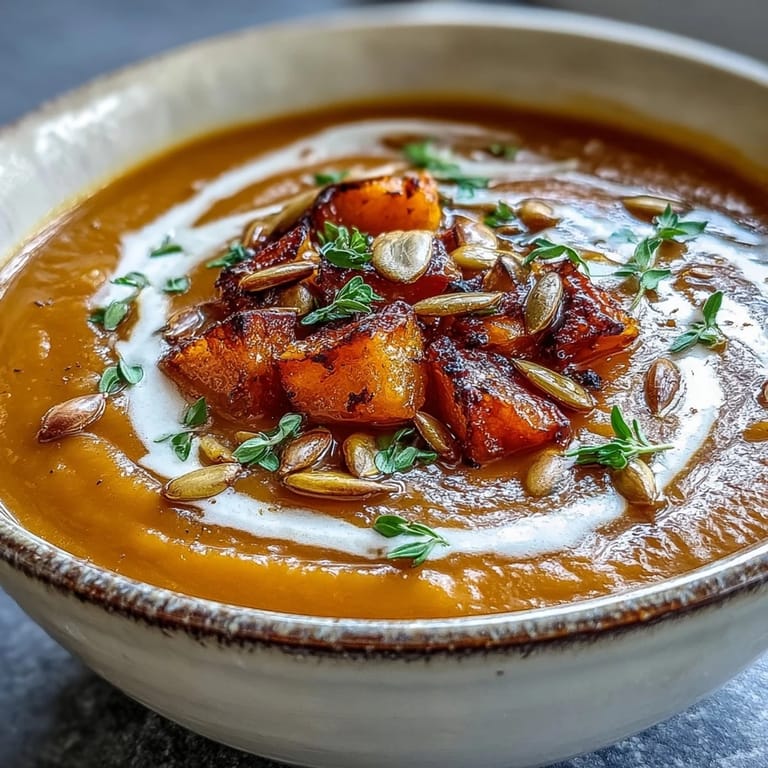
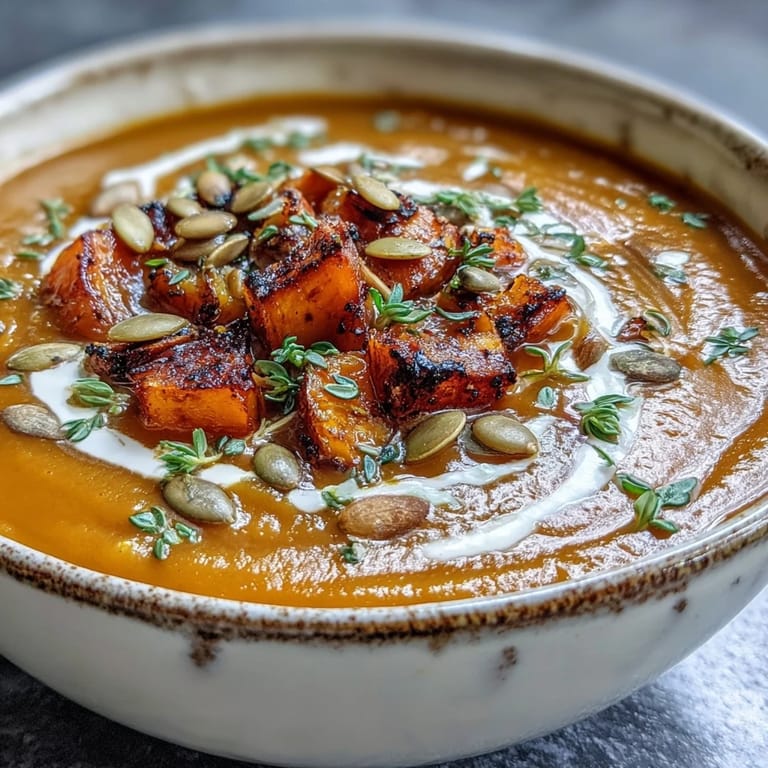
- Toasted pumpkin seeds and fresh thyme (for garnish): These aren't just decoration, they give you something to bite into and a reason to pause before eating.
Tired of Takeout? 🥡
Get 10 meals you can make faster than delivery arrives. Seriously.
One email. No spam. Unsubscribe anytime.
Instructions
- Get your oven ready:
- Set it to 400°F and let it preheat while you prep your vegetables. A hot oven is crucial for caramelization.
- Prep and arrange:
- Toss your cubed squash, chopped onion, garlic cloves, and carrot pieces on a baking sheet, drizzle generously with olive oil, and toss everything until it's glistening. Don't crowd the pan, you want space for the heat to work its magic.
- Roast until golden:
- Let everything sit in the oven for 30 to 35 minutes, stirring halfway through so nothing sticks or burns. You'll know it's done when the squash is fall-apart tender and the edges have taken on a deep golden color.
- Build your soup base:
- Scrape all those roasted vegetables into a large pot, pour in your vegetable broth, and add salt, black pepper, nutmeg, and cayenne if you're using it. The broth will immediately smell richer from the roasted bits on the pan.
- Simmer and meld:
- Bring everything to a simmer over medium heat and let it bubble gently for about 10 minutes so all the flavors get to know each other. This isn't a rushing step, it matters.
- Blend until silky:
- Use an immersion blender right in the pot (careful of splashes) and blend until completely smooth, or carefully transfer to a countertop blender in batches. Either way, keep going until there are no grainy bits left.
- Taste and adjust:
- Add a splash more salt or pepper, taste again, and trust your instincts. This is when you add cream if you want that extra richness, stirring it in gently.
- Serve with intention:
- Ladle into bowls while it's hot, scatter pumpkin seeds and thyme on top, and take a moment before eating to appreciate what you've made.
 Save
Save My daughter asked for this soup three days in a row last winter, which never happens with anything I cook. She said it tasted like fall, and I realized that's exactly what I was going for all along.
The Magic of Roasting
Roasting is the move that separates okay butternut squash soup from the kind you dream about. When vegetables hit a hot pan, their natural sugars caramelize and create this complex sweetness that you absolutely cannot get from boiling. The oven does the heavy lifting for you, so you're really just letting chemistry happen while you do something else entirely.
Cream or No Cream
I've made this both ways more times than I can count, and honestly, it's beautiful either way. The cream version is luxurious and feels like a special occasion, while the plain version is lighter and lets you taste the actual squash more clearly. Coconut cream is a wonderful middle ground if you want richness without dairy, and it adds a subtle flavor that complements the nutmeg perfectly.
Variations and Pairings
This soup is flexible in the way that the best recipes are, which means you can play around and make it your own. I've added crispy sage leaves on top, drizzled it with hot honey, served it alongside grilled cheese, and even poured it into bread bowls. The foundation is so solid that you can dress it up or keep it simple depending on your mood.
- A peeled apple tossed in with the vegetables adds subtle sweetness without making it taste like dessert.
- Toast your own pumpkin seeds with a pinch of salt the day before so they're extra crispy and flavorful.
- Make a big batch and freeze it in portions, it actually tastes even better after a few weeks when the flavors have had time to settle.
 Save
Save This soup has become my go-to when I want to feel capable in the kitchen without actually trying too hard. It's the kind of recipe that reminds you why you cook in the first place.
Cooking Questions & Answers
- → Can I make this soup ahead of time?
Absolutely. This soup actually tastes better the next day as flavors have more time to meld. Store in an airtight container in the refrigerator for up to 4 days. Reheat gently on the stove, adding a splash of broth if needed to adjust consistency.
- → How do I get the smoothest texture?
Roasting the vegetables first is key—it softens them naturally and adds depth. When blending, use an immersion blender directly in the pot for 2-3 minutes, or work in batches with a countertop blender. For ultra-smooth results, pass the blended soup through a fine-mesh sieve.
- → What can I substitute for butternut squash?
Other winter squash varieties work beautifully here—try kabocha, acorn, or delicata squash. Sweet potatoes or a combination of carrots and sweet potatoes also create a lovely soup with similar sweetness and vibrant color.
- → Is this freezer-friendly?
Yes, freeze this soup for up to 3 months. Cool completely before transferring to freezer-safe containers, leaving about an inch of space for expansion. Thaw overnight in the refrigerator, then reheat slowly on the stove.
- → How can I make this soup more filling?
Stir in a can of drained white beans during the final simmer for protein and body. Serve with crusty bread for dipping, or pair with a side salad for a complete meal. Adding a grain like wild rice or quinoa as a topping also works wonderfully.
- → What's the purpose of roasting first?
Roasting concentrates the natural sugars in the squash and vegetables, creating caramelization that boiling alone cannot achieve. This adds depth and sweetness to the final soup, eliminating the need for additional sugar or sweeteners.