 Save
Save There's something about building a bowl rather than plating a dish that makes you feel like you're curating your own meal instead of just eating what's been decided for you. I stumbled onto this kale harvest grain bowl during one of those early fall mornings when the farmer's market was overflowing with pomegranates and the sweet potatoes looked almost too good to pass up. What started as an attempt to use up what I'd bought turned into something I've made dozens of times since, each version slightly different depending on what's in season or what's lingering in my crisper drawer.
I made this for my sister when she was going through a phase of trying to eat better, and she sat at my kitchen counter while I assembled the bowls, asking questions about every ingredient like she was taking mental notes. Halfway through eating, she stopped and said the dressing was what made the whole thing work, and that's when I realized how much a simple vinaigrette can transform separate components into something that actually feels intentional.
Ingredients
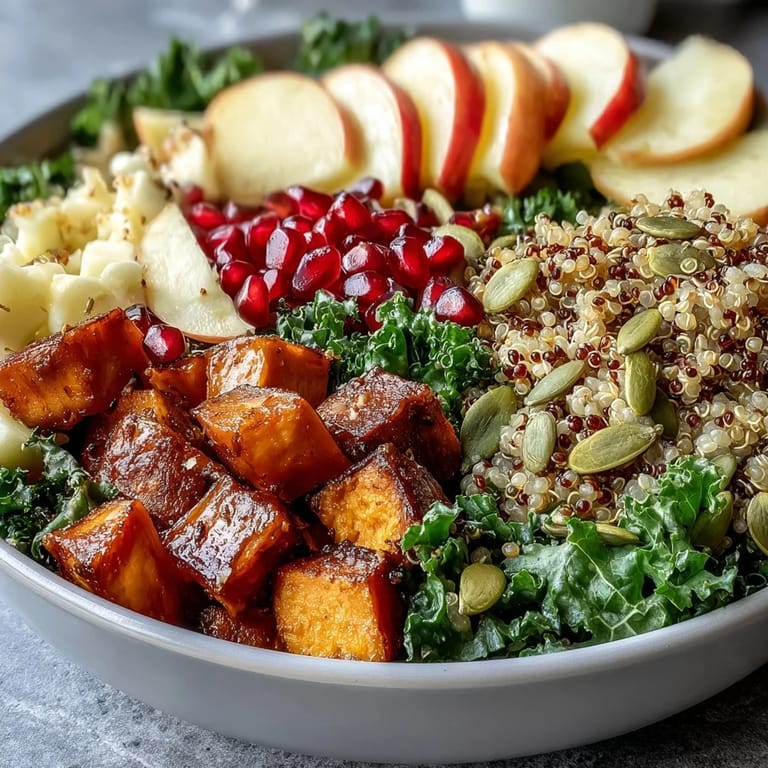
- Quinoa: This grain is your protein anchor and cooks in just 15 minutes, which is why it became a staple in my weeknight rotation instead of fussier grains.
- Kale: The massaging step is not just culinary theater—it actually transforms the leaves from tough and bitter to silky and approachable, which converted me from a kale skeptic to someone who actually craves it.
- Sweet potatoes: Roasting them brings out their natural sweetness and creates little caramelized edges that add textural contrast you wouldn't get from raw vegetables.
- Apple: The acidity and crispness cut through the richness of the grains and roasted vegetables, and the color adds brightness to what could otherwise look a bit monochromatic.
- Pomegranate seeds: These are equal parts flavor and mood—they add a tart pop and a jewel-like visual element that makes the bowl feel special rather than just healthy.
- Pepitas: Pumpkin seeds bring a subtle earthiness and crunch that keeps every bite interesting instead of letting the bowl become too soft and uniform.
- Olive oil: Use a good quality oil for the dressing since that's where it matters most; the roasting oil doesn't need to be fancy.
- Apple cider vinegar: This is what gives the dressing its personality—the slight apple note ties the whole bowl together thematically without being obvious about it.
- Maple syrup: A touch of sweetness balances the mustard's sharpness and the vinegar's tang, creating a dressing that tastes sophisticated rather than one-note acidic.
- Dijon mustard: This emulsifies the dressing so it actually coats the vegetables instead of pooling at the bottom of the bowl, plus it adds a subtle complexity that no one can quite put their finger on.
Tired of Takeout? 🥡
Get 10 meals you can make faster than delivery arrives. Seriously.
One email. No spam. Unsubscribe anytime.
Instructions
- Get your oven ready and start the potatoes:
- Preheat to 400°F and toss your diced sweet potatoes with olive oil, salt, and pepper on a baking sheet. They'll take about 20 to 25 minutes and should be golden and starting to caramelize at the edges when they're done—turn them halfway through so they cook evenly on all sides.
- Cook the quinoa while potatoes roast:
- In a medium saucepan, combine rinsed quinoa with 2 cups of water and a pinch of salt, then bring it to a boil. Once it's boiling, reduce the heat to low, cover, and let it simmer for 15 minutes until the water is absorbed and you can see those little spiral tails popping out of the grains.
- Massage the kale into submission:
- Chop your kale finely and put it in a large bowl, then drizzle it with just a tiny splash of olive oil and a pinch of salt. Use your hands to rub and massage the leaves for a minute or two until they darken and soften—this is the move that makes people actually enjoy eating kale instead of tolerating it.
- Build your dressing:
- Whisk together the olive oil, apple cider vinegar, maple syrup, Dijon mustard, salt, and pepper in a small bowl until everything is combined and looks emulsified. Taste it and adjust the vinegar or sweetness to your preference—this is where you make the dressing yours instead of just following instructions.
- Assemble the bowls:
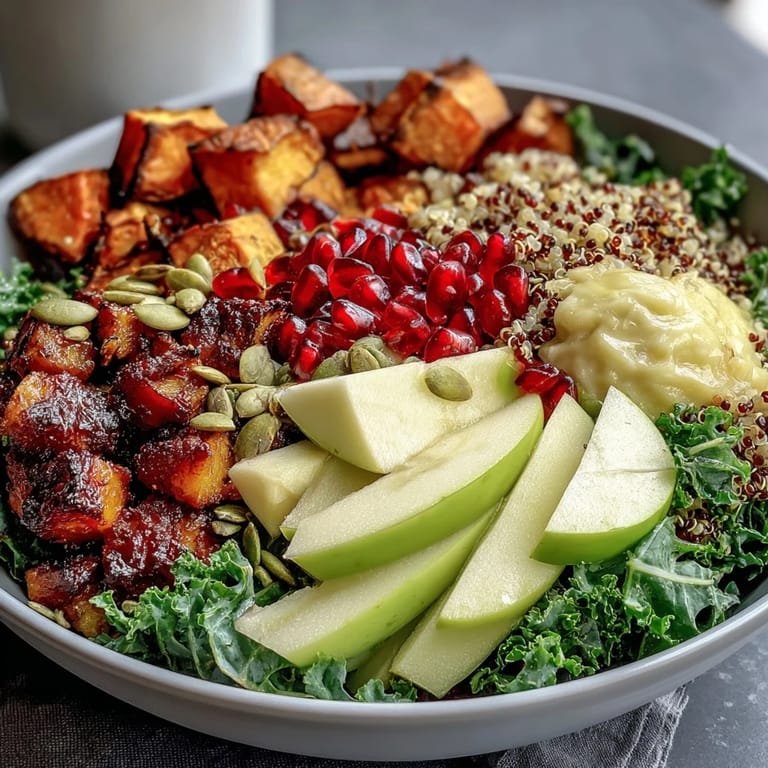
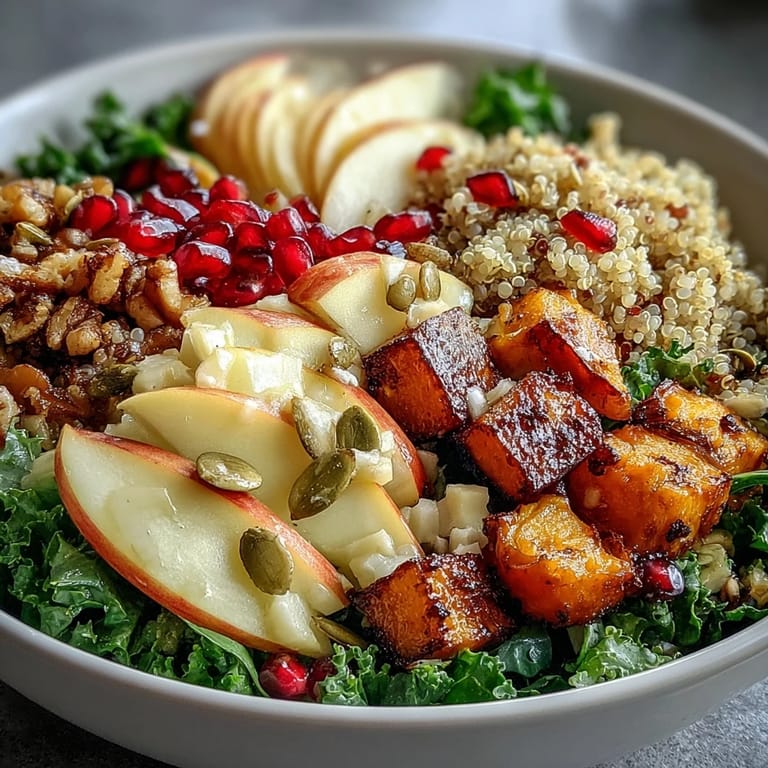
- Divide the massaged kale among four bowls, then arrange the quinoa, roasted sweet potatoes, diced apple, pomegranate seeds, and pepitas on top in whatever pattern feels right to you. Drizzle the dressing over everything just before serving so the greens don't get soggy while you're eating.
 Save
Save What I love most about this bowl is that it somehow feels indulgent while being completely honest about what it is—there's no pretense here, just really good ingredients that taste like themselves. It's become the kind of meal I make when I want to feel nourished without feeling like I'm punishing myself, which might be the most important thing a weeknight dinner can do.
Why This Bowl Works Year-Round
The beauty of grain bowls is that they're flexible enough to follow the seasons without losing their identity. In fall and winter, the pomegranate and apple feel seasonal and necessary, while the roasted sweet potatoes bring warmth and density to the plate. Come summer, you could swap the sweet potatoes for something lighter like roasted zucchini and use stone fruits instead of apples, but the structure remains the same—greens, grains, roasted vegetables, fresh fruit, nuts, and dressing.
The Dressing Changes Everything
I've learned through trial and error that a bowl is only as good as its dressing, which is why I always make mine fresh instead of using bottled versions. The maple syrup version here works beautifully with the apple and pomegranate, but I've also made versions with balsamic vinegar and a touch of garlic when I'm feeling different ingredients on hand. The formula is simple enough to adapt—three parts oil to one part acid, a touch of sweetness, salt, pepper, and something with personality like mustard or minced garlic.
Small Tricks That Make a Big Difference
Over the years of making this bowl, I've picked up small habits that have genuinely improved the final dish without adding complexity. Toasting the pepitas in a dry skillet for a minute or two before adding them brings out their flavor in a way that matters more than you'd think, and keeping all your components at slightly different temperatures—warm grains, room-temperature vegetables, crisp apple—creates contrast that keeps the bowl interesting bite after bite. One thing I always do is taste the dressing on its own before drizzling it over the bowl, because quinoa can be neutral enough to accept a dressing that's a bit too acidic or too sweet without you realizing it until you've already plated everything.
- Toast your pepitas for just a minute or two in a dry skillet to deepen their flavor before adding them to the bowl.
- Let your roasted sweet potatoes cool to room temperature before assembling so they don't make the kale wilt.
- Always taste your dressing before using it—this small step prevents disappointing bowls and builds your intuition for balance.
 Save
Save This bowl has become one of those recipes I make without thinking, which is its highest compliment. It feels nourishing without being austere, and it works just as well for a solo lunch as it does for feeding guests.
Cooking Questions & Answers
- → How do you prepare kale for grain bowls?
Remove stems from kale and chop leaves finely. Place in a bowl with a splash of olive oil and pinch of salt, then massage with hands for 1-2 minutes until leaves darken and become tender. This removes bitterness and improves texture.
- → Can I make this grain bowl ahead?
Yes, prepare components up to 3 days in advance. Store quinoa, roasted sweet potatoes, and dressing separately in airtight containers. Assemble bowls fresh and add dressing just before serving to maintain textures.
- → What can I substitute for quinoa?
Farro, brown rice, wheat berries, or wild rice work beautifully. Cook according to package directions and season with salt while warm. Each grain brings slightly different texture and cooking time.
- → How do I remove pomegranate seeds easily?
Cut pomegranate in half horizontally. Hold one half cut-side down over a bowl, then tap firmly with a wooden spoon while rotating. Seeds fall out while membrane stays intact. Repeat with second half.
- → Can I add protein to this bowl?
Grilled chicken breast, baked tofu, roasted chickpeas, or hard-boiled eggs make excellent additions. Add about 4-6 ounces cooked protein per serving for a more substantial meal.
- → What dressing alternatives work well?
Tahini-lemon, balsamic vinaigrette, or green goddess dressing complement these flavors. Each brings different notes—creamy, sharp, or herbaceous—to pair with the sweet and tart components.