 Save
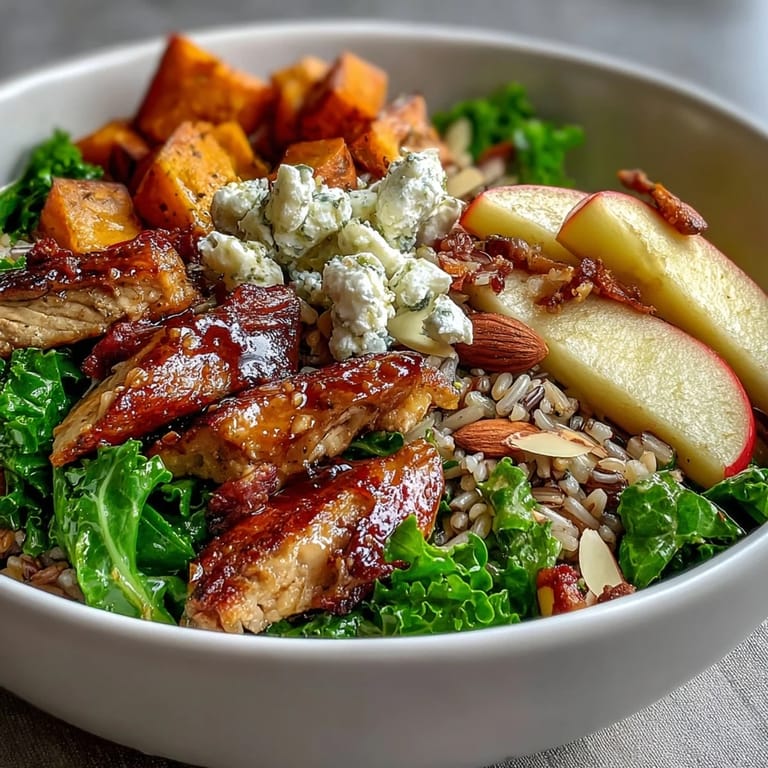
Save Last autumn, I stood in my kitchen watching the afternoon light catch the jewel tones of roasted vegetables cooling on my counter, and I realized I'd been making bowls all wrong. This Harvest Bowl came together almost by accident one Sunday when I had a half-empty fridge and needed something that felt complete rather than cobbled together. The first bite—that combination of nutty wild rice, tender chicken, and the sharp pop of apple against creamy goat cheese—made me understand why bowls have become the way I cook when I want nourishment without fussing.
I made this for my sister's family on a cool October afternoon, and her five-year-old asked for seconds while her teenager—the notoriously difficult eater—quietly went back for thirds without announcing it was good. That's when I knew this bowl had crossed from my kitchen obsession into something with real staying power, the kind of dish that brings different people to the table without anyone feeling like they're compromising.
Ingredients
- Boneless, skinless chicken breasts (2, about 400 g): The canvas for your flavor—I learned to pound them to even thickness so they roast in exactly the same time as the sweet potatoes below.
- Olive oil for chicken and sweet potatoes (2 tbsp total): Keeps everything from sticking and helps the seasonings cling where they belong.
- Kosher salt and black pepper: Don't skip seasoning the chicken directly; it makes all the difference in flavor depth.
- Wild rice (1 cup uncooked): Nutty and substantial, this grain holds up beautifully under the weight of all those toppings without getting mushy.
- Water or chicken broth (2 cups): Broth adds subtle depth, but water lets the rice's natural flavor shine through if that's your preference.
- Sweet potato (1 large, peeled and diced): The jewel of this bowl—roasting brings out its natural sweetness and creates those caramelized edges everyone fights over.
- Smoked paprika (1/2 tsp): This spice changed my roasted vegetable game entirely, adding warmth without heat.
- Kale (4 cups chopped, stems removed): Massaging it with dressing makes it silky rather than tough, a trick that shouldn't work but absolutely does.
- Apple (1 medium, Honeycrisp or Fuji): The acidity and crunch cut through richness—I dice it just before assembly so it stays bright.
- Sliced almonds (1/3 cup, toasted if desired): Toasting them brings out oils and flavor, but raw works too if you're short on time.
- Crumbled goat cheese (1/2 cup): Tangy and creamy, it melts slightly from the warm rice and chicken, binding everything together.
- Balsamic vinegar (1/4 cup): The dressing's backbone—good quality makes a noticeable difference here.
- Extra virgin olive oil (1/4 cup): Adds richness and helps emulsify the dressing into something silky.
- Dijon mustard (1 tsp): The emulsifier that makes this dressing stay together rather than separating into oil and vinegar.
- Honey (1 tsp): Balances the vinegar's sharp tang with a whisper of sweetness.
- Garlic clove (1 small, finely minced): Raw garlic in dressing is sharp, so I use half a clove if I'm serving to a crowd, a whole one if it's just for me.
Tired of Takeout? 🥡
Get 10 meals you can make faster than delivery arrives. Seriously.
One email. No spam. Unsubscribe anytime.
Instructions
- Get your oven ready and set up your workspace:
- Preheat to 400°F and line a baking sheet with parchment paper—this makes cleanup almost pleasant afterward. Think of the sheet as having an invisible center line dividing your two main players.
- Season and spread those sweet potatoes:
- Toss your diced sweet potato with olive oil, smoked paprika, and salt, then spread them on one half of your baking sheet. The paprika will smell incredible even before they hit the oven, a signal that good things are coming.
- Prepare the chicken:
- Rub those breasts with olive oil, salt, and pepper, then place them on the other half of your sheet. They won't touch if you arrange them right, which means they'll roast rather than steam.
- Roast everything together:
- Into the oven for 25 to 30 minutes, remembering to flip those sweet potatoes halfway through. You'll know you're done when the chicken reaches 165°F inside and the sweet potatoes are tender enough to pierce easily with a fork; let the chicken rest for five minutes before slicing so it stays juicy.
- Cook your wild rice while things roast:
- Rinse the rice under cold water—this removes some starch and prevents gumminess. In a saucepan, combine rice and water or broth, bring to a boil, then reduce heat to low, cover, and let it simmer gently for 35 to 40 minutes until tender and most liquid is absorbed.
- Whisk together your dressing:
- Combine balsamic vinegar, olive oil, Dijon mustard, honey, and minced garlic in a bowl or jar, then whisk until it looks creamy and emulsified rather than separated. Taste it and adjust salt and pepper—this dressing is the soul of your bowl.
- Give your kale some love:
- Take your chopped kale and massage it gently with a drizzle of dressing and a pinch of salt for about a minute or two until it becomes noticeably darker and silkier. This step transforms tough leaves into something tender enough that even kale skeptics eat it happily.
- Assemble each bowl with intention:
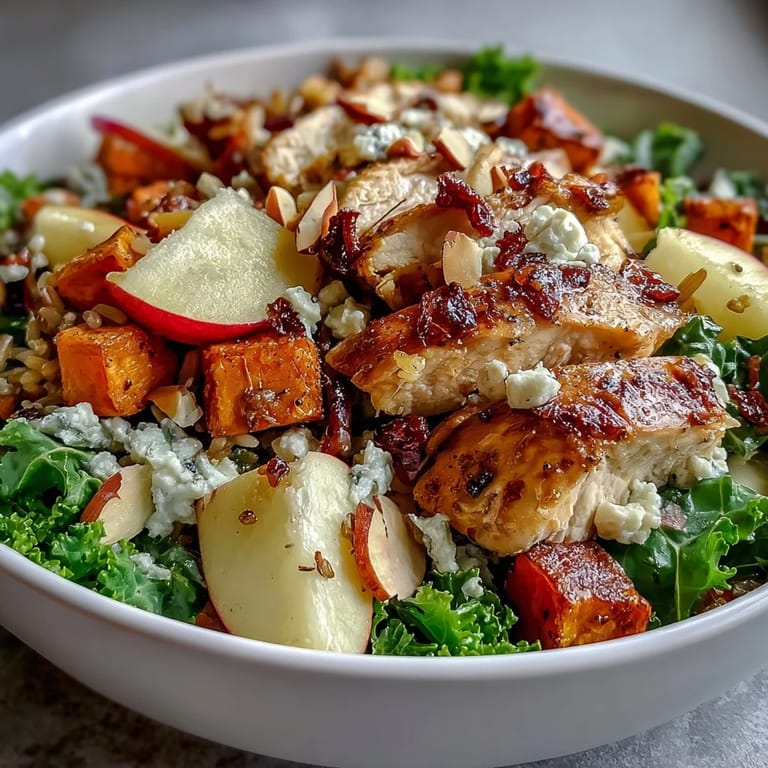
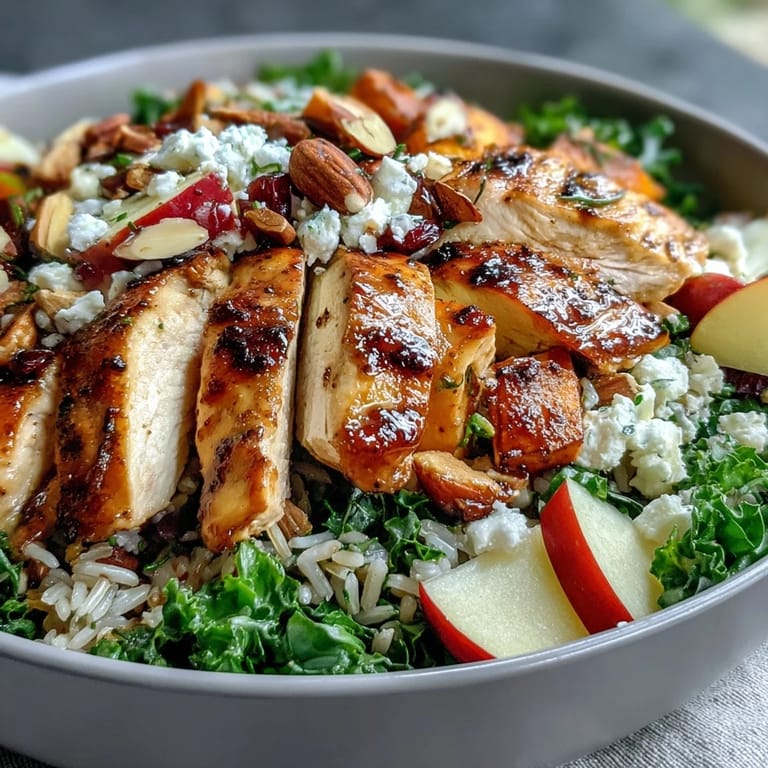
- Start with a bed of that massaged kale, then layer wild rice, warm roasted sweet potatoes, sliced chicken, crisp apple, almonds, and goat cheese. Drizzle with extra dressing and serve immediately while the warm components are still steaming against the cool kale.
 Save
Save My neighbor came by one evening just as I was plating these bowls, and instead of leaving politely when she saw my dinner, she stayed and we ended up eating together at my kitchen counter, talking about how food that looks this beautiful somehow tastes better. It became our thing—not a big deal, just an easy dinner we'd make together when life felt overwhelming and we needed something nourishing that didn't demand precision or expertise.
Why This Bowl Works Year-Round
The genius of this bowl isn't just in the individual ingredients but in how they complement each other across every season. In fall, you're celebrating actual harvest abundance with roasted everything. Come winter, the warm proteins and grains offer comfort while the kale and apple remind you that vegetables still exist. Spring invites you to swap sweet potatoes for asparagus or roasted radishes and use tender baby kale that barely needs massaging. Summer calls for grilled chicken, room-temperature quinoa instead of rice, and raw or lightly blanched vegetables that taste of their peak moment.
Building Your Bowl Strategy
I've learned that the order of assembly matters more than people realize. Starting with a substantial base of kale means nothing gets lost in the bowl and it keeps leafy greens from wilting under warm components. The wild rice acts as an insulating layer between hot and cool elements, while the apple's position near the top ensures you get that brightness and crunch in every bite rather than crushing it under the weight of everything else. Think of it less like randomly throwing things in a bowl and more like composing something that wants to be eaten from top to bottom.
The Dressing That Changes Everything
This balsamic dressing is simple enough that it could feel boring, but it absolutely isn't—the Dijon mustard does the real work here by emulsifying fat and vinegar into something stable and silky rather than something that separates into gross puddles. I keep leftover dressing in a jar in my fridge and use it on basically everything: roasted vegetables, simple salads, even stirred into yogurt as a weird but delicious dip. The honey is crucial too, a gentle counterpoint to vinegar's aggression, and fresh garlic gives it personality without overwhelming.
- Make dressing first and let it sit while everything else cooks so flavors meld and garlic mellows slightly.
- If your dressing breaks or looks separated, start with a fresh teaspoon of mustard in a clean bowl and whisk in the broken dressing slowly to bring it back together.
- This amount makes enough for four bowls plus extra for drizzling and storing, which is exactly how I like it.
 Save
Save This bowl reminds me why I love cooking—not because it's complicated or impressive, but because it brings together things that individually are pleasant and somehow creates something greater than the sum of those parts. Make it once and it becomes the dish you return to when you need to feel capable and nourished at the same time.
Cooking Questions & Answers
- → Can I make this harvest bowl ahead of time?
Yes, this bowl meal preps beautifully. Store components separately in airtight containers for up to 4 days. Keep the dressing separate and add just before serving to maintain freshness and texture.
- → What can I substitute for wild rice?
Brown rice, quinoa, or farro work well as alternatives. Adjust cooking time accordingly—brown rice takes similar time, while quinoa cooks faster in about 15-20 minutes.
- → Is this harvest bowl gluten-free?
Yes, all ingredients are naturally gluten-free. Always verify packaged items like Dijon mustard and chicken broth if used to ensure no gluten-containing additives.
- → How do I massage kale properly?
Place chopped kale in a bowl, drizzle with a small amount of olive oil or dressing, and pinch the leaves firmly with your fingers for 1-2 minutes. This breaks down tough fibers, making the kale tender and less bitter.
- → What other toppings could I add?
Roasted Brussels sprouts, red onion, butternut squash, or avocado would complement the flavors beautifully. For protein variations, try roasted chickpeas, marinated tofu, or shredded rotisserie chicken.
- → Can I use a different nut besides almonds?
Absolutely. Walnuts, pecans, or cashews provide similar crunch and nutty flavor. For a nut-free version, use toasted pumpkin or sunflower seeds instead.