 Save
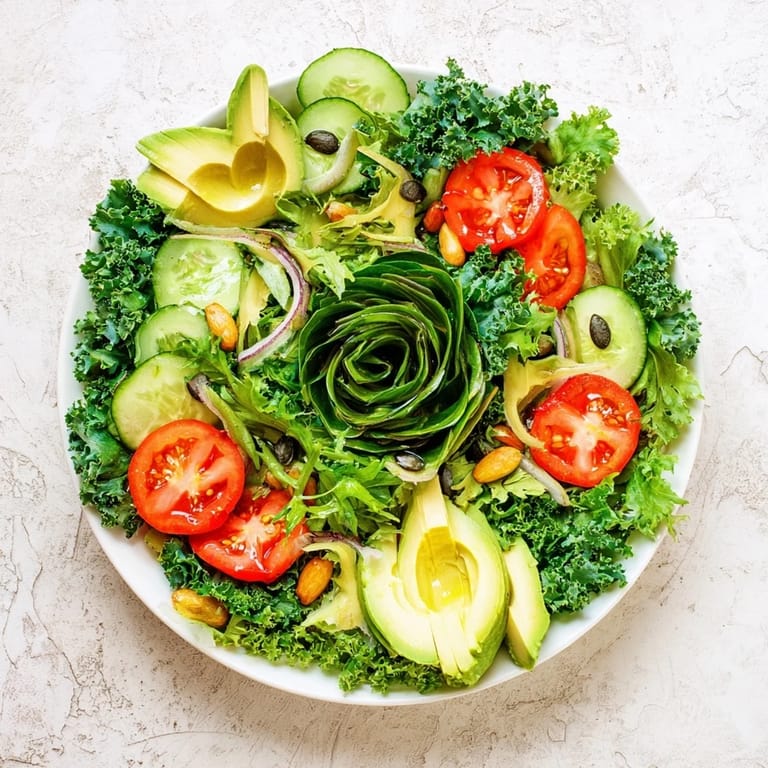
Save I discovered this salad while staring at a spiral shell on my kitchen counter, wondering why some things just look right. That afternoon, I started arranging vegetables like I was solving a visual puzzle, and halfway through realized I was recreating the Golden Ratio without meaning to. My dinner guest that night spent more time photographing the plate than eating it, which should have annoyed me but somehow didn't. There's something magical about food that's as beautiful to look at as it is to taste.
I made this for my sister's art show opening and watched people pick at it hesitantly, as if something this beautiful might break. Then someone bit into the pomegranate seeds and the whole mood shifted—suddenly everyone was reaching for the salad, unable to stop themselves. That's when I realized that food arranged with intention doesn't just feed people; it connects with something deeper in them.
Ingredients
- Mixed baby greens: Arugula, spinach, and watercress create a peppery base that doesn't wilt under dressing and holds its shape on the platter.
- Cherry tomatoes: Halved to show off their glossy insides; they're both decorative and bursts of actual flavor.
- Ripe avocado: The creaminess here isn't just texture—it's what makes the salad feel complete rather than just virtuous.
- Yellow bell pepper: Thinly sliced for delicate strips that catch light and add sweetness without heaviness.
- Cucumber: Thin slices stay crisp and provide a cooling counterpoint to the richer elements.
- Pomegranate seeds: These are the jewels—they add tartness, crunch, and visual drama in equal measure.
- Feta cheese: Crumbled roughly so it nestles into pockets of greens and doesn't turn into a solid lump.
- Toasted pine nuts: Toast them yourself just before assembling; that warmth brings out their buttery sweetness and keeps them from tasting stale.
- Extra-virgin olive oil: Use something you'd actually taste on its own—this is not the place for mediocre oil.
- Fresh lemon juice: Squeezed moments before serving so it hasn't oxidized into something flat.
- Honey: A small amount balances acidity without making this a sweet salad.
- Dijon mustard: The emulsifier that makes the dressing come together instead of separating.
Tired of Takeout? 🥡
Get 10 meals you can make faster than delivery arrives. Seriously.
One email. No spam. Unsubscribe anytime.
Instructions
- Build your base:
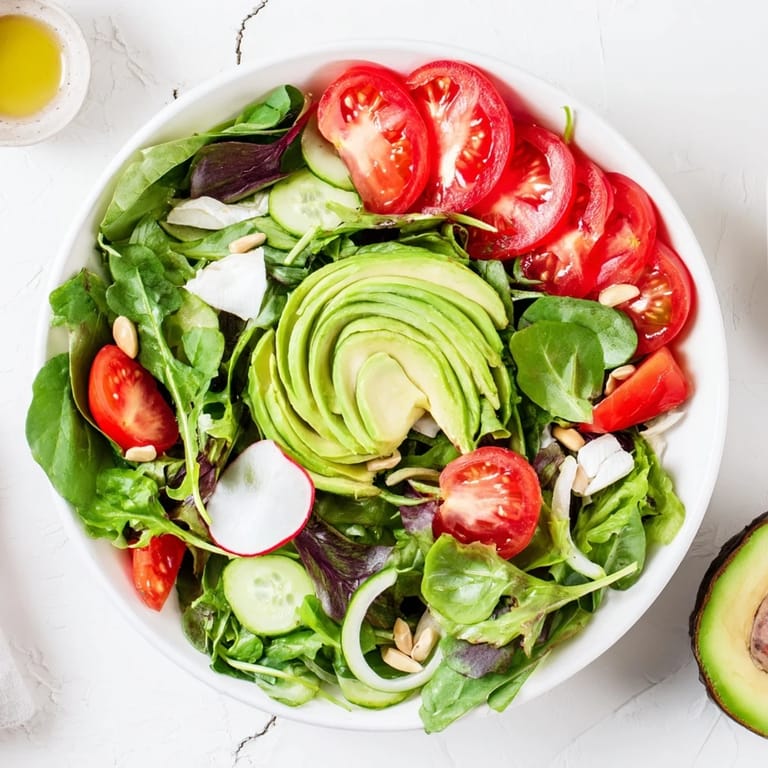
- Spread the mixed greens across your platter in a gentle spiral or sweeping curve, leaving the center slightly fuller than the edges. This isn't about perfect geometry; it's about creating movement with your hands.
- Place the focal point:
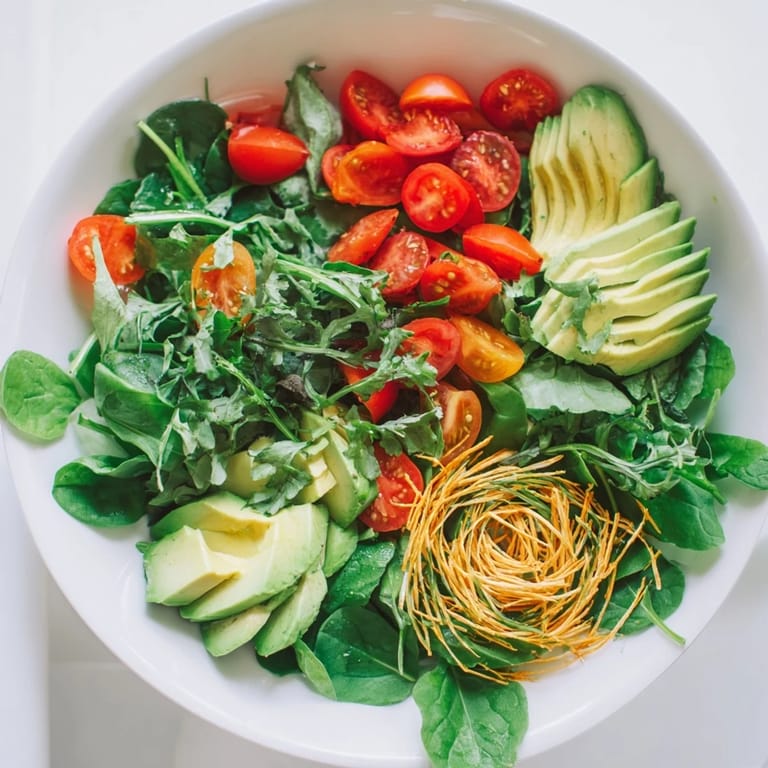
- Start arranging your vegetables from the center outward, positioning your largest or most colorful elements (avocado slices, tomato halves) at about the two-thirds mark along your spiral. Think of it like drawing the viewer's eye on a journey across the plate.
- Layer in rhythm:
- Alternate textures and colors as you work outward—a stripe of cucumber, then bell pepper, then pomegranate seeds, so nothing dominates a single section. The pattern should feel intuitive, not rigid.
- Scatter the finishing touches:
- Sprinkle crumbled feta and warm pine nuts over the arrangement, with a gentle emphasis toward the center where your arrangement began. These catch the light and add dimension.
- Make your dressing:
- Whisk together olive oil, lemon juice, honey, and Dijon mustard in a small bowl until it emulsifies and thickens slightly. Taste it before adding salt and pepper—the feta will contribute saltiness, so go lighter than you think you should.
- Finish and serve:
- Drizzle the dressing in thin streams across the salad just before serving, moving your hand to distribute it evenly. Serve immediately so the colors stay vivid and the greens stay crisp.
 Save
Save I served this to someone who claimed they didn't eat salad, and they came back for seconds. Sometimes a dish breaks through people's resistance simply because someone cared enough to make it beautiful, and beauty has a way of changing minds.
Why the Golden Ratio Works Here
The truth is, humans are drawn to certain proportions without knowing why—it's wired into us. When you arrange a salad with that principle in mind, even loosely, it feels balanced before your brain can explain why. The focal point creates a natural entry point for the eye, and then the ingredients flow outward like a story that has a beginning, middle, and end.
Playing with Variations
This salad is a framework more than a recipe. I've made versions with grilled chicken spiraled into the center, others with roasted beets instead of tomatoes when I wanted earthiness over brightness. A friend swapped the pine nuts for crispy chickpeas and suddenly it had protein and crunch simultaneously. The arrangement method works for almost any combination of vegetables you love, so don't treat the ingredient list as gospel.
Making It Your Own
The joy of this salad is that it gives you permission to be both practical and artistic at the same time. You're not sacrificing flavor for appearance, and you're not making yourself crazy with unnecessary steps. It's just you, a platter, and vegetables arranged with intention.
- If you want added protein, grill chicken strips and lay them like spokes from the center, or toss in warm roasted chickpeas.
- Substitute goat cheese for the feta if you want something tangier and creamier, or skip cheese entirely and add a soft-boiled egg instead.
- Serve this with crisp white wine—Sauvignon Blanc or a light sparkling wine both let the salad's freshness shine without competing.
 Save
Save This salad taught me that dinner doesn't have to be complicated to be memorable—sometimes it just needs to be arranged with care. Serve it when you want people to feel celebrated.
Cooking Questions & Answers
- → What is the inspiration behind the salad arrangement?
The salad is arranged following the golden ratio, creating a natural spiral that enhances both visual appeal and ingredient distribution.
- → Can I substitute feta cheese with another cheese?
Yes, goat cheese can be used as a creamy alternative while maintaining a similar tangy flavor.
- → How should the dressing be prepared and applied?
Whisk olive oil, lemon juice, honey, Dijon mustard, salt, and pepper until emulsified, then drizzle evenly over the salad just before serving.
- → What nuts are included and can they be replaced?
Toasted pine nuts provide a crunchy texture; you can substitute with walnuts or almonds if preferred.
- → Is this salad suitable for gluten-free diets?
Yes, the ingredients are naturally gluten-free, making it suitable for gluten-free dietary needs.
- → How can I add protein to this dish?
Adding grilled chicken or chickpeas enhances protein content while preserving the salad's freshness.