 Save
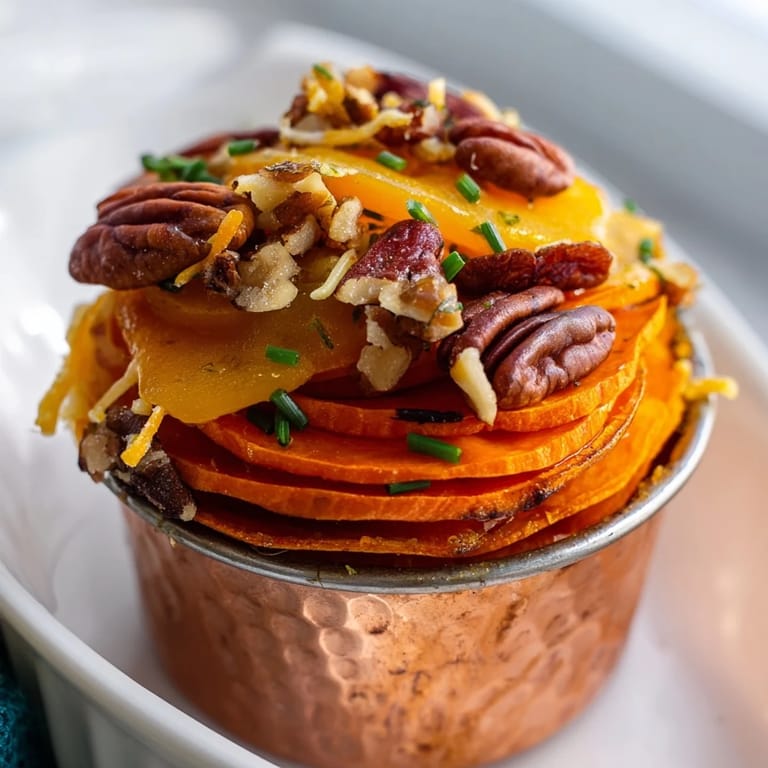
Save I discovered Copper Penny Warmth on a crisp October afternoon when I was hunting for something that felt both sophisticated and deeply comforting. My grandmother's copper ramekins had been sitting in my cabinet, untouched for years, and I kept thinking about how they deserved better than dust. That day, I found them again—and this dish was the reason. Layering sweet potatoes, carrots, and apricots felt like arranging autumn itself into something you could hold in your hands.
I made this for a dinner party last November, and I watched my friends lean in the moment those copper ramekins hit the table. Someone asked if I'd learned to cook professionally. I hadn't, of course—I'd just learned that sometimes the most impressive dishes are the ones where good ingredients do the talking, and copper catches the candlelight just right.
Ingredients
- Sweet potatoes: Two medium ones, peeled and thinly sliced. They're the foundation here, and slicing them thin is the secret—they cook through while staying tender, and they bridge that beautiful gap between the earthiness of roasted vegetables and something almost dessert-like.
- Carrots: Two large ones, peeled and thinly sliced to match the sweet potatoes. They add a subtle sweetness and stay firm enough to layer beautifully without falling apart.
- Olive oil: Two tablespoons. Use something you'd actually taste if you drizzled it on bread—the quality matters here.
- Smoked paprika: One teaspoon. This is where the warmth lives. It adds depth without heat, making you taste autumn in every layer.
- Sea salt: Half a teaspoon. Fine crystals dissolve evenly and don't overpower.
- Black pepper: A quarter teaspoon. Just enough to whisper.
- Dried apricots: Half a cup, sliced. Their tartness cuts through the richness beautifully, and they plump slightly as they bake.
- Pecan halves: Half a cup, lightly toasted. Toast them yourself if you can—thirty seconds in a dry pan makes them taste like they're worth something.
- Aged cheddar cheese: One cup, coarsely grated. Aged is non-negotiable here. Sharp, with crystalline notes, it doesn't become gluey when it melts.
- Fresh chives: Two tablespoons, finely chopped, for garnish. Optional, but they're the punctuation mark that says you care.
Tired of Takeout? 🥡
Get 10 meals you can make faster than delivery arrives. Seriously.
One email. No spam. Unsubscribe anytime.
Instructions
- Heat your oven and prepare your ramekins:
- Set the oven to 400°F. Arrange your four copper ramekins or small baking dishes on a baking sheet—this makes them easier to move around later, and the copper will catch the heat beautifully.
- Coat the vegetables in warmth:
- In a large bowl, toss the thin-sliced sweet potatoes and carrots with olive oil, smoked paprika, salt, and pepper. Use your hands if you want to—really make sure every slice is kissed with that golden spice. This is when the kitchen starts to smell like something good is happening.
- Build your layers like you mean it:
- This is the meditative part. In each ramekin, start arranging slices of sweet potato and carrot in overlapping, interlocking rows—think of roof shingles, or scales, or anything that fits together. Between the vegetable layers, tuck in slivers of dried apricot and a sprinkle of toasted pecans. Keep going until the ramekin is full and beautiful. You're not just cooking here; you're composing something.
- Let the oven do its gentle work:
- Cover each ramekin loosely with aluminum foil—loose enough that steam can escape, but enough to keep things moist. Slide them into the oven for 20 minutes. The vegetables will soften, the apricots will warm through, and the whole thing will start to smell like cinnamon and roasting root vegetables.
- Finish with gold:
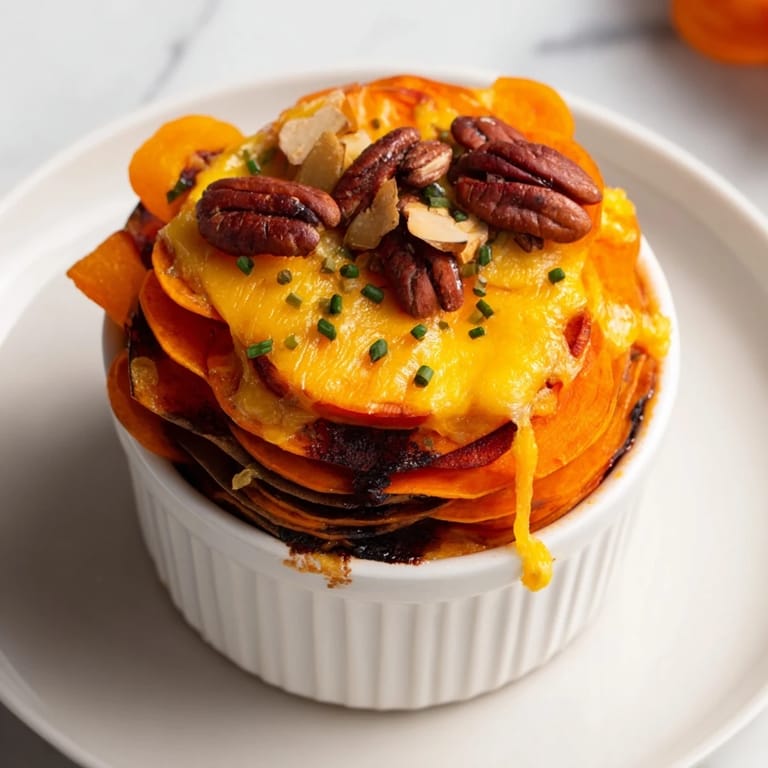
- Remove the foil, scatter the coarsely grated aged cheddar generously over each ramekin, and return them to the oven for exactly five more minutes. You're looking for the cheese to melt and turn a deeper golden color at the edges—that's when the umami deepens and everything comes together.
- Rest, garnish, and serve:
- Let each ramekin cool for just a moment—long enough that you won't burn your mouth but while everything is still steaming. Scatter fresh chives on top if you're using them. Serve directly in the copper ramekins. This is the moment someone will say it's too beautiful to eat. They'll eat it anyway, and they'll ask for the recipe.
 Save
Save There was a moment during one of my dinner parties when everyone had stopped talking and was just eating, and the only sound was the gentle clink of spoons against copper and little sighs of contentment. That's when I knew this dish had become more than food—it was an invitation to slow down and pay attention.
The Art of Layering
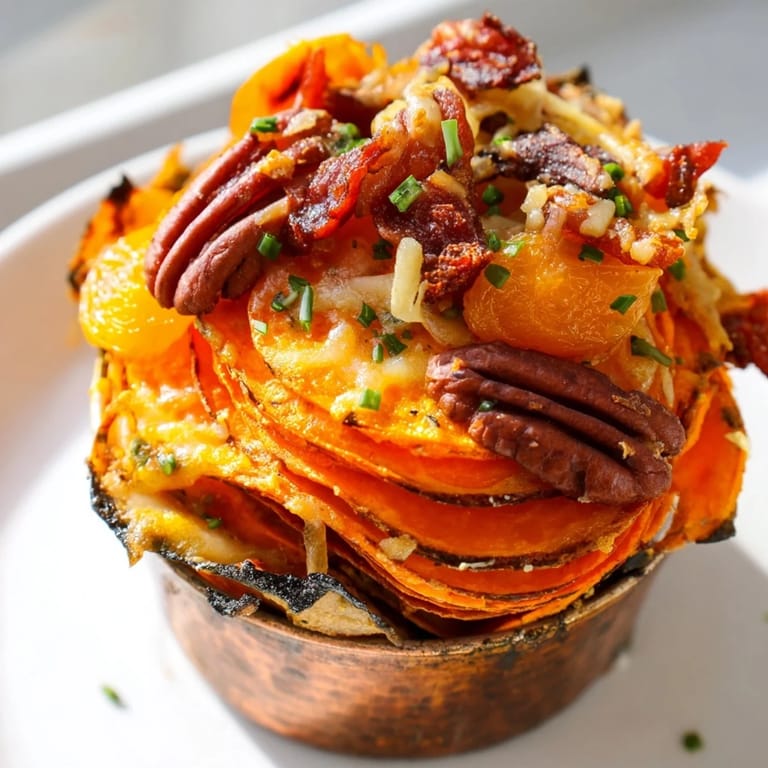
Layering isn't about perfection; it's about intention. When you arrange vegetables in overlapping rows, you're creating visual rhythm and ensuring that every bite has vegetables, fruit, and cheese. The apricots nestle into the gaps, the pecans add little pockets of richness, and the whole thing becomes architectural. In the oven, these layers stay distinct enough to appreciate, but they also meld together just slightly, so every spoonful tastes like they were always meant to be together.
Pairing and Serving Moments
This dish wants to be shared. It looks stunning as an appetizer when you want people to pause and appreciate before the meal truly begins, but it's equally at home as a substantial side dish beside roasted chicken or fish. The copper ramekins keep the food warm longer than a regular plate, and there's something about eating from a ramekin—cradled in copper, with the residual heat keeping everything at that perfect temperature—that makes the whole experience feel more intentional. A medium-bodied Chardonnay or a spiced cider beside it completes the autumn mood, if you're that way inclined.
Variations Worth Exploring
This recipe is forgiving in the best way. The framework—roasted vegetables, dried fruit, nuts, aged cheese—is flexible enough to shift with what you have or what you're craving. I've made it with dried figs instead of apricots on nights when figs felt right, and with dates when I wanted something deeper and more molasses-like. For a vegan version, plant-based cheddar that melts properly works beautifully, though I'd taste and adjust the salt slightly since some brands run mild. The vegetables themselves can shift—parsnips instead of carrots, regular potatoes if you want less sweetness—but keep the thin-slicing principle and the baking time holds.
- Try dried figs or dates if you want a richer, darker fruit flavor that leans more decadent
- Substitute walnuts or hazelnuts for pecans if that's what your pantry holds or what you prefer
- Add a thin layer of shallots between the vegetables for savory depth, if you're feeling adventurous
 Save
Save Copper Penny Warmth taught me that a truly memorable dish doesn't need to be complicated—it just needs vegetables worth eating, flavors that make sense together, and someone willing to take a moment to layer it with care. I think that's the real recipe.
Cooking Questions & Answers
- → What vegetables are used in Copper Penny Warmth?
Thinly sliced sweet potatoes and large carrots form the vegetable base, seasoned with olive oil, smoked paprika, salt, and pepper.
- → Can dried apricots be substituted?
Yes, dried figs or dates can replace apricots for a different sweet nuance without altering the dish's balance.
- → How is the cheese incorporated in the dish?
Grated aged cheddar is added on top after initial baking, then melted to a golden finish during the final oven time.
- → What type of nuts are included?
Lightly toasted pecan halves are layered within for texture and a rich, nutty flavor contrast.
- → Is this suitable for special diets?
It fits vegetarian and gluten-free diets if gluten-free cheese is used, and can be made vegan with plant-based cheddar.
- → How should the dish be served?
Serve warm directly in the copper ramekins, optionally garnished with fresh chopped chives for brightness.