 Save
Save I discovered this cake on a gray afternoon when my neighbor appeared at the door with a jar of candied oranges she'd made weeks prior, wondering if I could turn them into something worthwhile. The kitchen smelled like sugar and citrus as I worked, and by the time that golden cake emerged from the oven, we were both convinced we'd stumbled onto something special. There's something about olive oil cakes that feels both humble and elegant at once, and when you add those jewel-toned candied oranges, it transforms into the kind of dessert that makes people pause mid-conversation.
I made this last spring for my sister's book club gathering, and I'll never forget how she snuck into the kitchen halfway through the afternoon to steal another slice. She said it tasted like sunshine and butter, which maybe sounds poetic but genuinely captures how bright and warm this cake feels. That moment made me realize this wasn't just another dessert recipe—it was something I'd want to make again and again.
Ingredients
- Medium oranges (2): Slice them thin enough that light passes through, which tells you they're ready to candy properly; thinner slices mean better texture.
- Granulated sugar (1 cup for candying): This becomes the syrup that transforms the oranges, so don't skimp on quality here.
- Water (1 cup): Room temperature works best for dissolving the sugar evenly without shocking the fruit.
- All-purpose flour (2 cups): Measure by spooning into your measuring cup rather than scooping directly, which prevents overworking the batter.
- Baking powder (1 1/2 teaspoons): Make sure it's fresh; old leavening agents won't give you the gentle rise this cake needs.
- Baking soda (1/2 teaspoon): This works with the acidity of the citrus to create a tender crumb.
- Salt (1/2 teaspoon): Balances all that sweetness and makes the citrus flavors pop.
- Granulated sugar (1 cup for cake): Rubbing this with orange zest releases the oils before you even start mixing.
- Orange zest (from 1 orange): Use a microplane for the finest texture, and use it fresh for the most fragrant results.
- Eggs (3 large, room temperature): Cold eggs won't incorporate smoothly into the oil and sugar, so take them out about thirty minutes beforehand.
- Extra virgin olive oil (3/4 cup): This is the backbone of the cake, so choose one you'd actually taste in a salad; fruity, peppery varieties shine here.
- Whole milk (3/4 cup, room temperature): Like the eggs, cold milk will seize up slightly when it meets the warm mixture.
- Vanilla extract (1 teaspoon): A simple ingredient that rounds out all those bright citrus notes.
- Powdered sugar (1 cup): Sift it even if the recipe doesn't explicitly ask; lumps in the glaze are genuinely noticeable.
- Fresh orange juice (2–3 tablespoons): Use juice you've freshly squeezed if possible; bottled juice tastes flat by comparison.
- Lemon juice (1 tablespoon): This adds a subtle tartness that prevents the glaze from tasting one-dimensional.
Tired of Takeout? 🥡
Get 10 meals you can make faster than delivery arrives. Seriously.
One email. No spam. Unsubscribe anytime.
Instructions
- Candy the oranges:
- Combine sugar and water in a large skillet and bring to a gentle simmer, stirring until the sugar dissolves completely. Lay your orange slices in a single layer and let them simmer for 20–25 minutes, flipping halfway through, until they turn translucent and the white pith becomes tender. Transfer each slice to parchment paper with care, as they're delicate at this stage.
- Prepare your stage:
- Heat your oven to 350°F (175°C) and grease a 9-inch round cake pan thoroughly, then line it with parchment paper for easy removal later. This seems like extra work, but it's the difference between a cake that releases cleanly and one that sticks.
- Build your dry mixture:
- Whisk flour, baking powder, baking soda, and salt together in a bowl, making sure everything is evenly distributed. Set this aside—you'll come back to it.
- Create your base:
- In a large mixing bowl, combine sugar and orange zest and rub them together with your fingers for a minute or two until the zest releases its aromatic oils and the mixture smells bright and alive. Whisk in your room-temperature eggs, continuing until the mixture turns pale and thick, which usually takes about three minutes of constant whisking.
- Emulsify gently:
- Slowly stream in your olive oil while whisking constantly; this gradual incorporation prevents the mixture from breaking. It should remain smooth and homogeneous throughout.
- Alternate wet and dry:
- Add half the dry mixture to the wet ingredients, followed by half the milk and the vanilla, then repeat with the remaining dry mixture and milk. Fold gently until just combined; overmixing develops gluten and makes the cake tough.
- Layer and bake:
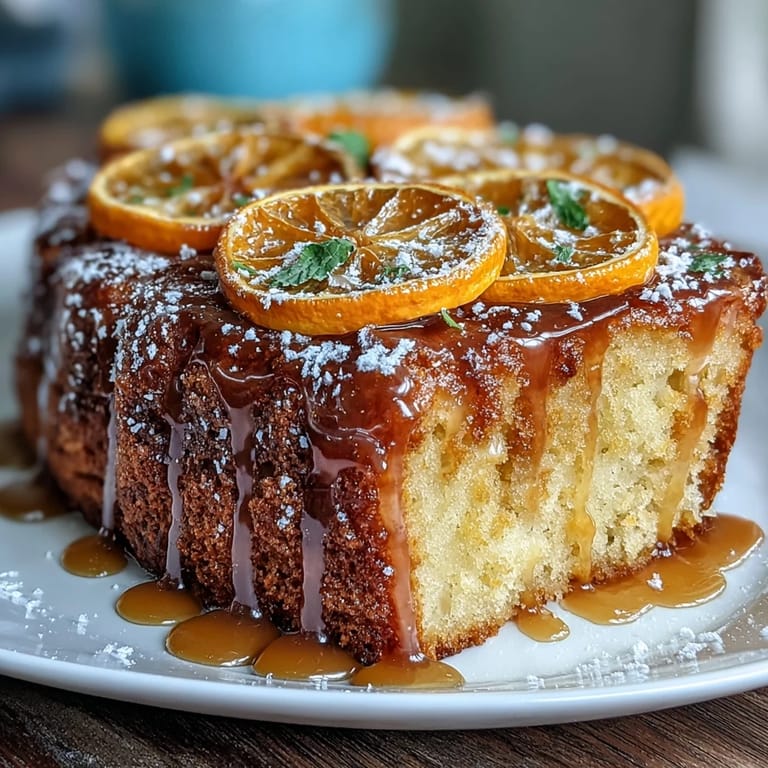
- Arrange your cooled candied orange slices in a single layer on the bottom of the prepared pan, then pour the batter over them carefully and smooth the top. Bake for 45–50 minutes until a toothpick inserted in the center comes out clean or with just a few moist crumbs clinging to it.
- Cool with patience:
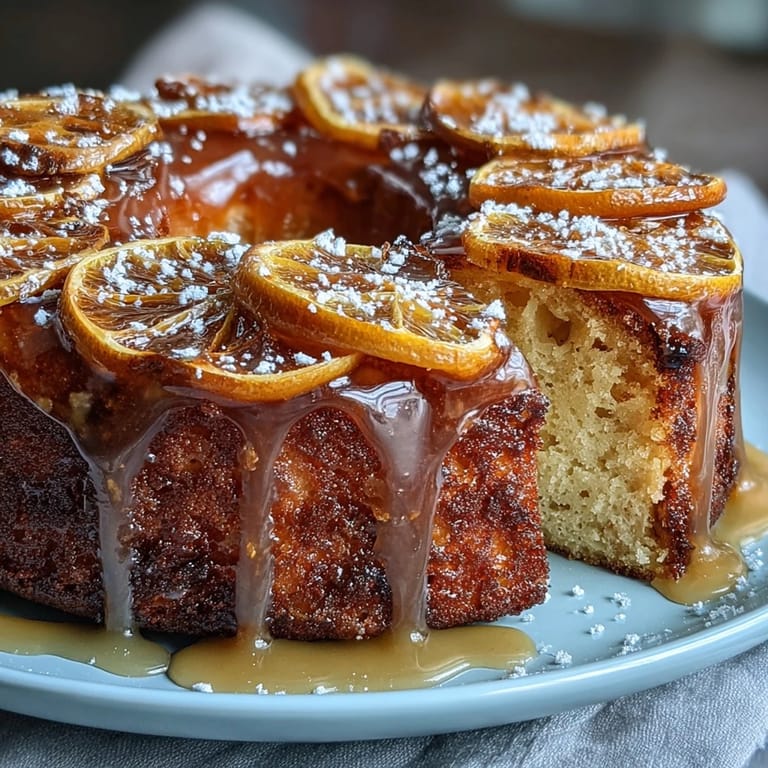
- Let the cake rest in its pan for 15 minutes, then run a knife around the edges and invert it onto a wire rack. Allow it to cool completely before glazing; this takes about an hour, but rushing this step will cause the glaze to melt off.
- Glaze and finish:
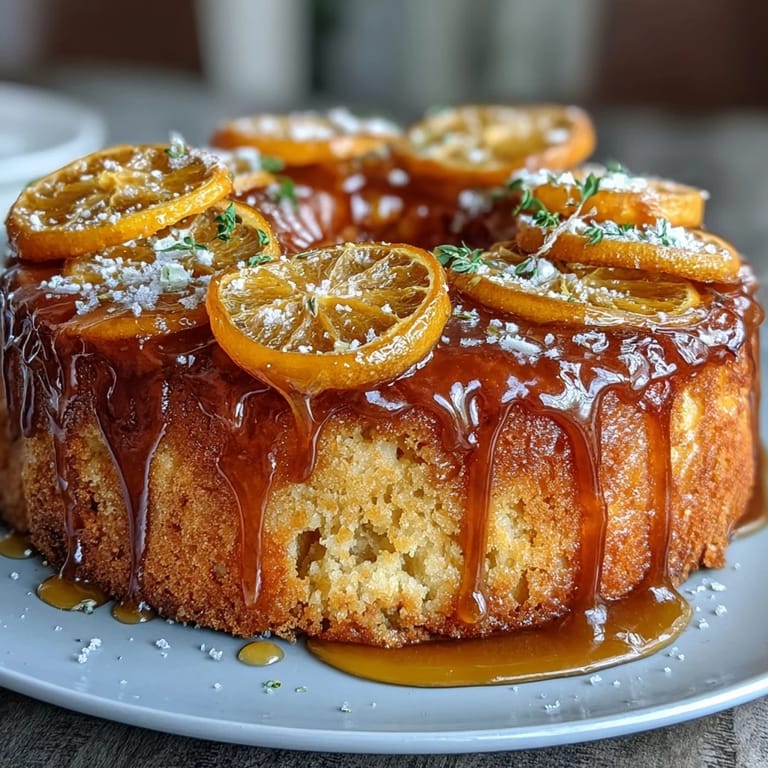
- Whisk together powdered sugar, fresh orange juice, and lemon juice until smooth, then drizzle over the cooled cake. Decorate with reserved candied orange slices if you'd like a finished look.
 Save
Save What made this recipe truly stick with me was when my daughter asked if we could make it again the following week, not because she had a special occasion, but just because she wanted it. In that moment, I understood that the best recipes aren't the ones that impress people—they're the ones people actually want to eat again.
The Magic of Candied Citrus
Making your own candied oranges is a small act that changes everything about this cake. The kitchen fills with a clean, syrupy sweetness as they cook, and you'll find yourself peering into the skillet frequently just to watch them transform. I've learned that this step can be done days in advance, which means you can break the cake-making process into smaller, less overwhelming chunks.
Why Olive Oil Matters Here
Most cakes rely on butter for their richness, but olive oil creates a completely different texture—more delicate, almost tender in a way that butter alone can't achieve. The fruitiness of good olive oil also plays beautifully with the citrus, creating this sophisticated flavor that seems simple until you taste it. I initially worried people might find it too different, but everyone immediately understood that the oil was intentional and right.
Variations and Pairings
This cake welcomes gentle experimentation without losing its essential character. I've tried it with blood oranges for a deeper color and earthier taste, and once substituted Greek yogurt for half the milk to create a slightly tangier crumb that felt more sophisticated. The brightness of Earl Grey tea is a natural companion, though a glass of Moscato d'Asti transforms it into something celebratory.
- Blood oranges create a jewel-toned presentation and more complex flavor profile.
- Storing leftovers in an airtight container keeps them fresh for up to three days, developing even more flavor as they sit.
- A dusting of fleur de sel on top of the glaze adds an unexpected savory note that makes people pause and ask what they're tasting.
 Save
Save This cake has become my answer when someone asks what I like to bake, because it feels both special and genuine. There's honesty in a cake studded with fruit you've candied yourself, glazed simply, and served without pretense.
Cooking Questions & Answers
- → How do I make candied orange slices?
Simmer thinly sliced oranges in a mixture of sugar and water until translucent and tender, then let them cool on parchment paper before using.
- → Can I use other citrus fruits in the glaze?
Yes, lemon or lime juice can be used in the glaze to add a fresh, tangy flavor that complements the orange nicely.
- → What type of olive oil is best for this cake?
Extra virgin olive oil is preferred for its rich flavor and aroma, which enhances the cake's moistness and taste.
- → How should I store the cake after baking?
Store the cake airtight at room temperature for up to 3 days to maintain moisture and freshness.
- → Can I substitute milk with another ingredient?
Greek yogurt can be used instead of milk for a tangier crumb and slightly denser texture.