 Save
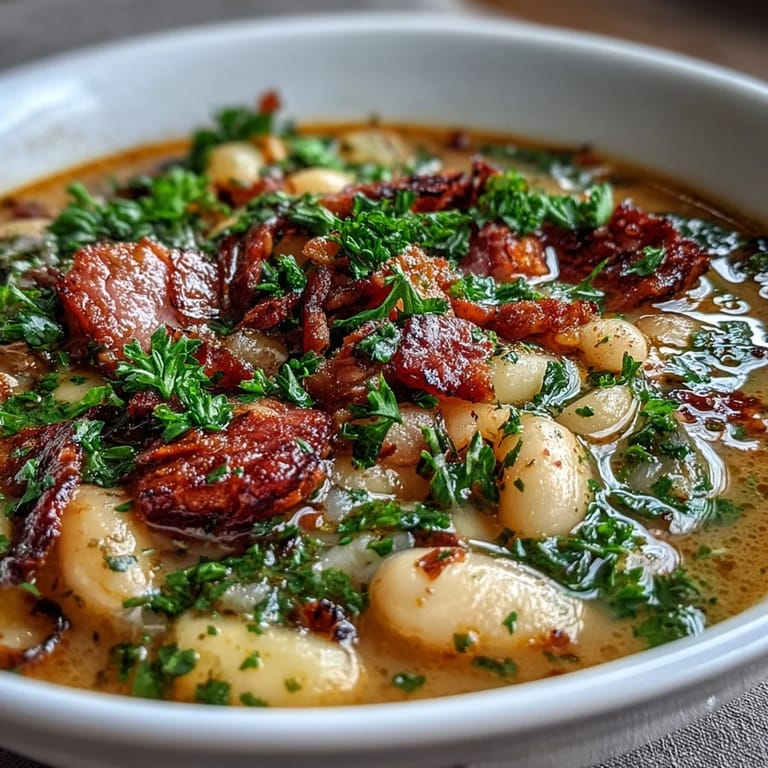
Save My neighbor Maria showed up at my door one October afternoon with a pot of this soup still steaming, saying she'd made too much and couldn't bear to see it go to waste. One spoonful and I understood why she'd been so insistent about leaving it behind—the broth had absorbed every ounce of smoky ham richness, and the potatoes had softened into creamy little clouds. I spent that evening recreating it from memory, adjusting here and there, until I finally got it right.
I made this for my sister when she was going through a rough patch, and she sat at my kitchen table for hours while it bubbled away on the stove. Something about the ritual of eating warm soup from a big bowl seemed to ease the tension in her shoulders. She's asked for it every winter since, and now it's become our thing—her arriving in November and me already having the ingredients ready.
Ingredients
- Smoked ham, diced (250 g): Choose a good quality ham with visible smoke ring if you can find it—this is where all your flavor comes from, so don't skimp or grab the ultra-thin stuff.
- Cooked white beans (400 g): Canned and drained work perfectly fine and save you hours, but if you're feeling ambitious, cook dried beans the night before and your kitchen will smell incredible.
- Potatoes (3 medium), diced: Cut them into roughly half-inch cubes so they cook evenly and get slightly creamy at the edges without turning to mush.
- Carrots (2 medium), diced: The sweetness balances the saltiness of the ham beautifully, so don't skip them or reduce the amount.
- Celery stalks (2), diced: This is the quiet flavor builder that makes people ask what your secret ingredient is.
- Onion (1 large), finely chopped: The finer you chop it, the faster it softens and the more evenly it distributes throughout the pot.
- Garlic (2 cloves), minced: Fresh garlic is non-negotiable here—jarred just doesn't have the same bite.
- Low-sodium chicken or vegetable broth (1.5 liters): Taste your broth before you buy it if possible; some brands are so salty the soup becomes inedible.
- Bay leaves (2): These add a subtle earthiness that rounds out all the other flavors, even though you can't taste them directly.
- Dried thyme (1 tsp): Don't use fresh thyme here—it turns black and bitter during the long simmer, so dried is actually the right choice.
- Freshly ground black pepper (½ tsp): Grind it right before you need it if you have a mill, but honestly, pre-ground works fine for soup.
- Salt, to taste: Add it gradually and taste as you go—the ham and broth already contribute plenty, and you can always add more but you can't take it back.
- Olive oil (2 tbsp): The quality doesn't matter much here since it's just for sautéing the vegetables, so use whatever you have.
- Fresh parsley, chopped (2 tbsp): This is optional but adds a fresh green note right before eating that lifts the whole dish, so I almost always include it.
Tired of Takeout? 🥡
Get 10 meals you can make faster than delivery arrives. Seriously.
One email. No spam. Unsubscribe anytime.
Instructions
- Build Your Flavor Base:
- Heat the olive oil in a large pot over medium heat and add your onion, carrots, and celery all at once. Stir them around for about five minutes until they start to soften and release their own flavors into the oil—you'll know it's ready when the onion begins to turn translucent at the edges.
- Wake Up the Garlic:
- Add your minced garlic and let it cook for just one minute, stirring constantly so it doesn't brown or turn bitter. The aroma that blooms up from the pot at this moment is your signal that you're on the right track.
- Introduce the Smoked Ham:
- Toss in the diced ham and cook it for three to four minutes, letting it brown slightly around the edges. This is when you'll really smell the smoke, and it fills the kitchen with a savory promise of what's to come.
- Layer In Everything Else:
- Add your diced potatoes, drained beans, bay leaves, thyme, black pepper, and broth all at once and give it a good stir to combine. Don't worry about the beans falling apart—they're sturdy enough to handle the stirring.
- Let It Simmer:
- Bring the whole pot to a boil, then lower the heat to low and cover it with a lid. Let it bubble gently for about an hour, or until the potatoes are fork-tender and have started to release their starch into the broth, which will make it slightly thicker and silkier.
- Finish and Taste:
- Remove the bay leaves and taste a spoonful of broth. Add salt gradually and carefully, tasting between each addition—remember that the ham and broth have already salted the pot quite a bit.
- Serve with Grace:
- Ladle the soup into bowls and shower each one with fresh parsley if you have it. Serve it hot, ideally with a slice of crusty bread for soaking up every last drop of broth.
 Save
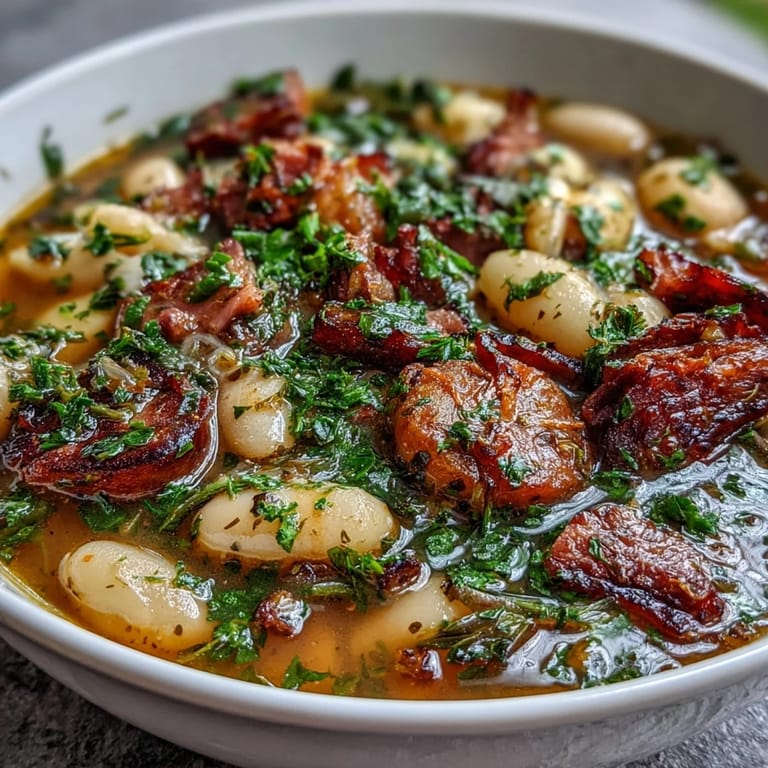
Save My son came home from college during his first winter break and asked if I was making the ham and bean soup—not just any soup, but specifically this one. Watching him eat three bowls back-to-back while telling me about his semester made me realize that food really is just love taking edible form. That's when this recipe stopped being something I made and became something that meant something.
Why This Soup Becomes a Tradition
There's something about the simplicity of this soup that makes it feel timeless. You're not fussing with complicated techniques or hunting for obscure ingredients—you're just letting quality ingredients talk to each other over heat and time. People return to recipes like this one because they work every single time, and they taste like someone who cares about you put thought into what you're eating.
Stretching Your Batch
I've learned that this recipe doubles beautifully if you're feeding a crowd or stocking your freezer for January mornings. The flavors actually improve when you make a bigger batch because the broth has more time to absorb everything around it. If you do freeze it, leave some room at the top of the container because the broth will expand slightly as it freezes, and defrost it overnight in the refrigerator rather than rushing it on the stove.
The Art of Knowing When It's Done
The real secret to this soup is understanding that the potatoes are your timer—once they're completely tender and almost falling apart, your soup is ready. Some people use a knife to test them, others just know by looking at how the broth has turned slightly creamy and thickened from the potato starch. The beans will never fall apart if they started out cooked, so you don't need to worry about them.
- If your soup seems too thin after simmering, mash a few beans against the side of the pot with a wooden spoon to release their starch and thicken it naturally.
- Taste the broth before serving, not just the vegetables, because sometimes the salt settles and the broth needs one final adjustment.
- Leftover soup tastes noticeably better the next day, so if you have time, make it a day ahead and reheat it gently on the stove.
 Save
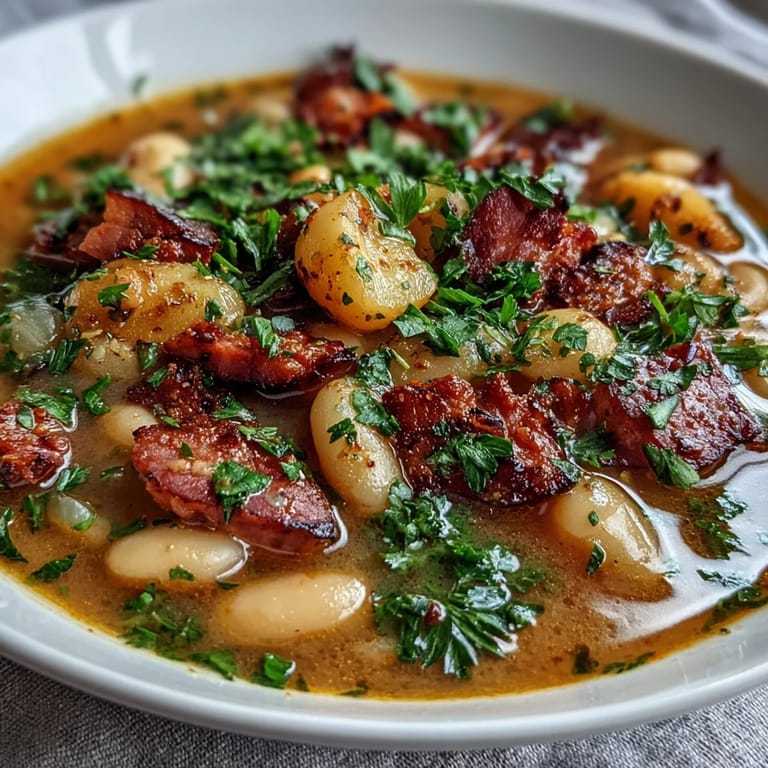
Save This soup has become my cold-weather comfort, my go-to for feeding people I care about, and my answer to 'what should I make?' on those days when you want something that feels both special and effortless. Make it once and it becomes yours too.
Cooking Questions & Answers
- → What type of beans work best for this soup?
White beans such as cannellini or navy beans tenderize well and absorb flavors nicely, making them ideal for this dish.
- → Can smoked ham be substituted?
Yes, smoked turkey or smoked sausage can be used to maintain a smoky and savory character with slight flavor variations.
- → How should the vegetables be prepared?
Onions, carrots, and celery are diced and softened in olive oil before adding garlic and ham to build a flavorful base.
- → What is the best way to enhance the soup’s richness?
Adding a ham bone during cooking enriches the broth with deeper smoky flavors; just remove it before serving.
- → How can leftovers be stored safely?
Leftovers should be refrigerated in a sealed container and consumed within three days to maintain freshness.
- → Is this dish gluten-free?
Yes, it naturally contains no gluten, but it's important to check labels on smoked ham and broth for hidden gluten ingredients.