 Save
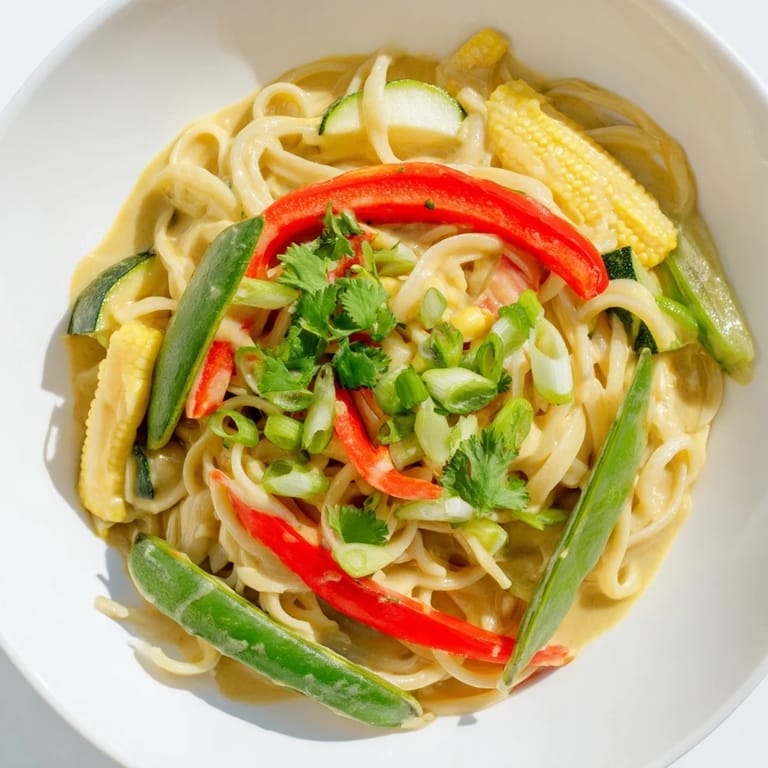
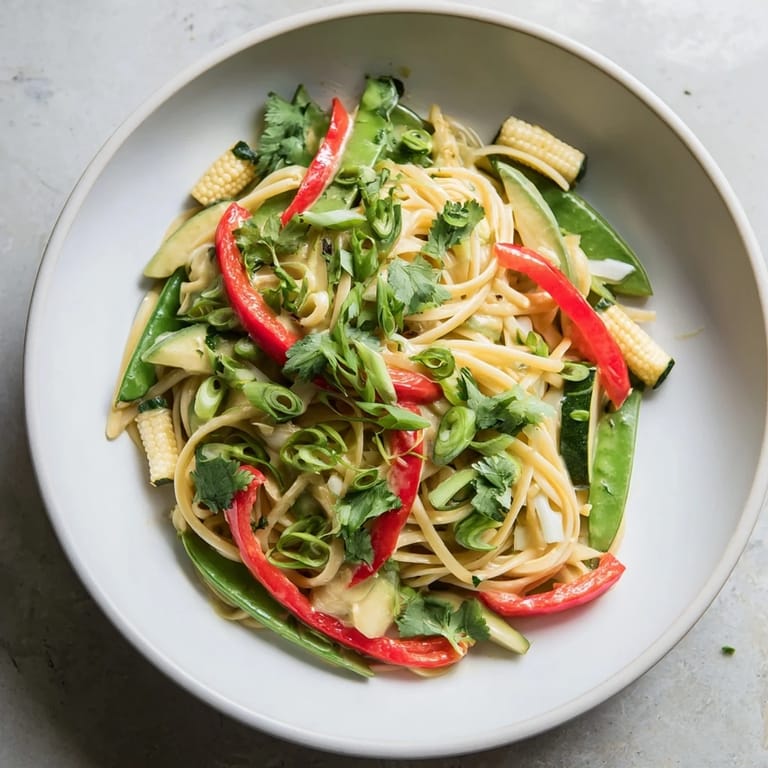
Save One rainy Tuesday, I was standing in front of my pantry staring at a jar of Thai green curry paste, wondering what I could do with it besides the usual stir-fry. Then it hit me—what if I treated pasta like a canvas for those bold, aromatic flavors? The result was this Thai Curry Pasta, a dish that bridges two cuisines in the most delicious way, with creamy coconut sauce clinging to tender noodles and vegetables that still have a satisfying snap to them.
I made this for a group of friends who were skeptical about fusion food, and I watched their faces change the moment they tasted it—that moment when someone stops mid-conversation because the flavors are just too interesting to ignore. The warmth of the curry, the freshness of the cilantro, and that unexpected kiss of lime made it clear that sometimes the best dishes are the ones that refuse to stay in one lane.
Ingredients
- Linguine or spaghetti (350 g): The thinner noodles work better here than thick ones—they let the curry sauce coat every strand without overwhelming the pasta's delicate texture.
- Red bell pepper: Sliced thin so it softens just enough to be tender while keeping a subtle crunch that contrasts beautifully with the creamy sauce.
- Zucchini: Halved and sliced releases a little water that actually helps lighten the sauce beautifully.
- Snap peas and baby corn: These stay crisp even with heat, giving you textural interest that makes each bite feel fresh.
- Spring onions: Added at the very end to keep their sharp, oniony flavor bright and vivid.
- Fresh cilantro: This is non-negotiable—it's what lifts the whole dish from heavy to harmonious.
- Thai green curry paste (3 tbsp): The heart of the dish; quality matters here, so grab a brand you trust or make your own if you're feeling ambitious.
- Coconut milk (400 ml full fat): Full fat is essential—light coconut milk will make the sauce taste thin and sad.
- Soy sauce: Just a tablespoon adds umami depth without making the sauce salty.
- Brown sugar: Balances the heat and salt with a gentle sweetness that makes everything taste more cohesive.
- Fresh ginger: Grated rather than minced gives you tiny flavor bursts throughout the sauce.
- Lime juice: This is your magic wand—a squeeze at the end transforms the sauce from good to unforgettable.
Tired of Takeout? 🥡
Get 10 meals you can make faster than delivery arrives. Seriously.
One email. No spam. Unsubscribe anytime.
Instructions
- Get your pasta water ready:
- Fill a large pot with water, salt it generously so it tastes like the sea, and bring it to a rolling boil. Once it's there, add your pasta and cook it exactly according to the package directions until it's al dente—tender but with a tiny resistance when you bite it.
- Build the curry foundation:
- While the pasta is cooking, heat oil in a large skillet or wok over medium heat, then add the curry paste and ginger. Let them hang out together for a minute or two, and the whole kitchen will smell like Thailand—that's when you know you're on the right track.
- Simmer the sauce:
- Pour in the coconut milk, soy sauce, and brown sugar, then let it bubble gently for a few minutes, stirring often so nothing sticks to the bottom. This is the time to let all those flavors get to know each other.
- Cook the vegetables just right:
- Add your bell pepper, zucchini, snap peas, and baby corn to the curry sauce and let them cook for 5 to 6 minutes until they're tender but still have some personality. They should yield to a fork but not fall apart.
- Marry pasta and sauce:
- Drain your pasta and add it to the skillet along with a splash of that reserved pasta water, then toss everything together so every strand is coated in that luscious sauce. Let it simmer for a couple of minutes so the pasta can absorb all those flavors.
- Finish with brightness:
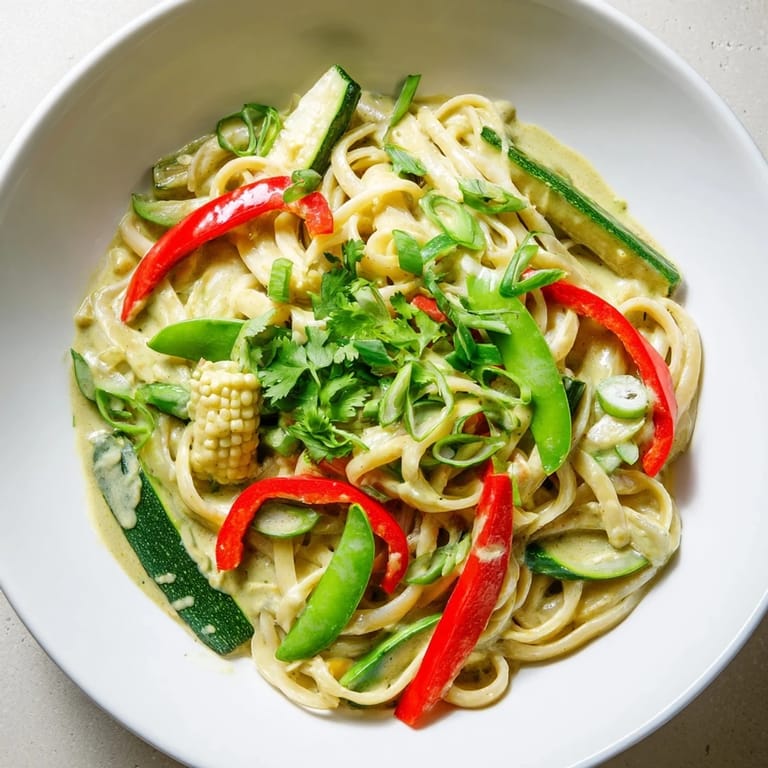
- Stir in the spring onions, lime juice, and cilantro, then taste it and adjust the seasoning if you think it needs it. This is your moment to make it perfect.
 Save
Save There's something magic about serving a bowl of this pasta to someone and watching them take that first forkful, eyes widening as they realize the flavors are familiar yet completely unexpected. This dish taught me that the best meals are the ones that surprise and comfort at the same time.
Making It Your Own
The beauty of this dish is how forgiving it is with substitutions. If you don't have snap peas, use broccoli or thin-sliced carrots; if baby corn feels too precious or hard to find, just skip it and add more zucchini or mushrooms instead. I've made versions with bok choy, asparagus, even roasted sweet potato, and each one tastes like its own unique dish. The curry paste and coconut milk are the anchors, but everything else is up for negotiation based on what's in your vegetable drawer and what's calling to you that day.
Protein Options and Vegan Notes
For meat eaters, thin slices of chicken breast or cooked shrimp add luxury without overshadowing the sauce. Tofu is equally welcome—press it first to remove excess water, then pan-fry it until it's golden before tossing it in with the vegetables. If you're keeping this vegan, just double-check that your curry paste doesn't contain shrimp paste or fish sauce, and you're golden. I've served this to vegans and omnivores at the same table with equal enthusiasm, which tells me something important: this dish doesn't feel like it's missing anything.
Serving and Pairing Ideas
Serve this straight from the skillet while it's still steaming, and scatter the optional garnishes over the top like you're adding the final brushstroke to a painting. A crisp Riesling or a light Pinot Grigio pairs beautifully because the acidity cuts through the coconut richness and echoes the lime. Some nights I'll add a squeeze of extra lime at the table and extra cilantro for people who want even more brightness, because not everyone's palate wants the same thing, and that's perfectly fine.
- Keep extra lime wedges on the table so people can adjust the tartness to their preference.
- Roasted cashews or peanuts sprinkled on top add textural contrast and a subtle earthiness.
- A small bowl of extra cilantro lets people who love it pile it on without restraint.
 Save
Save This Thai Curry Pasta lives on my table at least twice a month because it reminds me that the best cooking happens when you're willing to let two very different traditions dance together. It's the kind of dish that gets easier and more intuitive every time you make it.
Cooking Questions & Answers
- → What pasta works best for this dish?
Linguine or spaghetti are ideal as their texture pairs well with the creamy green curry sauce.
- → How can I adjust the spice level?
Modify the amount of green curry paste or add sliced red chili for extra heat to suit your taste preferences.
- → Can I make this dish vegan-friendly?
Yes, ensure the green curry paste contains no shrimp or fish sauce, and use plant-based ingredients throughout.
- → What vegetables complement the flavors here?
Bell pepper, zucchini, snap peas, baby corn, and spring onions provide a balance of sweetness and crunch.
- → How do I prevent the pasta from drying out?
Reserve some pasta water to add when tossing pasta with curry sauce, helping the sauce cling and maintain moisture.