 Save
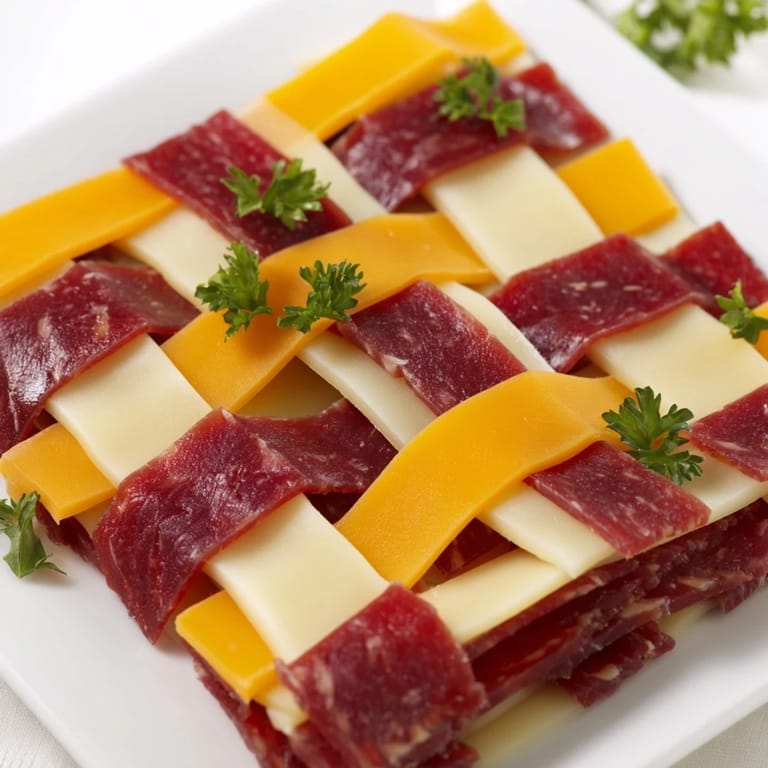
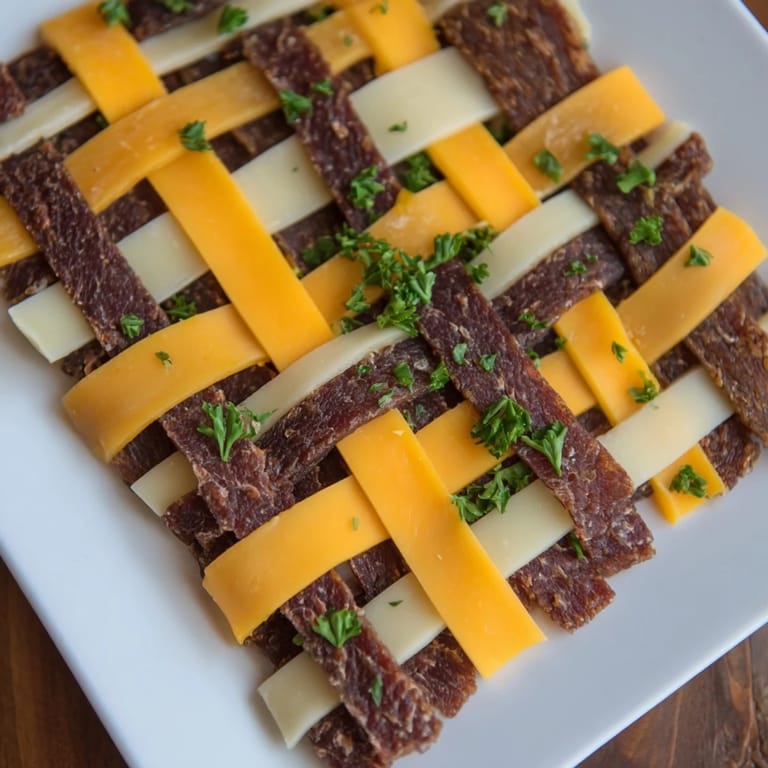
Save I discovered this appetizer by accident when I was arranging a charcuterie board and ran out of creative ideas, so I grabbed leftover jerky strips and some cheese slices to fill gaps. As I started laying them out, something clicked—the alternating colors and textures reminded me of a tartan pattern, and suddenly what was meant to be quick filler turned into the star of the board. My guests were so charmed by the playful presentation that I've made it for every gathering since, each time experimenting with different jerky and cheese combinations to create new plaid variations.
I'll never forget when my brother-in-law tasted this for the first time at a holiday potluck—he actually stopped mid-conversation to ask what the layered arrangement was made from. When I told him it was jerky and cheese he laughed, saying it looked too fancy to eat, but he came back for three more pieces anyway. That moment made me realize that sometimes the best appetizers aren't about complicated techniques, they're about turning humble ingredients into something that makes people pause and smile.
Ingredients
- Beef jerky: Choose a quality strip with good chew and flavor since it anchors the whole plaid pattern.
- Turkey jerky: Milder and a bit lighter in color, which creates nice visual contrast against the darker beef.
- Pork jerky: This one brings a subtle sweetness that balances the sharp cheese beautifully.
- Sharp cheddar cheese: The sharpness cuts through the saltiness of the jerky without getting lost.
- Monterey Jack cheese: Creamy and mild, it softens the intensity of the arrangement and feels luxurious between jerky strips.
- Smoked gouda: The real MVP—its smoky depth echoes the jerky flavors and ties everything together visually with its rich tan color.
- Fresh parsley or chives: A small handful of green adds freshness and keeps the whole thing from feeling one-note.
Tired of Takeout? 🥡
Get 10 meals you can make faster than delivery arrives. Seriously.
One email. No spam. Unsubscribe anytime.
Instructions
- Set up your canvas:
- Choose a cutting board or platter that's big enough to spread out comfortably without overcrowding. A slightly larger surface gives you room to work and makes the finished plaid feel more generous and open.
- Lay the foundation:
- Arrange half your jerky strips vertically in parallel lines, alternating between beef, turkey, and pork to create a natural color gradient. Step back and squint at it—you want the eye to see rhythm in the colors, not chaos.
- Begin the weave:
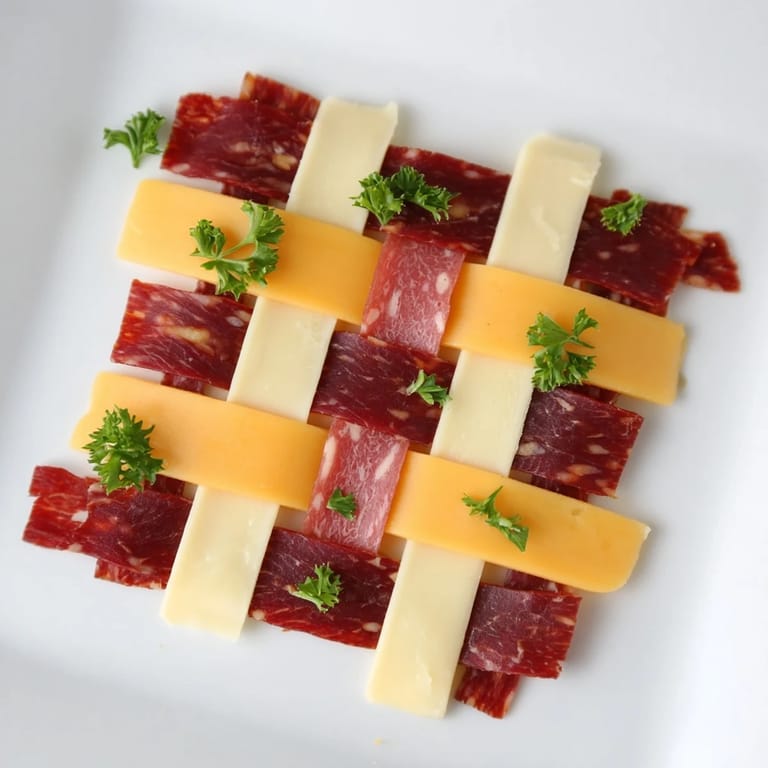
- Starting at one edge, take your first cheese strip and gently weave it horizontally over and under the jerky, alternating your cheese types as you go. This is where patience pays off—work slowly and let gravity help you rather than forcing anything.
- Build the pattern:
- Continue with the remaining jerky strips horizontally, then weave more cheese strips vertically, layering back and forth until you've used most of your ingredients. The plaid will start to reveal itself around the third or fourth weave.
- Set and shape:
- Once all strips are in place, gently press the entire arrangement with the flat of your hand to help everything grip together and hold its shape. This is crucial—you're coaxing the pieces to embrace each other.
- Refine the edges:
- If the borders look ragged, use a sharp knife to trim them clean and create straight lines. This transforms the whole thing from rustic to refined.
- Add the finishing touch:
- Scatter chopped parsley or chives across the top for a pop of green and a hint of fresh herb brightness. This garnish isn't just pretty—it adds a whisper of flavor that prevents the palate from getting jerky-fatigued.
- Serve with intention:
- Bring it to the table whole if you want the drama, or slice it into neat squares beforehand for easier eating. Either way, serve it fresh and watch people's faces light up when they realize what they're looking at.
 Save
Save I made this for a small dinner party last spring when I wanted something that felt special but not fussy, and one of my guests actually photographed it before eating it—which almost never happens with appetizers. Seeing her marvel at something I'd assembled with my own hands reminded me that hospitality isn't always about how much time you spend cooking; sometimes it's about the creativity and care you put into the presentation.
Choosing Your Jerky and Cheese Wisely
The beauty of this appetizer is that it's endlessly customizable, but that freedom can feel paralyzing if you're standing in the grocery store overwhelmed by options. I've learned to stick with jerky and cheese that have distinct personalities—pairing mild with bold ensures every bite feels intentional. Smoked varieties work especially well because they echo each other's flavors and create a more cohesive taste experience, rather than fighting for attention on your palate.
Making It Work for Different Diets
My vegetarian friend asked if I could make this without the jerky, and instead of saying no, I experimented with smoked tempeh strips and seasoned tofu, which turned out to be surprisingly wonderful. The key is finding plant-based alternatives with similar texture and umami depth so the weave still holds together structurally and the flavor profile stays balanced. If you're feeding a mixed group, you can even make two side-by-side arrangements—one traditional and one vegetarian—and people won't feel like anyone's eating a diminished version.
Timing and Storage Secrets
This is one of the rare appetizers you can prep almost completely ahead without sacrificing quality, which makes it perfect for when you're already juggling five other dishes. The trick is keeping everything covered and cool until the last moment, because exposed cheese starts sweating and jerky can dry out if it sits too long. I usually assemble it an hour before guests arrive, refrigerate it under plastic wrap, and pull it out about five minutes before serving so it's fresh without being cold enough to taste stiff.
- Cut your ingredients the morning of if you want to save time, but don't weave until a couple hours before serving.
- If you're making this ahead for travel, construct it on a sturdy board that fits in your refrigerator or cooler.
- Once sliced into squares, it keeps for about twenty minutes at room temperature before the edges start curling.
 Save
Save There's something genuinely delightful about serving food that makes people pause and look twice, especially when it tastes as good as it looks. This recipe proved to me that elegance doesn't require hours of cooking—sometimes it just requires seeing potential in simple ingredients and arranging them with intention.
Cooking Questions & Answers
- → How do you create the tartan plaid pattern?
Arrange jerky strips vertically and weave sliced cheeses horizontally over and under the jerky to mimic the classic tartan plaid design.
- → Can I substitute jerky with vegetarian options?
Yes, vegetarian jerky or smoked tofu strips can be used to maintain the pattern and texture while keeping it vegetarian-friendly.
- → What cheeses work best for this preparation?
Sharp cheddar, Monterey Jack, and smoked gouda provide contrasting flavors and colors that enhance the plaid pattern.
- → How should I store leftovers?
Cover tightly with plastic wrap and refrigerate for up to 2 hours to maintain freshness and texture.
- → What beverages pair well with this appetizer?
Dry white wine, light beer, or apple cider complement the savory and smoky flavors beautifully.