 Save
Save My neighbor brought over a sushi bake last summer, and I'll never forget how she pulled it straight from the oven—rice still steaming, nori shimmering, the smell of sesame and salmon filling her whole kitchen. I ate three servings that night and spent the next week trying to recreate it in my own kitchen. What I discovered was that this casserole is pure genius: all the flavors and textures of sushi, but assembled like a comfort food you can actually pull together on a weeknight. No fancy rolling skills required, just layers, a hot oven, and about forty-five minutes of your time.
I made this for my sister's dinner party and watched her face when she realized it was actually hot sushi, not cold. She went back for seconds and asked if I'd learned to make traditional rolls, which made me laugh because honestly, this version might be more forgiving and definitely more fun to assemble with friends crowded around the kitchen counter.
Ingredients
- Sushi rice: This is where the whole thing starts—use real sushi rice, not regular white rice. It has the right starch to hold everything together, and when you season it properly, it becomes the foundation that makes every bite feel intentional.
- Rice vinegar, sugar, and salt: These three ingredients are your seasoning trio; don't skip them or use regular vinegar. The sweetness and acidity are what transforms plain rice into something that actually tastes like sushi.
- Salmon fillet: Buy skinless if you can find it, and don't be afraid to ask the fishmonger for the thickest piece they have. It stays moist when baked and flakes beautifully into the cream cheese layer.
- Sesame oil: Use just a teaspoon—it's powerful stuff, and a little goes a long way to wake up the salmon's natural richness.
- Cream cheese and mayonnaise: The creamy layer is what separates this from cold sushi; Kewpie mayo has a richer, sweeter profile than regular mayo, and if you find it, it's worth the small splurge.
- Avocado: Slice it just before assembly so it doesn't brown, and don't squeeze it into the casserole—it needs to stay fresh and buttery on top.
- Nori sheets: Cut them into small squares rather than strips; they soften slightly during baking but stay crispy enough to give you that signature crunch.
- Sesame seeds and spring onions: These are your final flourish, the little details that make it taste like it came from somewhere special.
Tired of Takeout? 🥡
Get 10 meals you can make faster than delivery arrives. Seriously.
One email. No spam. Unsubscribe anytime.
Instructions
- Rinse and cook your rice the right way:
- Hold the sieve under cold running water and stir the rice with your fingers until the water runs completely clear—this removes excess starch and prevents gumminess. Bring it to a boil, then drop the heat immediately and let it steam gently under a lid for fifteen minutes, then another ten minutes sitting undisturbed; this patience is what gives you the texture you're after.
- Season the rice while it's warm:
- Mix your vinegar, sugar, and salt in a separate bowl first so they dissolve completely, then fold this mixture gently into the warm rice with a wooden spoon, fluffing as you go. You want every grain coated but not mushy—think light and airy, not sticky.
- Prepare your salmon:
- Pat the fillet dry with paper towels (this helps it brown better), brush it with soy sauce and sesame oil, and season with black pepper. Bake it at 400°F for twelve to fifteen minutes—it should flake easily with a fork but still feel slightly soft, not dried out.
- Build the creamy layer:
- Once your salmon is cool enough to handle, flake it into a bowl with the softened cream cheese, mayo, sriracha if you like heat, and lemon juice. Mix until smooth and spreadable, letting the warmth of the salmon warm the cream cheese slightly—this makes it easier to fold together evenly.
- Layer and bake again:
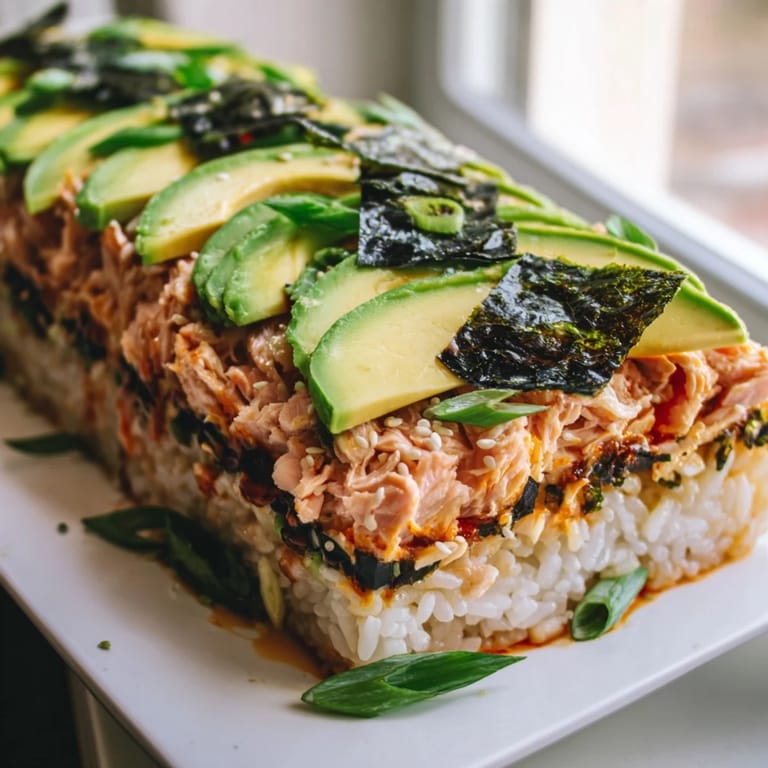
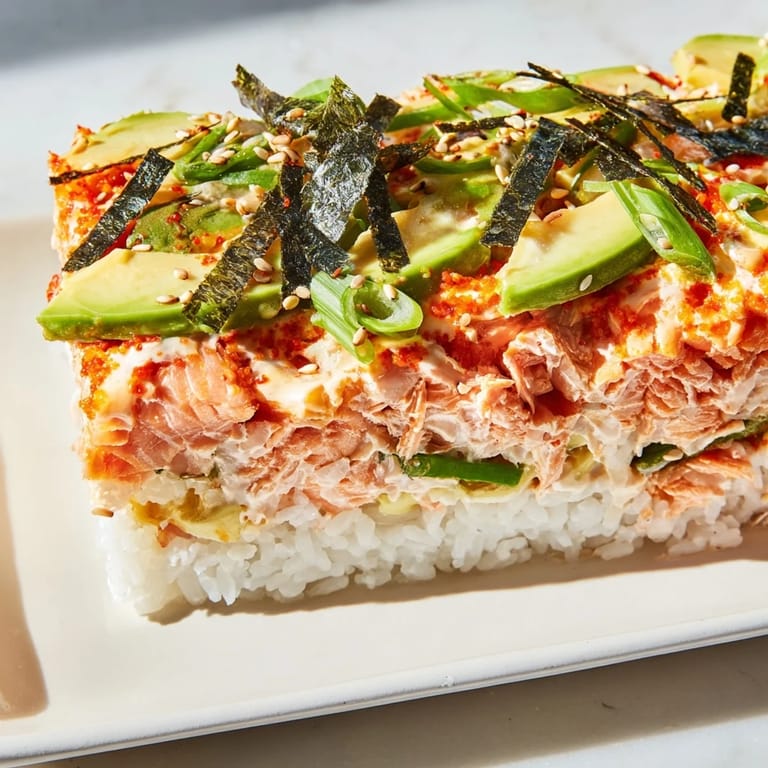
- Spread your seasoned rice into a greased baking dish, then dollop and smooth the salmon cream cheese over the top. Bake for ten minutes until the top is just beginning to show a little golden warmth—you're not trying to brown it, just heat it through so everything is warm and cohesive when you bring it to the table.
- Top with freshness:
- Just before serving, add your sliced avocado, nori squares, sesame seeds, and spring onions on top. This keeps them bright and crisp rather than wilting into the warm casserole.
 Save
Save What made this recipe truly special to me was realizing that it's not about perfection or technique—it's about taking something traditionally fussy and making it accessible. One night I burned the first batch of salmon and just used canned tuna instead, and it was still delicious. That's when I understood: this dish is forgiving in all the right ways.
Variations That Work
Crab meat, shrimp, or even good quality canned tuna all work beautifully in place of fresh salmon—I've made it all three ways and each one has its own charm. If you're making this for someone avoiding dairy, swap the cream cheese for a dairy-free version mixed with a bit of vegan mayo, and the texture stays creamy and rich. For extra crunch, sprinkle some panko breadcrumbs over the salmon layer before the second bake, and they'll turn golden and add a textural contrast that feels almost magical.
Wine Pairing and Serving
I learned from a wine-loving friend that this casserole pairs beautifully with something crisp and dry like a Sauvignon Blanc or chilled sake, and now I always have a bottle ready when I make it. The acidity cuts through the richness of the cream cheese while the wine's brightness echoes the fresh flavors of the avocado and nori. Serve it warm straight from the oven, with little bowls of soy sauce, pickled ginger, and wasabi on the side so everyone can customize their bite.
Make-Ahead and Storage
You can assemble this casserole completely up to four hours ahead of time, covering it with plastic wrap and keeping it in the refrigerator—just add an extra five minutes to the second bake if it's cold. Leftovers actually taste wonderful the next day, either warmed gently in the oven or eaten cold straight from the fridge on rice crackers as a snack. It keeps for about three days in a covered container, though honestly, it rarely lasts that long in my house.
- Slice portions neatly with a sharp knife dipped in water between cuts so you don't drag the creamy layer around.
- If you're doubling the recipe for a bigger crowd, use a 9x13-inch dish for each batch rather than stacking them, since they bake more evenly that way.
- The avocado is the only ingredient that really doesn't improve with time, so add it fresh right before serving even if you make everything else ahead.
 Save
Save This sushi bake taught me that the best recipes are the ones that feel a little bit special but don't ask you to become a sushi chef to pull them off. Every time I make it, I remember my neighbor's kitchen and how generous it felt to be fed something made with such care.
Cooking Questions & Answers
- → How is the rice prepared for this dish?
The rice is rinsed until clear, cooked with water, then mixed with a blend of rice vinegar, sugar, and salt to create a seasoned base.
- → What is the best way to cook the salmon layer?
Salmon is brushed with soy sauce, sesame oil, and black pepper, then baked until fully cooked and flaky, providing rich flavor and texture.
- → Can this dish be made with other protein options?
Yes, cooked crab meat, canned tuna, or cooked shrimp can substitute the salmon for variety or dietary preferences.
- → What toppings add texture and flavor to the casserole?
Sliced avocado, roasted nori squares, toasted sesame seeds, and thinly sliced spring onions add creamy, crisp, and savory elements.
- → How should this casserole be served?
Serve warm, accompanied by soy dipping sauce, with optional pickled ginger and wasabi to enhance the flavor profile.
- → Are there suggestions for dietary adjustments?
Use light mayonnaise and reduced-fat cream cheese for a lighter version, and consider adding panko breadcrumbs for extra crunch.