 Save
Save There's something about the smell of citrus hitting hot salmon that just makes a kitchen feel alive. I stumbled onto this sticky orange gochujang combination completely by accident—I'd grabbed a jar of gochujang thinking it was something else, and rather than waste it, I started mixing it with the orange juice I'd just squeezed for a morning smoothie. That happy mistake turned into this burnished, caramelized salmon that's become one of those dishes I make when I want to feel like I've got my kitchen life together, even on a Tuesday night.
I made this for my partner one rainy Saturday when we were both tired and hungry, and I remember how quickly the kitchen filled with that rich, savory-sweet aroma. By the time we sat down with those bowls of buttery rice topped with glazed salmon, the entire mood had shifted—suddenly we weren't tired anymore, just grateful and a little amazed that something this good could come together so easily.
Ingredients
- Skin-on salmon fillets (4, about 150 g each): Skin-on is non-negotiable here because it gets crispy and protects the fish from drying out; pat them completely dry before glazing so the sauce actually sticks and caramelizes.
- Gochujang (2 tablespoons): This Korean chili paste is salty, spicy, and slightly sweet, and it's what gives this dish its backbone; don't skip it or substitute with sriracha, which has a totally different flavor profile.
- Fresh orange juice (1/4 cup): Use freshly squeezed if you can—bottled juice tastes flat against the gochujang, and you want that bright acidity to sing.
- Soy sauce (2 tablespoons): This adds umami depth that rounds out the spice and heat; regular or low-sodium both work fine here.
- Honey (2 tablespoons): The sweetness balances the heat and helps the glaze caramelize gorgeously under the broiler.
- Rice vinegar (1 tablespoon): A tiny bit of acid cuts through the richness and keeps everything from feeling cloying.
- Fresh ginger and garlic (1 teaspoon grated, 1 clove minced): Both are aromatics that wake up the glaze and add warmth without any bitterness.
- Sesame oil (1 teaspoon): Just a whisper of this—it's potent, fragrant, and adds a subtle nuttiness that ties everything together.
- Jasmine rice (1 1/2 cups) with butter and salt: Jasmine rice is slightly fragrant and fluffy, the perfect canvas for the glossy salmon and its sauce.
- Scallions (3, thinly sliced): Fresh, sharp, and herbaceous, they brighten up the richness of the salmon and rice.
- Sesame seeds and orange zest (optional): These are final touches that add texture and visual appeal, making the finished bowl feel intentional and special.
Tired of Takeout? 🥡
Get 10 meals you can make faster than delivery arrives. Seriously.
One email. No spam. Unsubscribe anytime.
Instructions
- Whisk the glaze together:
- In a medium bowl, whisk gochujang, orange juice, soy sauce, honey, rice vinegar, ginger, garlic, and sesame oil until smooth and fully combined. The glaze should taste balanced—sweet, salty, spicy, and bright all at once.
- Marinate the salmon:
- Pat your salmon fillets completely dry with paper towels, then lay them skin-side up in a shallow dish. Spoon about 2 tablespoons of glaze over them, turn them to coat both sides, and let them sit for 10 minutes while you get the rice going.
- Cook the rice:
- Rinse jasmine rice under cold running water until the water runs clear, which removes excess starch and keeps the rice fluffy. In a medium saucepan, combine the rice, 3 cups water, butter, and salt, bring to a boil, then reduce heat to low, cover, and simmer for 15 minutes until the liquid is absorbed.
- Set up for broiling:
- While the rice cooks, preheat your broiler to high and line a baking sheet with foil, then lightly oil it. You want the salmon to release easily and not stick.
- Broil the salmon:
- Place the marinated salmon fillets skin-side down on the prepared baking sheet, brush generously with more glaze, and broil about 5 to 7 inches from the heat source for 6 to 8 minutes. About halfway through, brush with additional glaze and watch as the top gets glossy and caramelized; you're looking for an internal temperature around 125 to 130°F for medium doneness.
- Thicken the remaining glaze:
- While the salmon cooks, pour the leftover glaze into a small saucepan and simmer over medium heat for 2 to 3 minutes until it thickens slightly and becomes syrupy.
- Bring it all together:
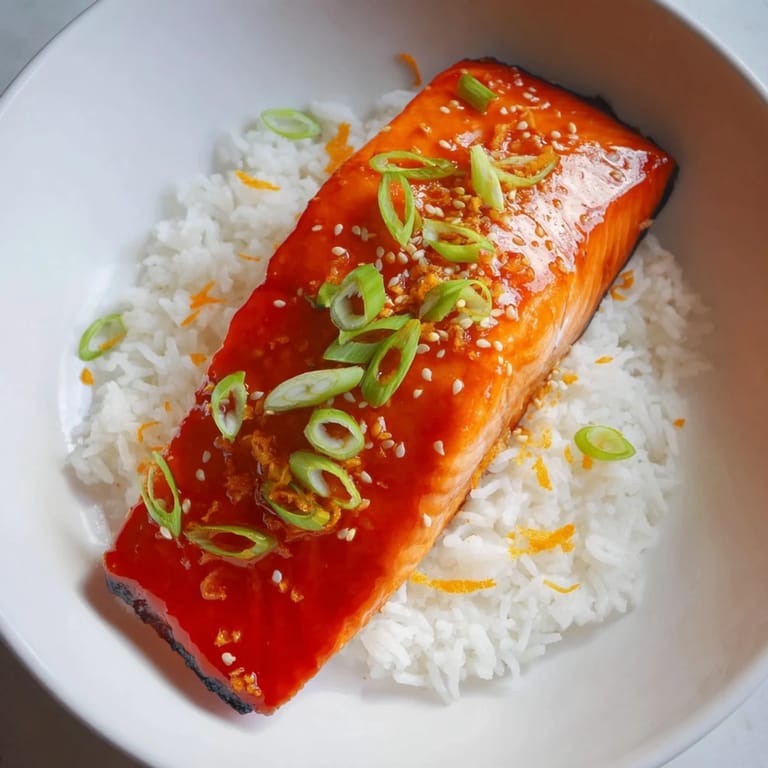
- Fluff the rice with a fork, divide it among bowls, top each with a salmon fillet, drizzle with the thickened glaze, and scatter scallions, sesame seeds, and orange zest across the top.
 Save
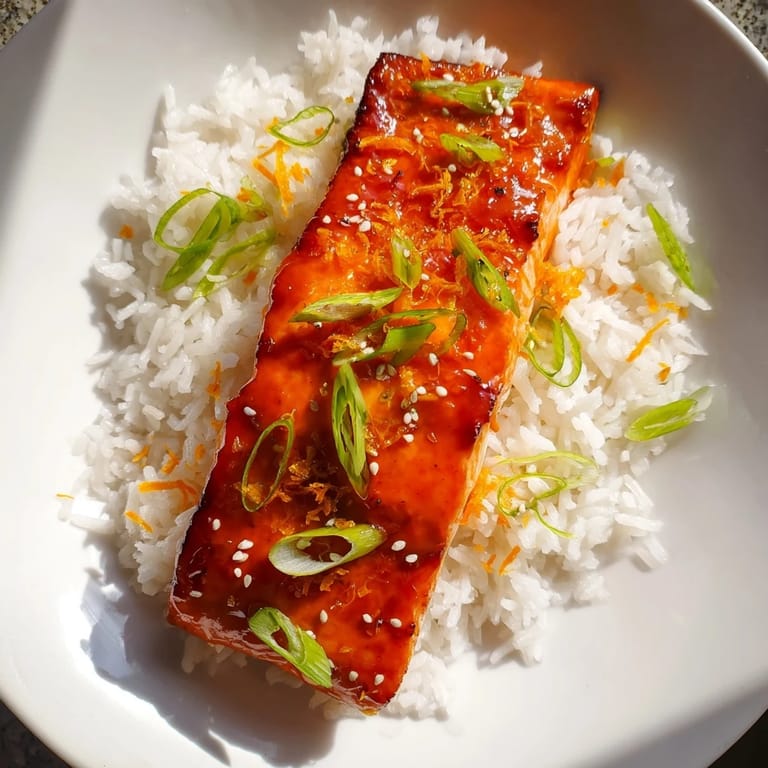
Save There's a moment, right after plating, when you see the glaze catch the light and the scallions look impossibly green against the orange salmon—that's when you realize you've made something that tastes as good as it looks. It's comfort food with personality, and that's the whole reason I keep making it.
Why Gochujang Changes Everything
Gochujang isn't just spicy; it's fermented, which means it has depth and complexity that you won't get from hot sauce or chili powder. When it hits the broiler and mingles with the sweet orange juice and honey, it mellows slightly while the edges caramelize into something almost umami-rich. The first time I used it, I was skeptical—fermented chili paste and citrus seemed like an odd pairing—but now I can't imagine this dish any other way. It's proof that sometimes the ingredients that feel most unfamiliar are the ones that make something truly special.
Rice Matters More Than You Think
The rice here isn't just a side—it's a vehicle for that gorgeous glaze, and it needs to be fluffy and buttery enough to absorb all those flavors without falling apart. Jasmine rice is my choice because it's naturally slightly sweet and fragrant, which complements the salmon without competing with it. If you rinse it properly and don't skip the butter, you'll end up with something that tastes intentional, not like an afterthought. I once tried skipping the rinsing step to save time, and the rice turned into a starchy paste; now I understand why that step matters.
Timing and Temperature Tricks
The beauty of this meal is that everything comes together in about thirty-five minutes, and most of that is just the rice simmering hands-off on the stove. The salmon only needs six to eight minutes under the broiler, so there's very little room for panic or overthinking—you prep, you set it going, and you check it once halfway through. For doneness, I aim for an internal temperature of 125 to 130°F for salmon that's still slightly translucent in the center and impossibly tender; a meat thermometer removes all the guesswork.
- Prep your glaze and marinate the salmon while water comes to a boil for the rice, which means zero idle time in the kitchen.
- If your broiler runs hot, start checking the salmon at the five-minute mark to avoid overcooking.
- Let the rice rest for those final five minutes covered—it sounds like nothing, but it lets the grains firm up and stay separate.
 Save
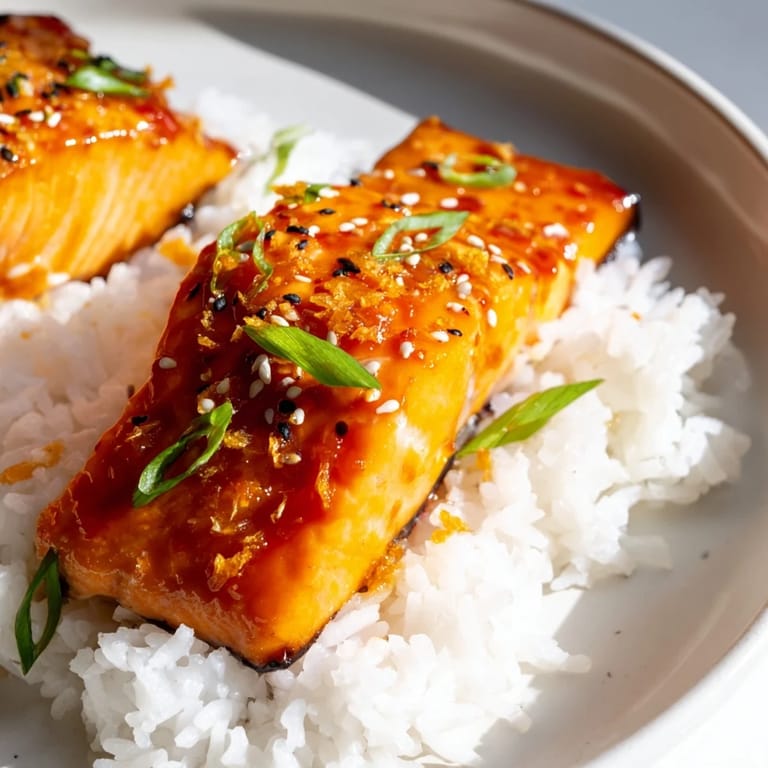
Save This salmon has become my go-to when I want to cook something that feels sophisticated and cared-for without losing my mind over timing or technique. It's the kind of dish that reminds you why you love cooking in the first place.
Cooking Questions & Answers
- → What type of salmon works best for this dish?
Skin-on salmon fillets are ideal as the skin crisps up nicely under the broiler while keeping the fish moist.
- → How can I make the glaze spicier?
Adding a pinch of chili flakes to the gochujang-orange glaze increases the heat without overpowering the sweetness.
- → Can I substitute jasmine rice?
Yes, brown rice or quinoa can be used for a heartier, more nutrient-dense base.
- → What’s the best way to ensure the rice is fluffy?
Rinse the jasmine rice under cold water until clear, then simmer gently with butter and salt before fluffing with a fork once cooked.
- → How do I know when the salmon is cooked properly?
The salmon is done when it’s caramelized on top and reaches an internal temperature of about 52–54°C (125–130°F) for medium doneness.