 Save
Save The first time I arranged a cheese board purely by color, I was scrambling to impress someone who had just returned from Morocco. I'd never thought much about the aesthetics of a platter before—cheeses were just cheeses, thrown together on whatever board I had clean. But standing in my kitchen with a wheel of golden Gouda catching the afternoon light, I realized that a board could tell a story without a single word spoken. That afternoon taught me that elegance isn't complicated; it's about paying attention to what's already beautiful and letting it shine.
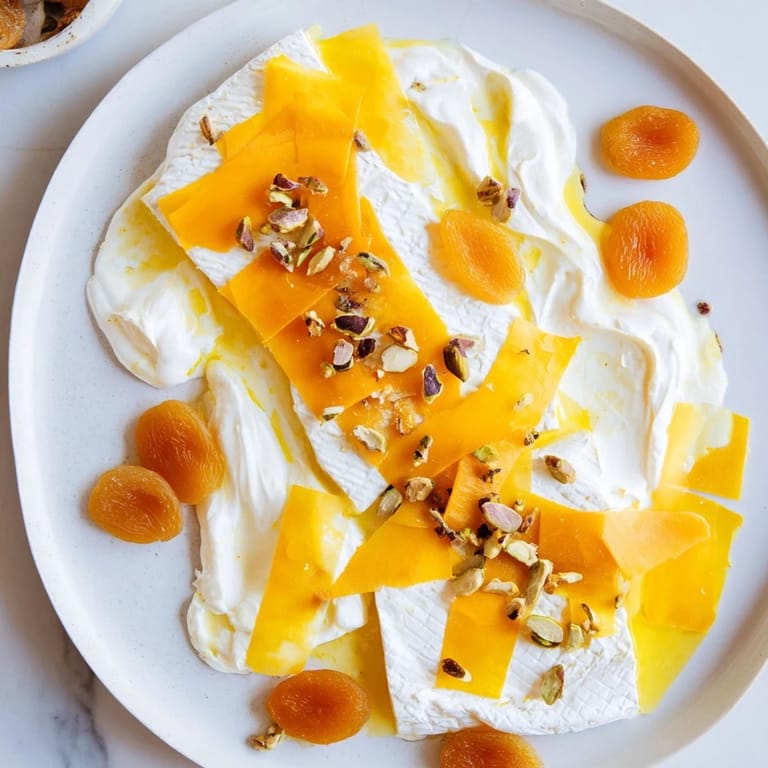
I made this board on a Tuesday evening when my neighbor stopped by unexpectedly with a bottle of wine. Instead of panicking, I walked to my fridge and realized I had exactly what I needed. Watching her face light up as she took in the flowing ribbons of cheese and those golden swirls of saffron cream—that's when I understood the real magic of a good cheese board isn't the ingredients, it's the moment it creates.
Ingredients
- Triple cream brie, lightly tinted with saffron or turmeric: This is your canvas—buy the finest quality you can find, and if you can't find pre-tinted versions, a whisper of saffron threads steeped in a drop of warm cream gives it that silk-like color without overpowering the delicate flavor.
- Aged Gouda, sliced thin: The nuttiness of aged Gouda bridges the gap between soft and firm, and thin slices let it drape beautifully across the platter like fabric.
- Fontina, room temperature, cut into ribbons: Room temperature is non-negotiable here—cold fontina will shatter instead of ribbon, so take it out at least thirty minutes before you start arranging.
- Mimolette, shaved: This is the golden treasure that ties everything together visually and adds a subtle sweetness that surprises people.
- Whipped ricotta, blended with a pinch of saffron threads: The saffron should just whisper its presence—you want color and a hint of floral warmth, not a strong spice flavor that dominates.
- Honeyed mascarpone: Buy good honey; it matters more here than anywhere else because it's tasted directly, not hidden in a dish.
- Lemon curd, optional: If you use it, a spoonful goes a long way—the tartness cuts through the richness and adds another layer of silky texture.
- Baguette, thinly sliced: Toast it lightly if you're making this ahead; it prevents sogginess and adds a welcome crunch.
- Seed crackers: Look for ones with visual interest—the speckles add to the flowing aesthetic.
- Dried apricots, halved: The slight chewiness and natural sweetness ground the richness of the cheeses.
- Roasted, salted pistachios: The salt is essential; it echoes the salt in the cheeses and keeps everything from feeling one-note sweet.
Tired of Takeout? 🥡
Get 10 meals you can make faster than delivery arrives. Seriously.
One email. No spam. Unsubscribe anytime.
Instructions
- Swoosh the spreads into flowing shapes:
- Using an offset spatula or the back of a spoon, dollop the saffron ricotta and honeyed mascarpone onto your platter in loose, organic puddles. Think of it like watercolor—let the colors blur slightly where they meet, and don't worry about perfection.
- Arrange cheeses in soft curves:
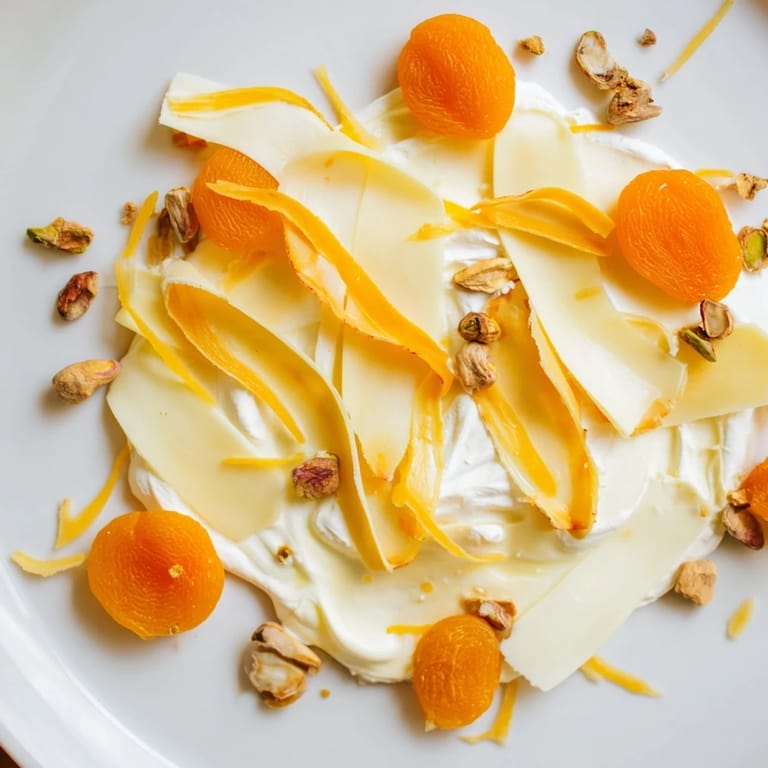
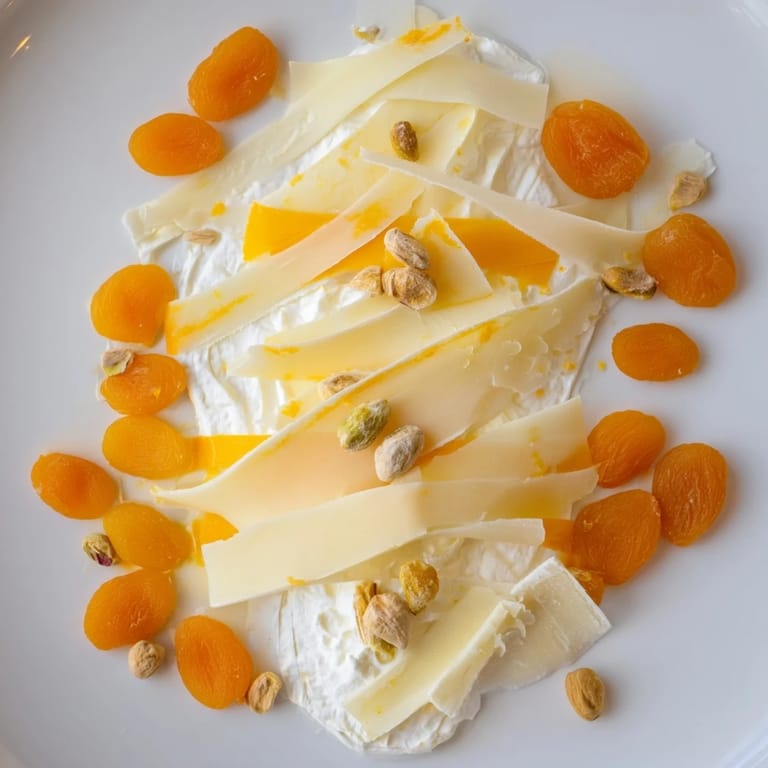
- Layer the Gouda slices so they cascade into the spreads, and drape the fontina ribbons across the board like silk scarves. Let the edges overlap and drift naturally into the creamy spreads; that's where the magic happens.
- Nestle the lemon curd:
- If you're using it, place a small spoonful directly on the platter and swirl it gently with a tiny brush or the tip of a knife. You're not trying to blend it; you're creating one more color accent.
- Scatter the accompaniments:
- Arrange baguette slices in loose clusters, tucking crackers, apricots, and pistachios into the gaps. The board should feel abundant and inviting, not rigid or formally arranged.
- Serve at room temperature:
- This is crucial—bring the board to the table only when you're ready to serve, and if it's been sitting for more than an hour, let the cheeses warm up for a few minutes before guests dive in.
 Save
Save The board that changed everything for me was served on a plain white marble slab during a dinner party where the conversation naturally drifted to stories about travel. People lingered longer over this simple arrangement than they had over any complicated dish I'd ever made. That's when I realized that sometimes the most memorable meals aren't about complexity—they're about creating space for connection, and a beautiful cheese board does exactly that.
The Art of the Platter
Arranging a cheese board is less about following rules and more about understanding flow. The spreads are your base—they anchor everything and create those soft puddles where the harder cheeses can rest. Think of the platter as a landscape: the spreads are the gentle valleys, the cheese ribbons are the flowing rivers, and the crackers and fruit are the scattered stones. When you stop thinking of it as a puzzle and start seeing it as a painting, the arrangement becomes intuitive.
Playing with Colors and Textures
The saffron tint does something unexpected—it transforms a cheese board from rustic to refined without any extra effort. The warm golden tones bounce off the creamy whites and pale yellows, creating a cohesive visual story. The mimolette shavings echo those golden hues, and suddenly the whole board feels intentional, even though you've simply chosen ingredients that were already beautiful.
The Perfect Pairing Moment
A cheese board like this one asks for the right accompaniment—something that respects the elegance without competing with it. The gentle acidity of a dry Sancerre cuts through the richness perfectly, while a crisp Prosecco adds celebration to the moment. If you want to take it further, consider edible flowers scattered across the board just before serving; they add color without adding flavor, and they signal to your guests that this is a moment worth savoring.
- If fresh flowers aren't available, a few microgreens or tiny herbs like dill fronds add visual interest and a whisper of freshness.
- Keep everything covered loosely with plastic wrap until the very moment you serve; it preserves the arrangement and keeps the cheeses fresh.
- A cheese board is forgiving—if something goes slightly wrong with the arrangement, a strategically placed cracker or dried fruit fixes it instantly.
 Save
Save Every beautiful cheese board is really an invitation—to slow down, to taste intentionally, to let the moment matter. This one, with its flowing silks and golden tones, is a particularly gentle one.
Cooking Questions & Answers
- → What cheeses are best for a saffron silk cheese board?
Soft, creamy cheeses like triple cream brie tinted with saffron pair beautifully with aged gouda, fontina ribbons, and mimolette shavings to provide variety in flavor and texture.
- → How do I achieve the silk effect with the spreads?
Use a spoon or offset spatula to swoosh whipped ricotta blended with saffron and honeyed mascarpone in gentle, flowing shapes on a large platter for a silky appearance.
- → Which accompaniments enhance this cheese board?
Thinly sliced baguette, seed crackers, dried apricots, and roasted pistachios add crunchy, sweet, and nutty contrasts that complement the creamy elements.
- → Can I make this board vegan-friendly?
Yes, substitute dairy cheeses with plant-based alternatives and replace creamy spreads with coconut-based versions to maintain texture and flavor.
- → What beverages pair well with this spread?
A dry white wine like Sancerre or a sparkling Prosecco balances the rich cheeses and enhances the saffron-infused flavors elegantly.