 Save
Save I still remember the first time I saw a wine bottle standing proudly in the center of a cheese board at a dinner party in Lyon. The cheeses around it had taken on this deep, wine-stained hue, and I thought it was the most elegant thing I'd ever encountered. Years later, when a friend challenged me to recreate that magic, I discovered that this ruby red wine stain board isn't just beautiful—it tells a story of wine, cheese, and the people gathered around the table. Every element has been kissed by wine, creating this gorgeous tapestry of flavors that feels both sophisticated and utterly approachable.
The first time I made this board for my partner's birthday, I watched their face light up when they saw that wine bottle standing like a monument in the center. What I loved most wasn't just the reaction—it was how the evening unfolded around that board, with people lingering, tasting, discovering flavor combinations they'd never imagined. That's when I realized this wasn't just food; it was an invitation to slow down and savor the moment.
Ingredients
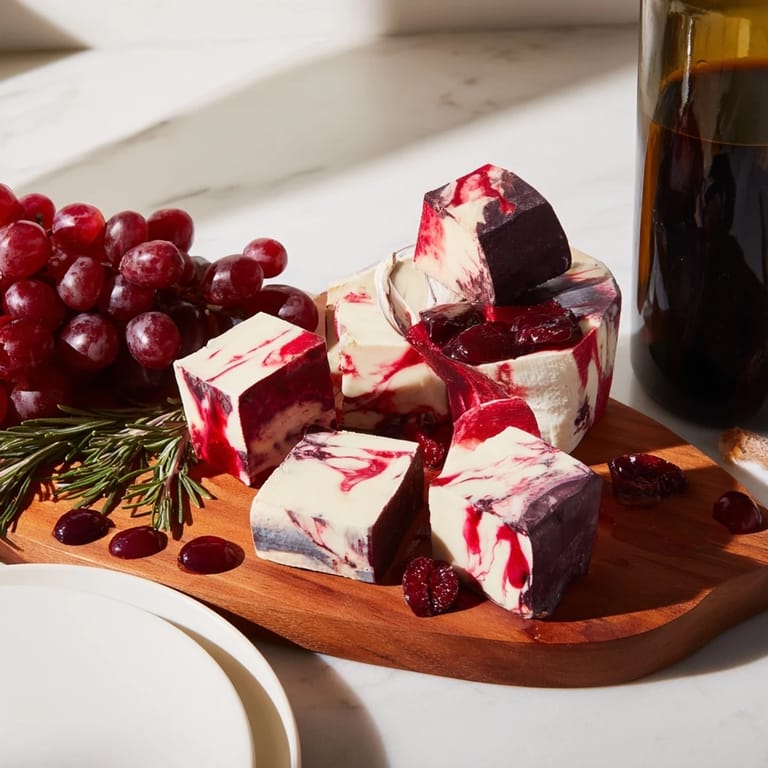
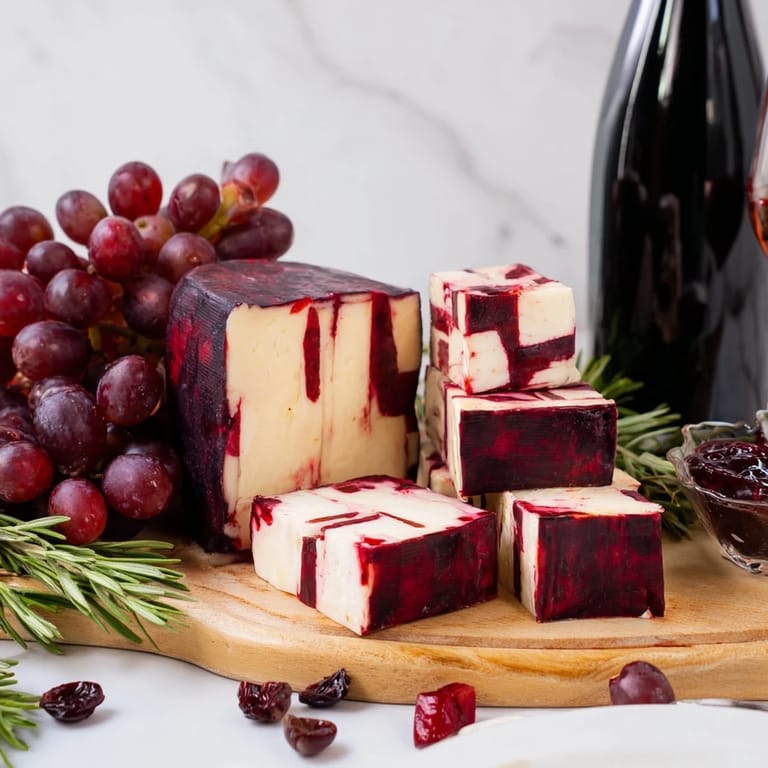
- Drunken goat cheese (200 g, sliced): This is your anchor ingredient—the creamy base that's been soaked in red wine until it's taken on a gorgeous wine-stained color. Slice it gently so it doesn't crumble, and let it come to room temperature before serving so the flavors really sing
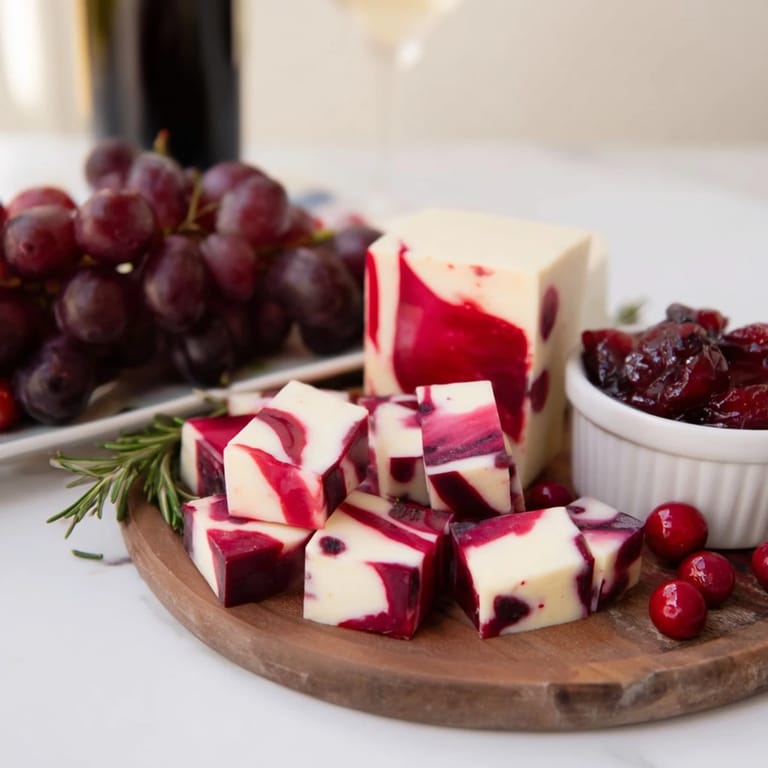
- Red Wine BellaVitano (150 g, cubed): A hard cheese that's been infused with red wine, giving it this deep ruby appearance and a complexity that soft cheeses can't quite achieve. The firmness means you can cube it without worry, and it holds its shape beautifully on the board
- Red wine-cured salami (100 g, thinly sliced): The meat brings a savory, salty note that plays beautifully against the wine-soaked cheeses. Find one that's been specifically cured with wine if you can—it makes all the difference
- Prosciutto (80 g, torn into ribbons): The delicate, salty counterpoint that adds texture and elegance. Tearing it by hand rather than slicing creates this romantic, abundant look
- Red wine jelly (1/2 cup): This glossy, jewel-toned condiment brings both visual drama and a bright acidity that cuts through the richness of the cheeses. Make it fresh, or use a high-quality store-bought version
- Red wine-poached grapes (1/2 cup): These sweet, wine-soaked orbs are pure magic—the wine concentrate intensifies their flavor while the slight softness from poaching makes them yield under your teeth
- Red wine-infused dried cherries (1/4 cup): Little bursts of deep fruit flavor and color that remind you wine was involved in every element of this board
- Red wine-marinated olives (1/3 cup): Choose kalamata for earthiness or green for a brighter note—either way, the wine marinade brings them into conversation with everything else
- Baguette (1 small, sliced): The neutral canvas that lets the stars shine. Slice it fresh on the day of serving, or very lightly toast the slices if they're a day old
- Red wine and rosemary crackers (1 cup): These carry the wine theme all the way through to your supporting cast, adding another layer of intentional flavor
- Fresh rosemary sprigs: These bring aroma and a visual herb element that says you care about the details. They're not just pretty—brush against them with your hand and your fingers smell like a Mediterranean garden
- Edible flowers (optional): The final flourish if you want pure visual magic. Pansies, violas, or nasturtiums add color without competing for flavor
Tired of Takeout? 🥡
Get 10 meals you can make faster than delivery arrives. Seriously.
One email. No spam. Unsubscribe anytime.
Instructions
- Set the Stage with Your Centerpiece:
- Take that wine bottle—label removed or left on if it's beautiful—and place it dead center on your largest wooden board or platter. This is your anchor, your focal point, the thing that makes everyone say 'oh' when they see the board. If you're nervous about the bottle tipping, you can wrap the base with a bit of crumpled parchment paper underneath the board to stabilize it, but the height and presence of that bottle is everything
- Build Your Cheese Foundation:
- Now comes the dance—arrange your sliced drunken goat cheese and cubed BellaVitano around the base of that bottle. Don't be timid. Let some pieces lean against the bottle like they're gravitating toward it. Vary the heights and angles. This is where you're creating the visual story, not just placing components
- Create Meat Ribbons:
- Fan out your red wine-cured salami in small piles, slightly overlapping each slice so you create this gorgeous, translucent effect. If you're using the prosciutto, tear it gently with your hands rather than cutting—those irregular, romantic ribbons scattered in their own small section add such grace to the board
- Add the Jewels:
- Spoon your red wine jelly into a small bowl—something ceramic or earthenware looks right for this—and nestle it into a gap among the cheeses. It should look like you've found the perfect pocket for it, not like an afterthought
- Scatter and Cluster:
- Now scatter your poached grapes, infused cherries, and marinated olives in small clusters throughout the board. Think of them as punctuation marks—they're drawing the eye around the whole composition, so don't clump them all in one corner. Leave some breathing room. Let the colors create a path for someone's eye to travel
- Arrange Your Bread and Crackers:
- Arrange baguette slices and wine crackers in arcs or radiating lines that echo the shape of the board. They should feel accessible but also part of the design, not just stuffed in wherever there's space
- The Final Flourish:
- Tuck fresh rosemary sprigs into gaps and around the board. If you're using edible flowers, place them where they create little pops of color—on top of a cheese cube, nestled next to the bottle, floating on the jelly. Step back. Adjust. This is your moment to make it perfect
- Serve with Intention:
- Bring the board to the table and encourage your guests to begin. Watch how they approach it, the combinations they choose, the conversations that happen around it. This is the real purpose of the board—not just feeding people, but creating a moment where everyone slows down together
 Save
Save There's a moment that always happens at these boards that I've come to treasure. Someone reaches for a piece of drunken goat cheese, pairs it with a slice of prosciutto and a poached grape, takes a bite, and their eyes actually close. That's when you know you've created something that transcends hunger. You've created wonder, right there in their mouth, right there at your table.
The Art of Wine-Infused Ingredients
What makes this board sing is that nothing here is by accident. Each element has been intentionally kissed by wine, and that creates this beautiful harmony that regular cheese boards just can't achieve. The drunken goat cheese isn't drunken by chance—it's been soaked for weeks, allowing the wine to penetrate every crevice, every air pocket. The same goes for every other ingredient on this board. That's not just flavor; that's philosophy. It's saying that you care enough about your guests to source or prepare ingredients that show thought, care, and intention. This isn't about expense—it's about the story each ingredient tells.
Creating Visual Drama
The wine bottle in the center isn't decoration—it's the entire visual concept. It's tall, it's elegant, and it references the ingredient that brings everything together. Everything radiates from that center point, which means your eye naturally knows where to begin and how to travel across the board. The deep ruby reds and wine-stained purples create this jewel-tone palette that photographs beautifully and looks absolutely luxurious. I've learned that the best boards aren't the ones with the most ingredients—they're the ones where every element serves both flavor and beauty, where you couldn't remove anything without diminishing the whole.
Pairing and Serving Wisdom
Serve this board with a fruity, medium-bodied red wine—a Pinot Noir or Merlot—and you'll understand why this combination exists. The wine in your glass echoes the wine that infused every element on the board, creating this beautiful feedback loop of flavor that makes everything taste better. The board also works beautifully with sparkling wine if you want to lighten the mood, and it's honestly stunning with a good rosé if you're serving it at lunch. This board isn't just about what's on the plate; it's about the conversation between the board and the glass.
- Always let guests discover combinations themselves—the magic happens in their own flavor journey, not in your suggestions
- Keep a small bread knife nearby so people can cut the harder cheeses if they prefer, and have a few small plates stacked nearby for guests who want to compose their own plates
- The board will naturally quiet down in the middle of the meal and then be discovered again toward the end—this is normal and beautiful, as people return to favorites they found earlier
 Save
Save This board is an invitation—to slow down, to taste intentionally, to gather around something beautiful and made with care. Every time I've set one of these out, the evening becomes about connection rather than consumption, about presence rather than hurrying. That's the real magic of the ruby red wine stain board.
Cooking Questions & Answers
- → How can I make the grapes infused with red wine?
Simmer seedless red grapes in dry red wine with sugar and a cinnamon stick for about 10 minutes, then let them cool for a flavorful infusion.
- → What cheeses work best for this board?
Soft cheeses like drunken goat and harder varieties soaked in red wine, such as BellaVitano, create a rich contrast in taste and texture.
- → Can I prepare this board for vegetarians?
Yes, simply omit the cured meats and add extra cheese or roasted nuts to maintain variety and flavor depth.
- → What bread or crackers pair well with this selection?
Slices of baguette and red wine and rosemary crackers complement the infused cheeses and meats, adding a crisp texture.
- → How should I arrange the components for the best presentation?
Place an empty wine bottle at the center of the board, arrange cheeses and meats around it, and scatter accompaniments like jelly, grapes, and olives artistically throughout.
- → What garnishes enhance the board’s appeal?
Fresh rosemary sprigs and edible flowers add color, aroma, and a touch of elegance to the overall display.