 Save
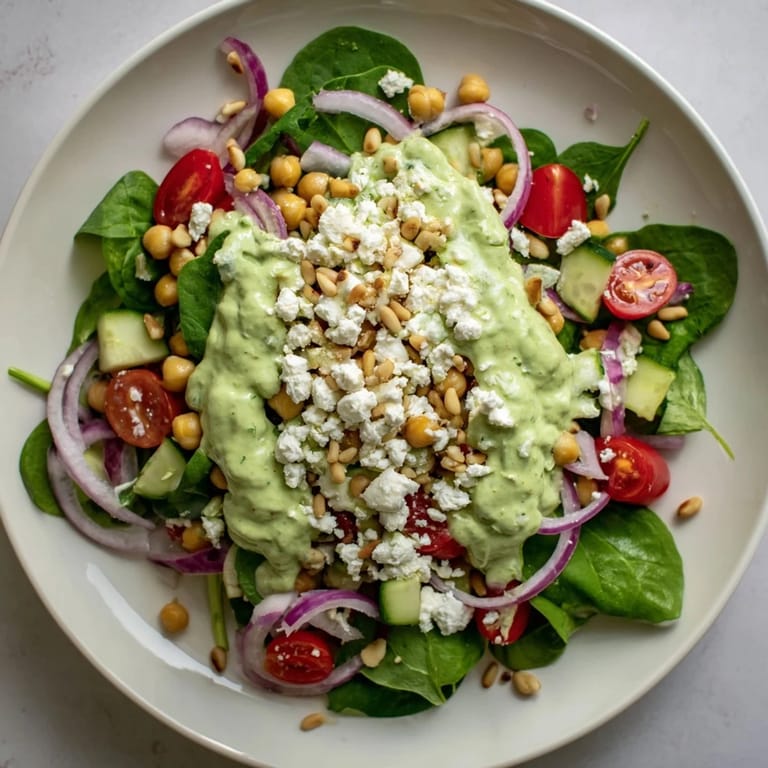
Save There's something magical about the moment when you realize a salad can be genuinely exciting. I discovered this one afternoon while rummaging through my fridge, frustrated that I had fresh spinach and canned chickpeas but nothing that felt like a proper meal. Then I remembered the basil plant on my windowsill that had been quietly thriving, and suddenly everything clicked into place. That first bite of vibrant green pesto coating creamy chickpeas and tender greens felt like a small victory in the kitchen, the kind that makes you wonder why you don't make this more often.
I made this for a friend who'd been stressed about eating better, and watching her face light up when she tasted the pesto was worth every minute of chopping. She asked for the recipe on the spot, which rarely happens, and now it's become part of our regular lunch rotation whenever we catch up.
Ingredients
- Chickpeas: One can drained and rinsed, these provide a creamy texture and plant-based protein that keeps you satisfied without feeling heavy.
- Fresh baby spinach: Four cups washed and dried, the tender leaves wilt slightly from the warm pesto and become silkier than you'd expect.
- Cherry tomatoes: One cup halved, their sweet-tart burst is essential for cutting through the richness of the pesto and feta.
- Red onion: Half a small one thinly sliced, adds a gentle bite that keeps the salad from becoming one-dimensional.
- Cucumber: Half a cup diced, brings a cooling crispness that makes the whole thing feel refreshing.
- Toasted pine nuts: A quarter cup optional, but they add a buttery depth that changes everything if you can swing it.
- Crumbled feta cheese: A quarter cup optional, salty and tangy notes that echo the brightness of the basil.
- Fresh basil leaves: One cup packed for the dressing, use the tender leaves from the top of the plant for the best flavor and color.
- Parmesan cheese: A quarter cup grated, contributes a savory punch that helps the pesto cling to every leaf.
- Extra-virgin olive oil: A quarter cup, this is where quality matters, so use something you'd taste on its own.
- Lemon juice: One tablespoon freshly squeezed, brightens the pesto and prevents it from tasting flat or heavy.
- Garlic: One clove, just enough to give the dressing personality without overpowering the basil.
- Water: Two to three tablespoons for adjusting consistency, add it slowly while the processor runs.
- Salt and black pepper: To taste, taste as you go because the Parmesan already brings saltiness to the party.
Tired of Takeout? 🥡
Get 10 meals you can make faster than delivery arrives. Seriously.
One email. No spam. Unsubscribe anytime.
Instructions
- Build the pesto foundation:
- Pulse basil, Parmesan, pine nuts, garlic, and lemon juice in a food processor until everything is finely chopped and fragrant. You'll know it's ready when the mixture smells like summer and looks like coarse breadcrumbs.
- Emulsify with olive oil:
- With the motor running, drizzle in olive oil slowly so it becomes silky and creamy rather than separated and greasy. Add water a tablespoon at a time until the texture is pourable but still clings to a spoon.
- Season to perfection:
- Taste your pesto and adjust salt and pepper, remembering that the salad vegetables will add their own seasoning too. It should taste bright and bold at this stage.
- Assemble the salad base:
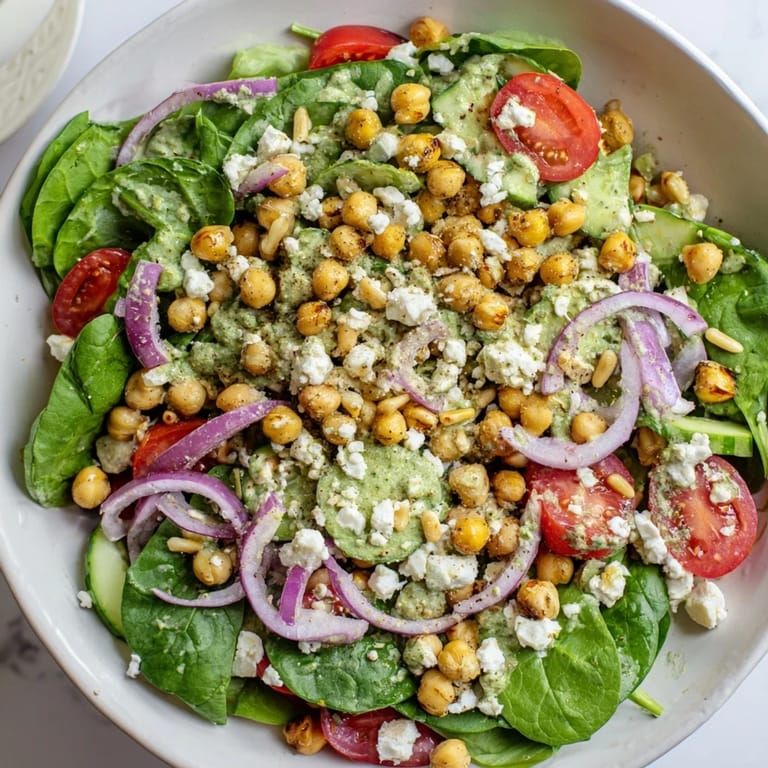
- In a large bowl, combine chickpeas, spinach, tomatoes, red onion, and cucumber, mixing gently so the leaves don't bruise.
- Dress and toss with intention:
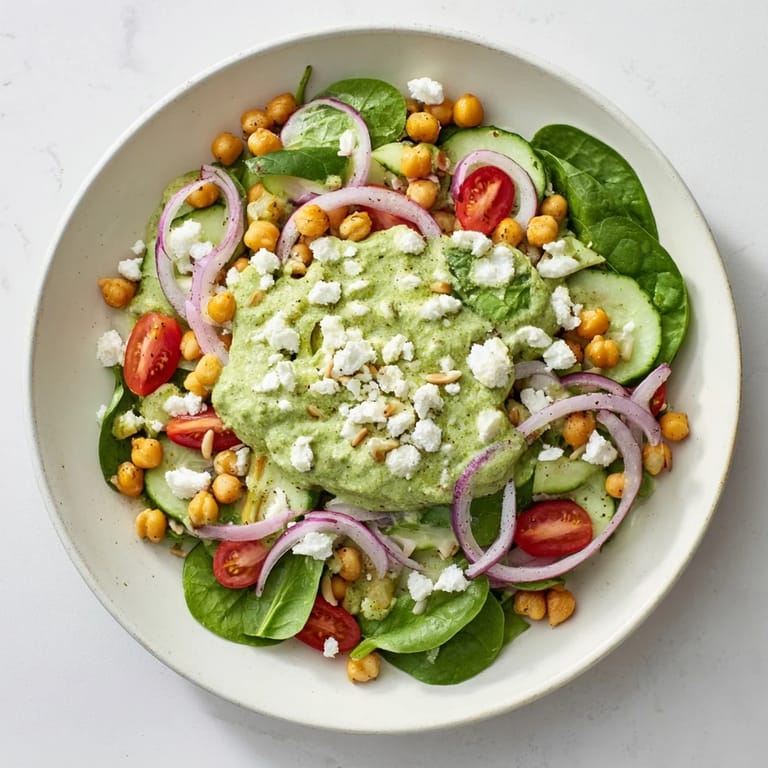
- Drizzle pesto over the salad and use tongs or your hands to coat everything evenly, being gentle with the spinach so it stays in whole leaves rather than shredding.
- Finish and serve:
- Scatter pine nuts and feta over the top if using them, and eat immediately while the salad still has its crispness. If you need to hold it, dress it lightly and add the nuts and cheese just before serving.
 Save
Save There was a moment during a quiet Sunday lunch when I realized how much joy something this simple could bring. No recipe drama, no complicated techniques, just honest ingredients working together to create something genuinely nourishing.
Why This Salad Works
The beauty of this combination lies in its balance of textures and temperatures. The warm earthiness of chickpeas grounds the delicate spinach, while the tomatoes and cucumber keep everything feeling light and summery. The pesto acts as a bridge between all these elements, its richness making even simple ingredients feel like they belong in the same bowl together. Every component serves a purpose, which is why removing even one feels like something's missing.
Making It Your Own
This recipe is flexible in the way that matters, adapting to what's in your kitchen without losing its soul. I've made it with arugula instead of spinach on days when I wanted something peppery, and with grilled chicken when I needed extra protein for a crowd. The pesto is the constant, the thing that ties everything together and makes it taste intentional rather than assembled.
Storage and Make-Ahead Strategy
You can prepare everything individually up to several hours ahead, keeping components separate so the spinach stays crisp and the tomatoes don't weep into the dressing. The pesto actually improves after an hour or two in the fridge as flavors settle and meld together more deeply. Just dress the salad right before eating, and it will taste like you made it moments before serving.
- Store pesto in an airtight container in the fridge for up to three days, and bring it to room temperature before using so the olive oil doesn't feel congealed.
- Chickpeas and vegetables can be prepped and refrigerated separately, but dress everything just before you plan to eat.
- If you're meal prepping, pack the pesto and salad components in separate containers and combine them when you're ready to eat.
 Save
Save This salad reminds me that some of the most satisfying meals come together without fuss or pretension. It's the kind of recipe that quietly becomes a regular part of your cooking life.
Cooking Questions & Answers
- → Can I make the pesto dressing vegan?
Yes, simply omit the Parmesan cheese and feta, or use plant-based cheese alternatives to keep it vegan and maintain rich flavor.
- → What can I substitute for pine nuts in the dressing?
Sunflower seeds or walnuts make great alternatives, providing a similar texture and nutty flavor without the allergen risk.
- → Is this salad suitable for gluten-free diets?
Absolutely. All ingredients are naturally gluten-free, making it safe and delicious for gluten-sensitive individuals.
- → Can I add protein to make this more filling?
Grilled chicken, roasted vegetables, or additional legumes can be added to enhance protein content and create a heartier dish.
- → How should I store leftovers for best freshness?
Store salad and dressing separately in airtight containers in the refrigerator. Combine just before serving to keep textures crisp.
- → Can I swap out spinach for another green?
Yes, arugula or kale work well, adding different flavors and textures that complement the pesto and chickpeas.