 Save
Save There's a particular Wednesday evening I keep coming back to—standing in my kitchen with a friend who'd just returned from a trip through Lebanon, and she was describing this stew her grandmother made every time the weather turned cool. She mentioned sumac before anything else, how it brightened everything, and I became obsessed with recreating that exact feeling. This lentil and chickpea stew is what I landed on after several attempts, each one teaching me something about balance and warmth.
I made this for a small dinner party and watched people slow down with their spoons, asking what made it taste so bright and layered. That moment—when someone stops talking mid-conversation because the food suddenly has their full attention—that's when I knew this recipe was worth holding onto.
Ingredients
- Brown or green lentils (1 cup, rinsed): Brown lentils hold their shape better than red ones, so you get texture throughout rather than mushiness; rinsing removes any dust or debris.
- Chickpeas (1 can, 15 oz, drained and rinsed): Canned ones are perfectly fine here and save you hours of cooking time without sacrificing flavor.
- Olive oil (2 tablespoons): This is your foundation for building flavor; don't skip it or rush this step.
- Yellow onion (1 large, finely chopped): The sweetness from slow cooking onions balances the tanginess of the sumac beautifully.
- Garlic (3 cloves, minced): Fresh garlic matters more than you'd think; it becomes mellow and sweet rather than sharp when simmered.
- Carrots (2 medium, diced): They add natural sweetness and body to the broth as they break down.
- Celery (2 stalks, diced): Often overlooked, but it builds depth and rounds out the vegetable base.
- Sumac (1½ teaspoons, ground): This is the secret ingredient that makes people ask what you did differently; it's tart without being sour, almost like a gentle lemon zest.
- Ground cumin (1 teaspoon): Warm and earthy, it anchors all the other spices together.
- Ground coriander (½ teaspoon): Adds a subtle, almost floral note that most people can't quite name.
- Smoked paprika (½ teaspoon): Brings a whisper of smokiness that makes the dish feel more complex.
- Salt (1 teaspoon, adjust to taste): Taste as you go; you might need more depending on your broth.
- Black pepper (½ teaspoon): Fresh cracked pepper, if you have it, makes a real difference.
- Cayenne pepper (¼ teaspoon, optional): Only add this if you like heat; it's easy to leave out or dial up.
- Vegetable broth (4 cups): Use good-quality broth; it becomes the backbone of the entire dish.
- Water (1 cup): Dilutes the broth slightly so flavors don't become too concentrated.
- Lemon juice (1 large lemon, about 3 tablespoons): Added at the end, it wakes everything up and makes the colors seem brighter.
- Fresh parsley (½ cup, chopped): Don't use dried here; fresh parsley adds a final green, herbaceous note that matters.
- Lemon wedges (for serving): Let people adjust the tartness to their own taste.
Tired of Takeout? 🥡
Get 10 meals you can make faster than delivery arrives. Seriously.
One email. No spam. Unsubscribe anytime.
Instructions
- Start with the aromatics:
- Heat olive oil in a large pot over medium heat and add your chopped onion. Let it cook for 4 to 5 minutes, stirring occasionally, until it softens and turns translucent. You want to hear that gentle sizzle and smell the sweet aroma rising up.
- Build the flavor base:
- Add your minced garlic, diced carrots, and celery. Cook for another 3 to 4 minutes, stirring now and then, until the vegetables begin to soften at the edges. The kitchen should smell incredible at this point.
- Toast the spices:
- Stir in your sumac, cumin, coriander, smoked paprika, salt, black pepper, and cayenne if you're using it. Cook for just 1 minute, stirring constantly, so the spices bloom and release their oils. This step is brief but crucial.
- Combine everything:
- Add your rinsed lentils, drained chickpeas, vegetable broth, and water. Stir everything together, then bring the pot to a boil over medium-high heat. Once it boils, reduce the heat to low and cover with a lid.
- Let it simmer:
- Keep the lid on and let everything simmer gently for 25 to 30 minutes. You're looking for the lentils to become tender but not mushy, still holding their shape slightly. Resist the urge to rush this; the waiting is where the flavors deepen.
- Finish bright:
- Remove the lid, stir in your lemon juice and about half of the fresh parsley. Cook uncovered for 2 to 3 more minutes to let the lemon integrate. Taste and adjust seasoning if needed—you might want more salt or another squeeze of lemon.
- Serve with intention:
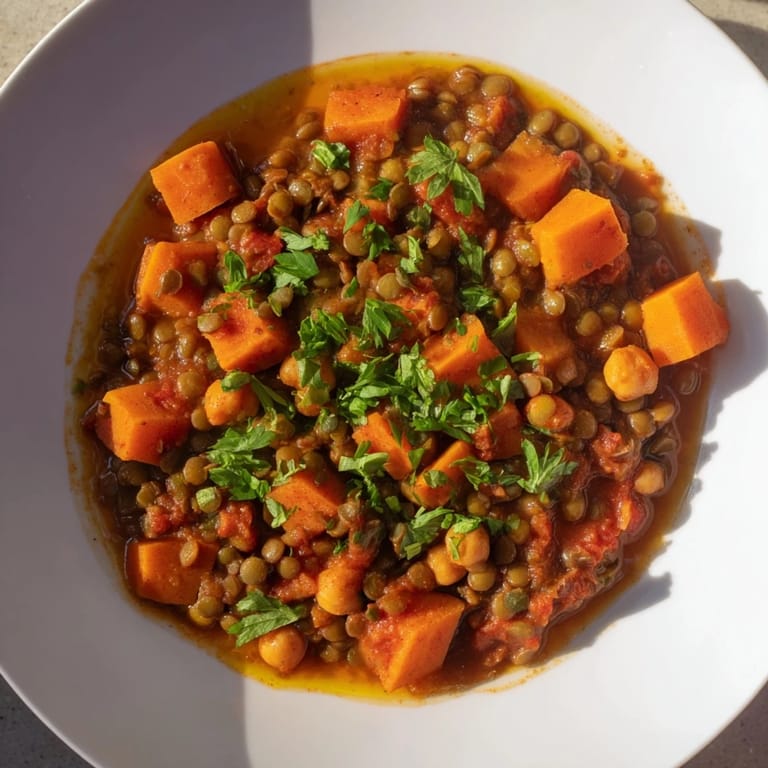
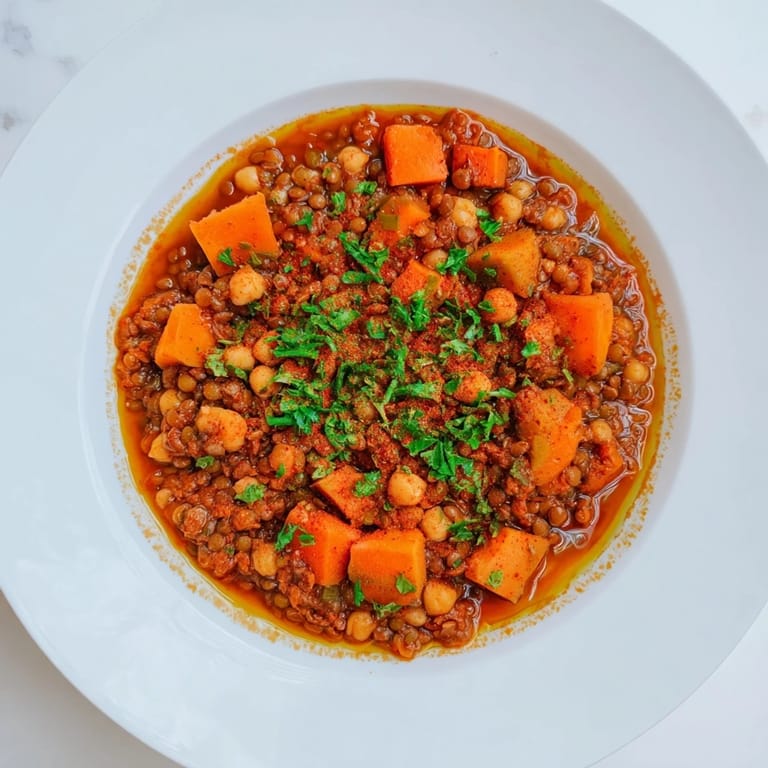
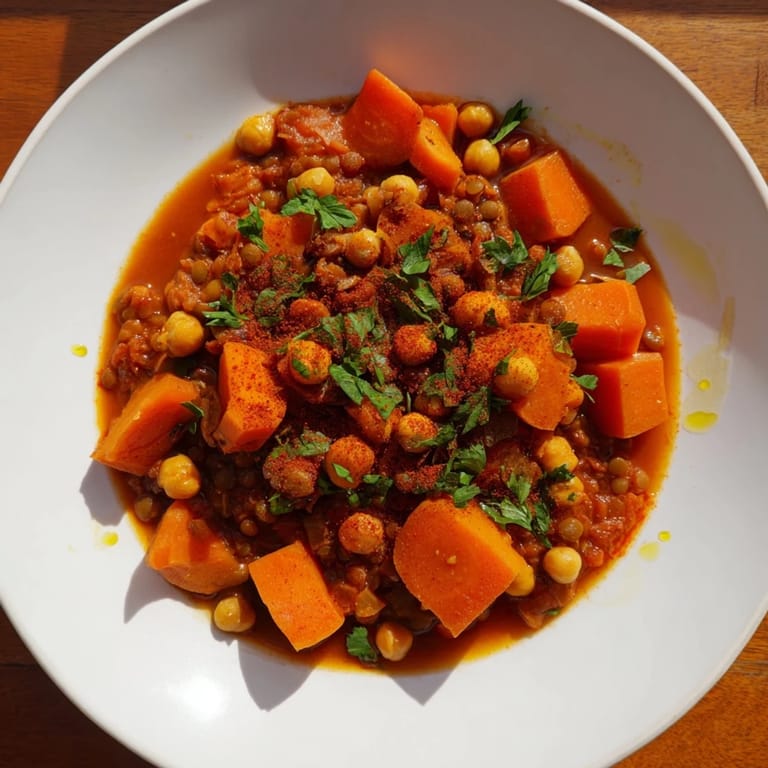
- Ladle the stew into bowls, scatter the remaining fresh parsley on top, and add a lemon wedge on the side. The color contrast is beautiful, and it invites people to customize their bowl.
 Save
Save What strikes me most about this stew is how it somehow tastes like both comfort and discovery at the same time. I've made it on rainy afternoons when I needed something warming, and on bright days when I wanted something that felt alive and vibrant.
The Magic of Sumac
Sumac is one of those ingredients that changed how I think about seasoning. It gives tartness without the acidity of vinegar or lemon, almost like you've captured the essence of brightness and preserved it as a powder. Once you start cooking with sumac, you'll find yourself reaching for it in salads, roasted vegetables, and even sprinkled over hummus. In this stew, it's what makes people say they can't quite place the flavor but they know they want another bowl.
Flexibility and Variations
One of the best things about this recipe is how gracefully it accepts changes. I've added spinach and kale in the last few minutes of cooking, stirred in roasted red peppers from a jar, and once even added a small handful of raisins for subtle sweetness. The base is so well-balanced that additions feel like you're building on something solid rather than fixing something broken. Some nights I serve it over rice, other nights with warm flatbread alongside, and occasionally I'll eat it completely on its own straight from a bowl.
Storing and Reheating
This stew is one of those rare recipes that improves with time. The flavors deepen and become more integrated as it sits in the refrigerator for a day or two. I usually store it in an airtight container and it keeps beautifully for about 4 days. When reheating, add a splash of water or broth if it's thickened too much, and taste for seasoning—sometimes a squeeze of fresh lemon before serving brings everything back into focus.
- For meal prep, portion into containers and you have ready-to-go lunches that feel special rather than repetitive.
- It also freezes well for up to 3 months, though the texture becomes slightly softer—still delicious, just less firm.
- Always reheat gently over low heat rather than blasting it on high heat, which can make the lentils turn mushy.
 Save
Save This stew has become something I turn to when I want to cook something that feels nourishing and intentional without demanding hours in the kitchen. It's the kind of dish that makes a simple dinner feel like an occasion.
Cooking Questions & Answers
- → What kind of lentils work best?
Brown or green lentils hold their shape well and provide a hearty texture suitable for this stew.
- → Can I add heat to this dish?
Yes, a pinch of cayenne pepper is optional and adds a gentle kick without overpowering the other flavors.
- → How long should the stew simmer?
Simmer the lentils and chickpeas for about 25–30 minutes until the lentils are tender but not mushy.
- → What can I serve alongside this stew?
Warm flatbread or rice complement the stew well and help soak up the flavorful broth.
- → Is sumac essential in the seasoning?
Sumac adds a tangy note, but if unavailable, extra lemon zest can provide a similar brightness.