 Save
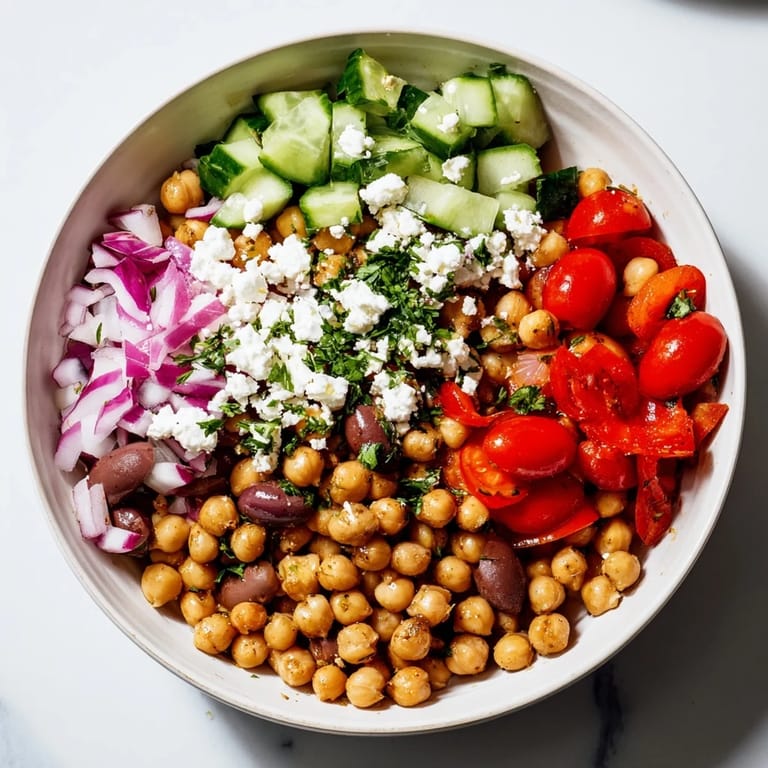
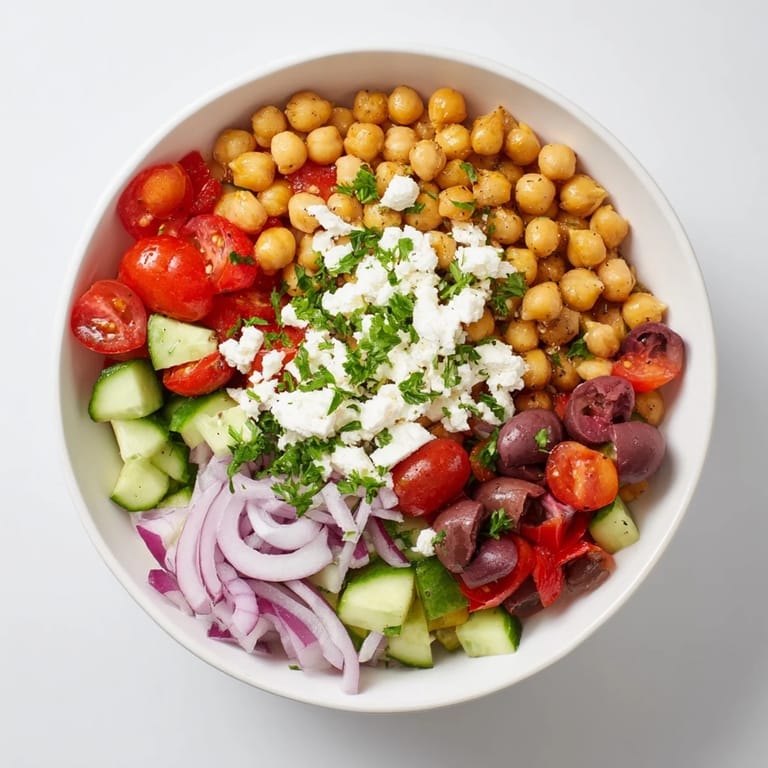
Save There's something about assembling a Mediterranean bowl that feels less like cooking and more like creating art on a plate. I discovered this particular combination on a lazy Sunday afternoon when I had a can of chickpeas, some vegetables that needed using, and absolutely no energy for anything complicated. The result was so bright and satisfying that I've been making variations of it ever since, each time tweaking it based on what's in my kitchen or what my mood demands that day.
I made this for a friend who'd just gone vegan, and I was honestly nervous about whether she'd feel like she was missing out. But watching her face when she took that first bite, the way the lemon and oregano hit all at once alongside the creamy vegan feta, I realized I'd accidentally created something that felt indulgent rather than like a compromise. She asked for the recipe before she'd even finished eating.
Ingredients
- Chickpeas (1 can, drained and rinsed): The foundation here, and draining them thoroughly keeps your bowl from getting watery and sad. They're sturdy enough to hold their shape but absorbent enough to soak up all that lemony dressing.
- Quinoa or brown rice (1 cup cooked, optional): This is your anchor if you want something more substantial, though honestly the bowl is plenty filling without it.
- Cucumber (1 medium, diced): The crispness is non-negotiable, so cut it right before serving if you can, and don't peel it—the skin adds a lovely color.
- Cherry tomatoes (1 cup, halved): These little bursts of sweetness balance the salty olives beautifully, and halving them means they don't roll everywhere.
- Red onion (1/4 small, thinly sliced): Raw and sharp, it cuts through the richness and keeps everything from feeling too heavy.
- Red bell pepper (1/2, diced): Adds sweetness and texture, and that vibrant color is half the appeal of this bowl.
- Vegan feta (80 g, crumbled): The texture matters here—crumble it right before serving so it stays distinct on top rather than melting into everything.
- Kalamata olives (1/3 cup pitted, halved): These are salty and briny and absolutely essential, though if you have a different olive you love, use it instead.
- Fresh parsley (2 tbsp, chopped): The fresh herb brightens everything up and makes it feel finished, so don't skip it.
- Extra-virgin olive oil (2 tbsp): The good stuff matters here since it's doing real work in the dressing, not just hiding in the background.
- Lemon juice (1 tbsp): Squeeze it fresh if you can—bottled never quite has the same life to it.
- Dried oregano (1 tsp): This is your Mediterranean signature, the herb that makes everything taste like you know what you're doing.
- Sea salt and black pepper (1/2 tsp and 1/4 tsp): Taste as you go, because olives and feta already bring salt, and you don't want to overdo it.
Tired of Takeout? 🥡
Get 10 meals you can make faster than delivery arrives. Seriously.
One email. No spam. Unsubscribe anytime.
Instructions
- Gather and prep your vegetables:
- Line up your cutting board and get everything prepped before you start assembling. Fresh vegetables matter here, so if something's been sitting in your fridge looking sad, swap it out for something with actual life to it.
- Combine the base:
- Dump your drained chickpeas into a large bowl with all the chopped vegetables. This is where you can taste as you go and mentally adjust your seasoning if needed.
- Make the dressing:
- In a small bowl, whisk together the olive oil, lemon juice, oregano, salt, and pepper until it emulsifies slightly. It should taste bright and assertive—a little more lemon juice if it feels too oily.
- Dress it all:
- Pour the dressing over everything and toss gently so you don't crush the chickpeas. The vegetables should glisten, not swim.
- Build your bowl:
- Divide the mixture between two bowls, adding quinoa or rice underneath if you're going that route. The base just holds everything, creating a more substantial meal if you need it.
- Top and finish:
- Sprinkle the vegan feta, olives, and parsley over each bowl right before serving. This keeps everything looking bright and prevents the toppings from getting lost in the mix.
- Serve or chill:
- Eat immediately if you love the contrast of temperatures and textures, or refrigerate for up to two days if you prefer it cold and thoroughly marinated. The flavors actually deepen as it sits.
 Save
Save I've brought this bowl to summer picnics, to potlucks where I wasn't sure what else would be available, to quiet lunches where I needed something that felt nourishing without being heavy. It's become the recipe I reach for when I want to feel like I'm eating something alive and intentional, not just fueling up. There's something grounding about the ritual of assembling it, the colors coming together, the way it smells like sun and herbs.
Why Mediterranean Bowls Work So Well
Mediterranean cuisine has been feeding people well for centuries, and it works because the flavors are honest and unafraid—lemon, olive oil, herbs, briny elements, fresh vegetables. Nothing is hiding or trying to impress you unnecessarily. When you build a bowl around these principles, you're building something that tastes good because it's built on a solid foundation, not because you've added something complicated. The beauty is in the restraint.
Customizing Without Losing the Spirit
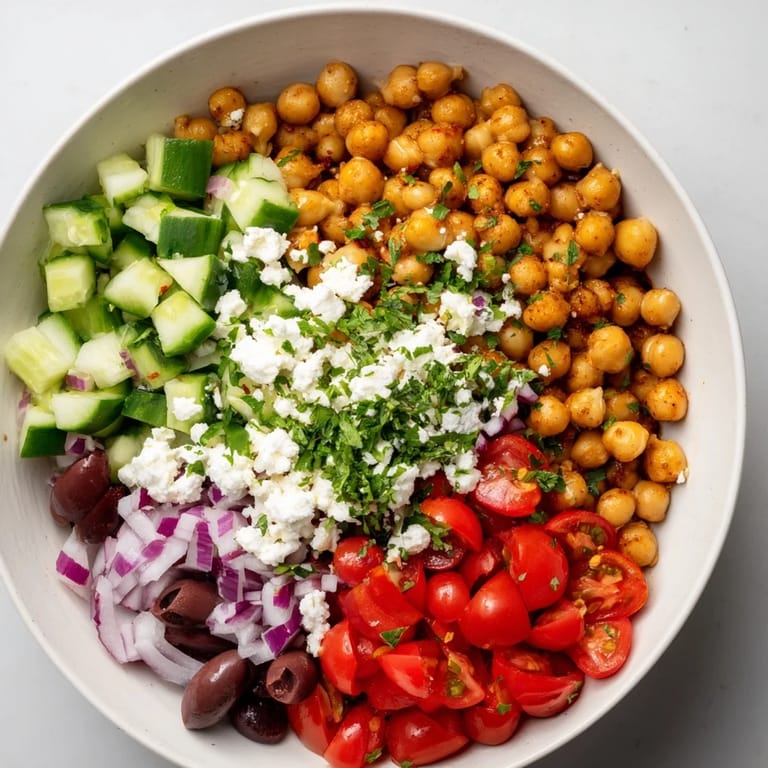
The genius of this bowl is that you can adapt it endlessly without breaking what makes it work. Swap the red pepper for yellow or orange if that's what you have. Use different olives if Kalamata aren't available—any briny olive will work. Add roasted chickpeas or pine nuts for crunch if you want that textural contrast. Even the dressing is flexible: more lemon if you like it bright, more oregano if you want herbiness to dominate. The only things that really matter are the chickpea base, the fresh vegetables, and the acidic dressing that ties everything together.
Meal Prep and Storage Magic
This is one of those rare recipes that actually improves when you make it ahead, something that feels almost too good to be true. The flavors marry overnight, the vegetables absorb all that lemony oregano goodness, and you end up with something that tastes like you've been thinking about it all day. Store everything in an airtight container for up to two days, though honestly I've kept it going for three without any problems.
- Keep the feta and parsley separate if you're storing it, adding them fresh when you're ready to eat so they don't get soggy or overwhelmed.
- If it dries out a bit in the fridge, just drizzle more olive oil and lemon juice before serving—it practically asks for it.
- This bowl is equally good straight from the fridge on a hot day or brought to room temperature if you prefer it less shocking to your palate.
 Save
Save This bowl has taught me that some of the best meals are the ones you throw together without overthinking, the ones that come from having good ingredients on hand and trusting that simplicity gets the job done. It's become my go-to proof that vegan eating doesn't require sacrifice—just intention and the good sense to let flavors speak for themselves.
Cooking Questions & Answers
- → Can I substitute the vegan feta with regular feta?
Yes, traditional feta can be used as a substitute if you’re not strictly following a vegan diet, providing a similar creamy texture and tangy flavor.
- → What is the best grain to serve with this bowl?
Cooked quinoa or brown rice both complement the bowl well, adding substance without overpowering the fresh Mediterranean ingredients.
- → How should I store leftovers to maintain freshness?
Store leftovers in an airtight container in the refrigerator for up to 2 days. The flavors will meld, offering a marinated taste when served chilled.
- → Can I add crunchier toppings to this dish?
Absolutely! Roasted chickpeas or toasted pine nuts add a pleasant crunch and additional texture contrast.
- → What drinks pair well with this Mediterranean bowl?
A crisp Sauvignon Blanc or chilled herbal tea pairs nicely, enhancing the fresh and zesty flavors.