 Save
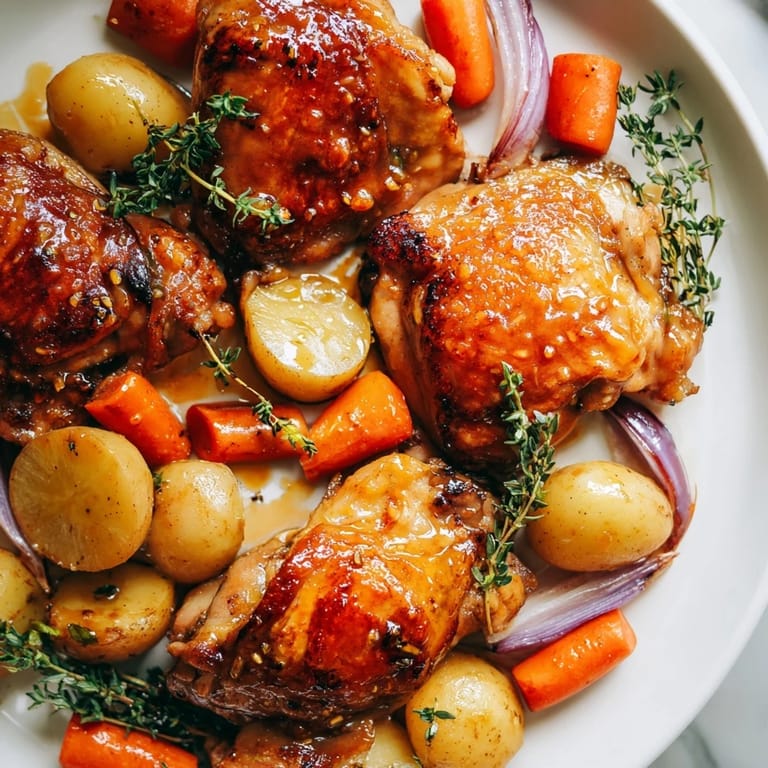
Save There's something about the smell of maple and mustard hitting hot chicken skin that makes you forget you're just throwing dinner together on a Tuesday night. I discovered this combination almost by accident when I had a half-empty jar of Dijon in the fridge and a bottle of maple syrup left over from weekend pancakes, and it turns out they're secretly meant for each other. The glaze gets sticky and dark and caramelized, and the whole kitchen fills with this warm, savory-sweet aroma that has everyone asking what's for dinner before they even walk in the door.
I made this for my sister's family one fall Sunday, and her youngest—who usually pushes vegetables around her plate—actually asked for seconds of the carrots because they were caramelized and sweet. That's when I knew this recipe was a keeper, not just because it tastes good, but because it somehow makes everyone at the table happier.
Ingredients
- Bone-in, skin-on chicken thighs (8 pieces, about 1.2 kg): They stay juicier than breasts ever could, and the skin crisps up beautifully when you don't move them around too much.
- Pure maple syrup (1/4 cup): Real maple has a depth that the imitation stuff just can't match; it's worth the extra dollar.
- Dijon mustard (3 tbsp): The sharp, grainy kind adds complexity and keeps the glaze from being one-note sweet.
- Olive oil (2 tbsp): Helps the glaze coat evenly and prevents it from scorching on the edges.
- Apple cider vinegar (2 tbsp): The acidity brightens everything and cuts through the richness of the chicken fat.
- Garlic (2 cloves, minced): Fresh garlic has a different bite than dried; it wakes up the whole dish.
- Fresh thyme (1 tbsp, or 1 tsp dried): Earthy and herbal, it ties the savory and sweet together perfectly.
- Smoked paprika (1/2 tsp): Just enough smokiness to add depth without overwhelming the maple-Dijon balance.
- Baby potatoes (400 g, halved): They caramelize around the chicken and absorb all the glaze that drips down.
- Carrots (250 g, cut into 2-inch pieces): The slight sweetness in carrots echoes the maple beautifully.
- Red onion (1, cut into wedges): Gets soft and almost candy-like when roasted, nothing like raw onion.
- Kosher salt and freshly ground black pepper: Always season in layers—first the chicken, then the vegetables, and taste as you go.
Tired of Takeout? 🥡
Get 10 meals you can make faster than delivery arrives. Seriously.
One email. No spam. Unsubscribe anytime.
Instructions
- Get your oven ready:
- Preheat to 220°C (425°F) and line your sheet pan with parchment paper or foil; this step might seem small, but cleanup is everything when dinner is already on the table.
- Dry and season the chicken:
- Pat each thigh completely dry with paper towels—this is non-negotiable if you want crispy skin. Season both sides generously with salt and pepper and let them sit while you prep the rest.
- Make the glaze:
- In a small bowl, whisk together the maple syrup, Dijon mustard, olive oil, apple cider vinegar, minced garlic, thyme, and smoked paprika until smooth and glossy. Taste it straight from the spoon if you want—it should be tangy, slightly sweet, and deeply savory.
- Arrange the vegetables:
- Toss your potatoes, carrots, and red onion with a light drizzle of olive oil, salt, and pepper, then spread them in a single layer on the baking sheet. This matters because vegetables that touch the pan brown better than those piled on top of each other.
- Nestle the chicken:
- Place the chicken thighs skin side up among the vegetables, leaving a little space between each one so steam can escape and skin can crisp. Brush each thigh generously with the glaze, reserving about 2 tablespoons for a second coat later.
- First roast:
- Put the pan in the oven for 30 minutes. You'll start to smell the maple and mustard caramelizing after about 15 minutes, and that's when you know things are happening.
- Second coat and finish:
- Pull the pan out carefully, brush the chicken with that reserved glaze, and slide it back in for another 5 to 10 minutes until the skin is deep golden and caramelized. The internal temperature should reach 74°C (165°F) when you test it with a meat thermometer in the thickest part of a thigh.
- Rest and serve:
- Let the whole pan sit for 5 minutes before plating—this gives the juices a chance to settle back into the meat. Scatter extra fresh thyme over the top if you have it.
 Save
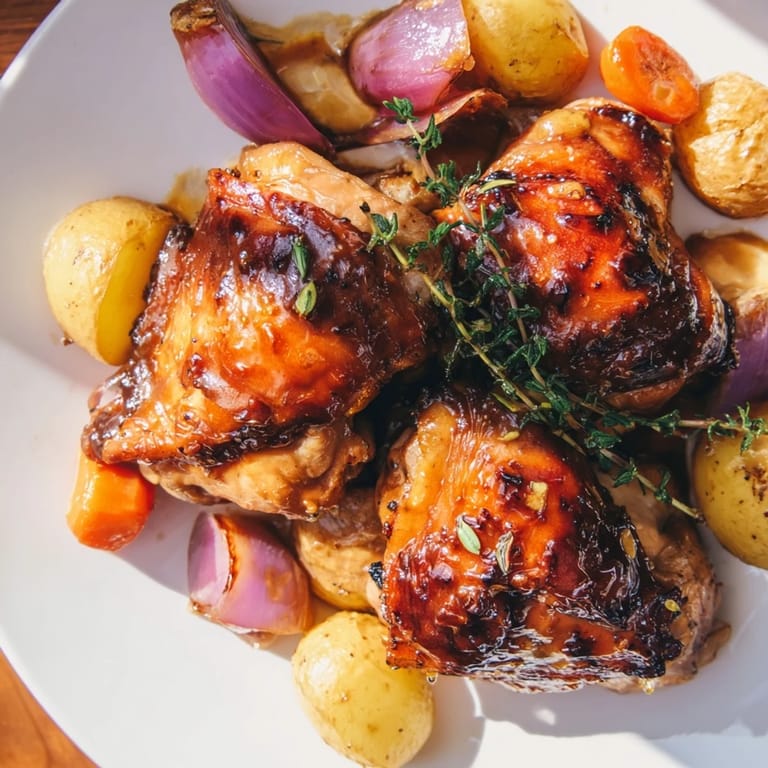
Save The first time I served this, someone asked for the recipe before they'd even finished eating, and I realized it wasn't the individual ingredients that made it special—it was how they came together to create something that felt both elegant and completely effortless. That moment made me understand why simple, well-balanced recipes are the ones people actually come back to.
Why Bone-In Thighs Are Your Secret Weapon
Chicken thighs are more forgiving than breasts because they have more fat running through them, which means you can't really overcook them into dryness the way you can with leaner cuts. The bone conducts heat and keeps the meat incredibly juicy, and the skin—if you don't move it around—becomes this crackling, golden thing that tastes almost better than the meat underneath. I used to be a breast-only cook until I realized I was working twice as hard for half the flavor.
The Glaze Formula That Works
The magic in this dish lives in how the maple and Dijon actually balance each other instead of competing. Maple alone would be cloying, Dijon alone would be sharp and one-dimensional, but together with the vinegar and a whisper of smoke, they become something that tastes like you spent hours developing the recipe instead of five minutes whisking. I've started using this same ratio on pork chops and salmon, and it works because the formula respects the ingredient's own flavor instead of drowning it.
Vegetable Swaps and Serving Ideas
The beauty of a sheet pan dinner is that you can swap vegetables based on what you have or what's in season without throwing off the timing. I've roasted this with sweet potatoes instead of regular potatoes, with thick-cut parsnips, with Brussels sprouts halved and tossed in the same way—everything works because they all benefit from that high heat and the glaze that drips down. A crisp white wine like Chardonnay or dry Riesling cuts through the richness perfectly if you want to drink alongside dinner.
- Sweet potatoes add earthiness and a deeper sweetness that echoes the maple even more.
- Brussels sprouts get crispy and caramelized on the cut side if you lay them flat.
- Pearl onions or shallots work beautifully too and look fancy without any extra effort.
 Save
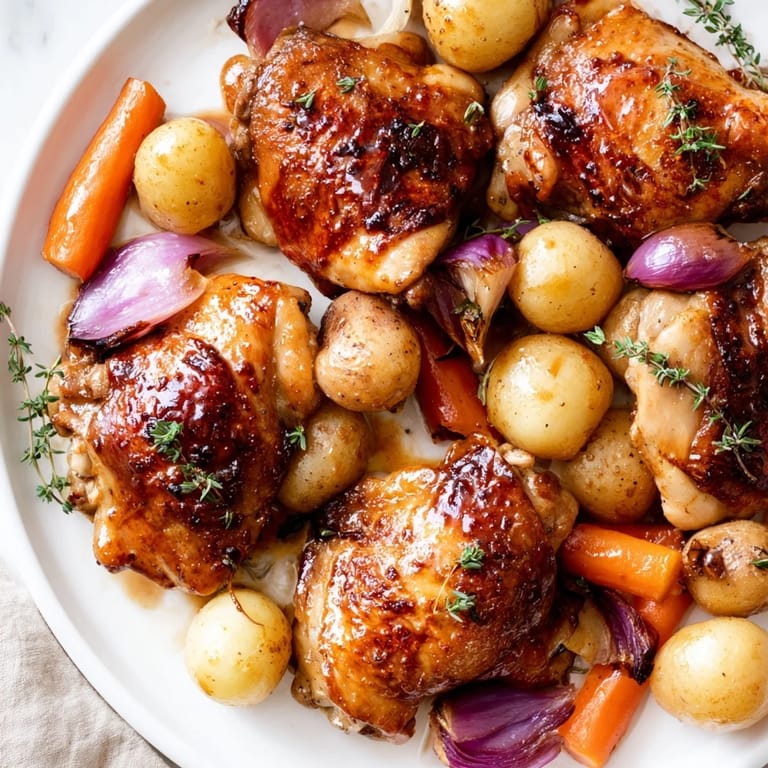
Save This recipe taught me that the best weeknight dinners are the ones where everything cooks together and comes to the table on the same pan it was born on. There's something honest about that.
Cooking Questions & Answers
- → What type of chicken thighs work best?
Bone-in, skin-on chicken thighs provide juicier, more flavorful results and crispier skin when roasted.
- → Can I substitute the vegetables?
Yes, sweet potatoes, parsnips, or Brussels sprouts make great alternatives to baby potatoes, carrots, and red onion.
- → How do I know when the chicken is done?
The chicken is fully cooked when its internal temperature reaches 74°C (165°F) and the skin is nicely caramelized.
- → Is it necessary to brush the glaze twice?
Brushing the glaze halfway through cooking intensifies flavor and helps achieve a sticky, caramelized coating.
- → What wine pairs well with this dish?
A crisp Chardonnay or a dry Riesling complements the sweet and tangy flavors of the glaze nicely.