 Save
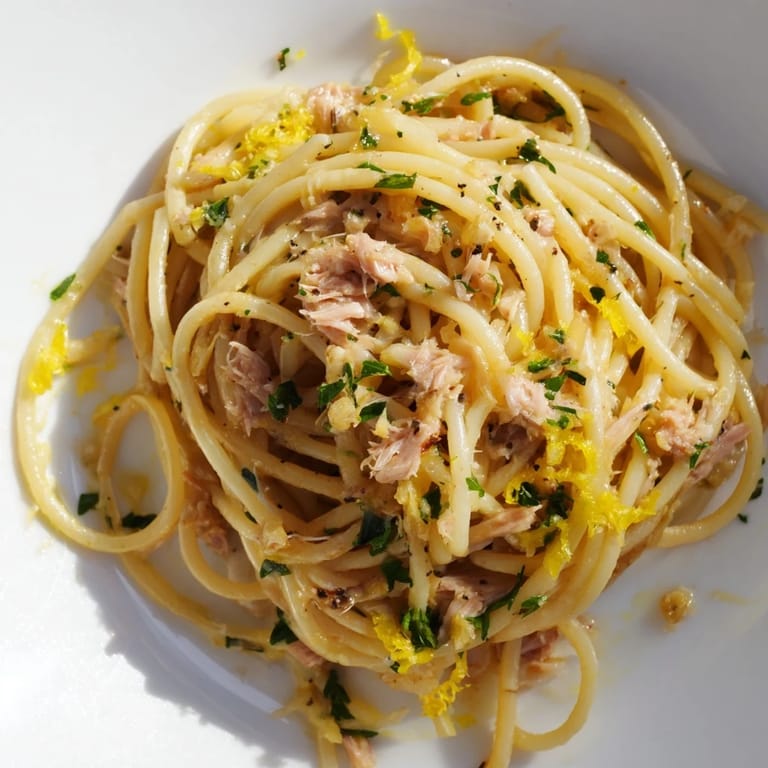
Save I started making this dish on nights when the fridge looked bare but I still wanted something that tasted intentional. A can of tuna, a lemon rolling around in the drawer, and pasta in the pantry became my unlikely trio. The first time I tossed it all together, I was skeptical, but the moment the garlic hit the oil and the lemon zest released its perfume, I knew I was onto something good.
I made this for my sister once after a long day, and she looked at me like I'd performed magic with pantry scraps. We ate it straight from the skillet, standing at the counter, talking through everything and nothing. That night it became more than just a quick fix, it became the meal I reach for when I want to feel capable without the fuss.
Ingredients
- Dried spaghetti: The long strands hold onto the sauce beautifully, and cooking it just until al dente gives you that perfect chew.
- Olive oil: Use something decent here, it's the base of your sauce and you'll taste it in every bite.
- Garlic cloves: Slice them thin so they soften and sweeten without burning, releasing that mellow, aromatic warmth.
- Lemon: Both the zest and juice bring brightness, the zest adds fragrance and the juice cuts through with tang.
- Canned tuna in olive oil: Drain it well but save a little of that oil if you want extra richness, and look for good quality chunks.
- Crushed red pepper flakes: A pinch adds a gentle heat that lingers without overpowering, totally optional but I always add it.
- Fresh flat-leaf parsley: It brings color and a grassy freshness that makes the dish feel alive.
- Pasta cooking water: This starchy liquid is the secret to a silky sauce that clings instead of puddles.
- Salt and black pepper: Season as you go, tasting and adjusting until it feels balanced.
Tired of Takeout? 🥡
Get 10 meals you can make faster than delivery arrives. Seriously.
One email. No spam. Unsubscribe anytime.
Instructions
- Boil the pasta:
- Bring a large pot of salted water to a rolling boil and cook the spaghetti until it still has a little bite. Before draining, scoop out a quarter cup of that starchy water, it's gold for the sauce.
- Warm the garlic:
- Heat olive oil in a large skillet over medium heat and add the sliced garlic, stirring gently until it smells sweet and turns just barely golden. Don't let it brown or it'll taste bitter.
- Add the tuna and lemon:
- Stir in the flaked tuna, lemon zest, lemon juice, and red pepper flakes if you're using them. Let everything warm through for a couple of minutes, breaking up the tuna gently as it heats.
- Toss with pasta:
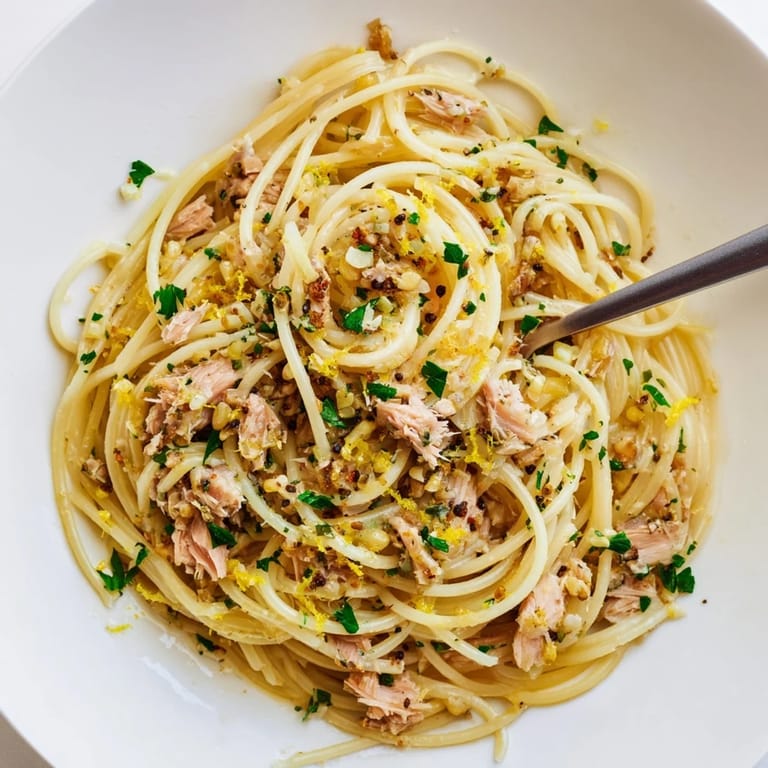
- Add the drained spaghetti to the skillet and toss it all together, pouring in the reserved pasta water bit by bit until the sauce coats each strand without being soupy. It should look glossy and unified.
- Finish and serve:
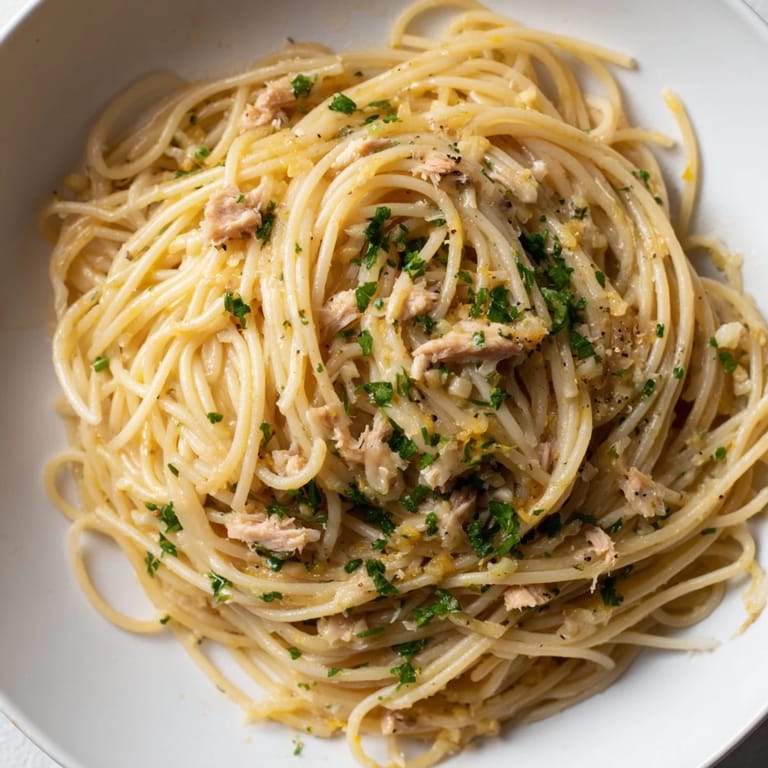
- Stir in the chopped parsley and taste for salt and pepper. Plate it up, sprinkle more parsley on top, and serve with lemon wedges for squeezing.
 Save
Save There was a summer evening when I made this outside on a camp stove, the sun setting over the water, and it tasted even better with salt in the air. It's funny how a simple plate of pasta can anchor a memory like that, turning an ordinary recipe into something you return to again and again.
What to Do with Leftovers
This reheats surprisingly well if you add a splash of water or olive oil to loosen it up. I've eaten it cold straight from the fridge the next day and it still holds its brightness, though the pasta firms up a bit. You can also toss in some arugula or spinach when reheating to freshen it up.
How to Make It Your Own
Sometimes I throw in a handful of halved cherry tomatoes for sweetness and color, or a spoonful of capers for that briny punch. If you like anchovies, melt one or two into the oil with the garlic for deeper umami. It's endlessly adaptable depending on what's sitting in your pantry or how adventurous you're feeling.
Pairing and Serving Ideas
This pairs beautifully with a crisp white wine like Pinot Grigio or Sauvignon Blanc, something that echoes the lemon and doesn't compete with the fish. Serve it with a simple green salad dressed in olive oil and vinegar, or some crusty bread to soak up any leftover sauce on the plate.
- Add a side of roasted vegetables if you want more heft.
- Top with grated Parmesan if you're not keeping it strictly pescatarian.
- Double the lemon juice if you love extra brightness.
 Save
Save This is the kind of meal that proves you don't need a long ingredient list or hours in the kitchen to make something worth sitting down for. It's quick, it's bright, and it always feels like a small victory on a plate.
Cooking Questions & Answers
- → How do I prevent the tuna from drying out?
Use canned tuna packed in olive oil and add it gently to the warm garlic oil to keep it moist and flaky.
- → Can I use fresh garlic instead of sliced garlic?
Sliced garlic offers a milder infusion, but minced fresh garlic can be used for a stronger garlic presence; cook carefully to avoid burning.
- → What can I add for extra richness in the sauce?
Capers or halved cherry tomatoes can boost the sauce’s depth and texture without overpowering the fresh lemon and garlic notes.
- → How should I adjust seasoning to taste?
Season with salt and freshly ground pepper gradually, tasting as you combine the ingredients to achieve a balanced flavor.
- → What wine pairs best with this pasta?
A crisp white wine like Pinot Grigio or Sauvignon Blanc complements the zesty lemon and tuna flavors beautifully.