 Save
Save I discovered Korean BBQ nachos at a late-night gathering when someone showed up with leftover gochujang beef and a bag of tortilla chips, and we started layering things on a baking tray out of pure curiosity. That moment of improvisation taught me that the best dishes often come from happy accidents—when bold flavors meet unexpected vessels. Now I make this whenever I want something that feels indulgent but doesn't require hours in the kitchen.
The first time I served these properly, my partner kept reaching for "just one more nacho" until the platter was nearly gone, which told me everything I needed to know about the recipe. There's something about the combination of gochujang's heat, melted cheese, and the crunch of fresh vegetables that makes people lose track of how many they've eaten.
Ingredients
- Flank steak or sirloin, thinly sliced (300g): The thin slices cook quickly and absorb the marinade beautifully—ask your butcher to slice it for you if you're not confident with a knife.
- Gochujang (2 tbsp): This fermented chili paste is the soul of the dish; don't skip it or substitute with sriracha, as the depth matters.
- Soy sauce (1 tbsp): Adds umami and saltiness that ties the beef and vegetables together.
- Brown sugar (1 tbsp): It balances the heat and saltiness, creating that addictive sweet-savory profile.
- Sesame oil (2 tsp): Use the toasted kind for maximum flavor—a little goes a long way.
- Fresh garlic and ginger: These are non-negotiable for authentic Korean BBQ depth.
- Tortilla chips (200g): Choose sturdy ones that won't go soggy instantly; thicker chips are your friend here.
- Mozzarella and Korean cheese blend (200g total): The combination melts beautifully and creates those gorgeous golden strings.
- Fresh vegetables (red onion, carrot, cucumber, scallions): These add textural contrast and brightness—don't skip them even though they're toppings.
- Kimchi (2 tbsp): The pickled funk is what elevates this from ordinary nachos to something memorable.
- Toasted sesame seeds and cilantro or shiso: These finishing touches add aroma and visual appeal.
Tired of Takeout? 🥡
Get 10 meals you can make faster than delivery arrives. Seriously.
One email. No spam. Unsubscribe anytime.
Instructions
- Build your marinade:
- In a bowl, whisk together gochujang, soy sauce, brown sugar, sesame oil, minced garlic, ginger, and rice vinegar until smooth and glossy. Add the sliced beef and massage it gently so every piece gets coated, then let it sit for at least 20 minutes—this is where the magic begins.
- Heat your oven and skillet:
- Preheat to 200°C (400°F) while you get a skillet very hot over medium-high heat. You want it hot enough that the beef hits with an audible sizzle.
- Sear the beef:
- Working in batches so you don't crowd the pan, cook the marinated beef for 2 to 3 minutes per batch until the edges are deeply browned and caramelized. Transfer to a plate as you go.
- Prepare your nacho base:
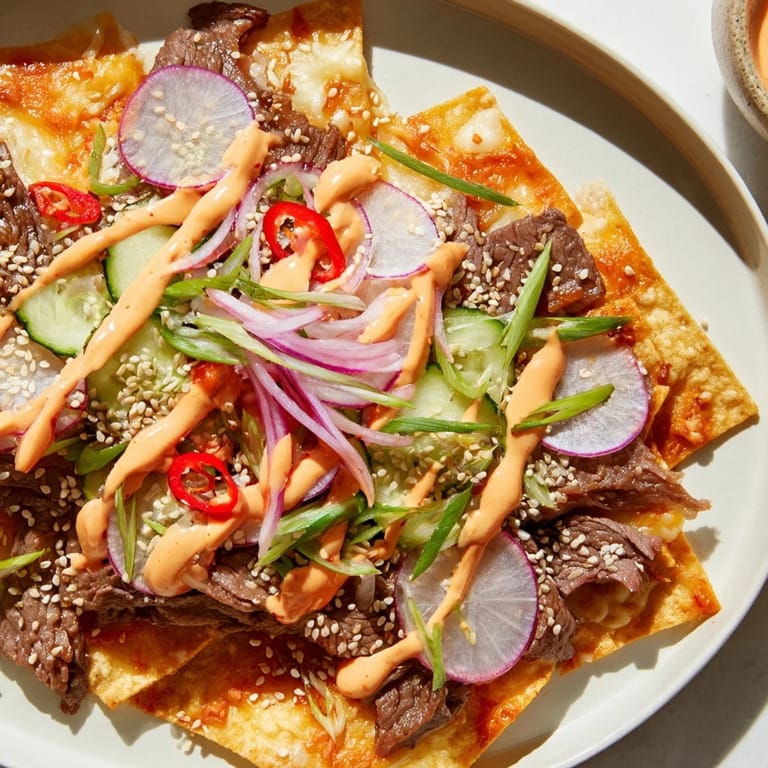
- Line a baking tray with parchment paper and spread tortilla chips in a single layer, overlapping slightly. Scatter half the cheese blend over the chips, then distribute the cooked beef evenly.
- Cheese melt:
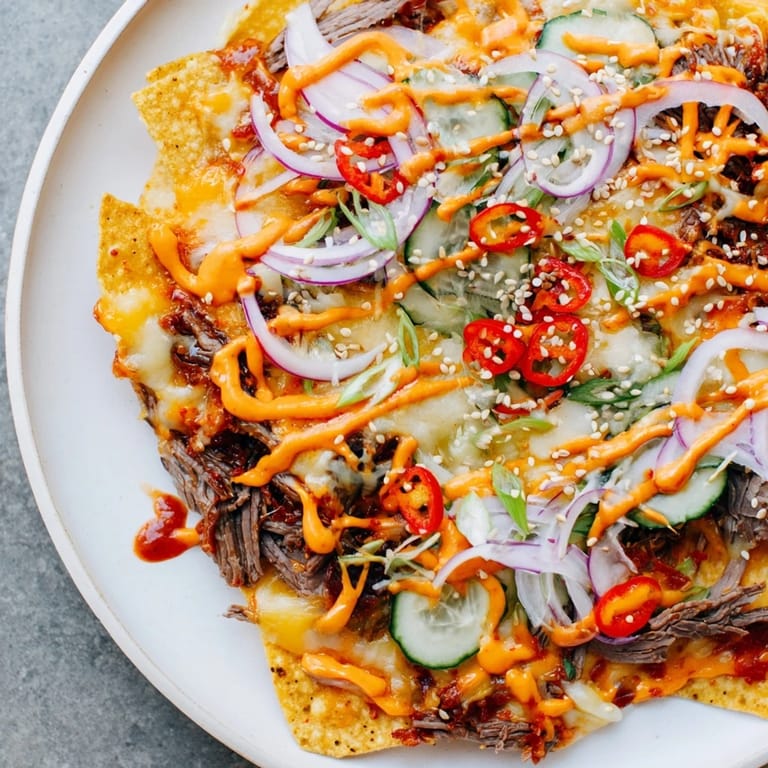
- Sprinkle the remaining cheese over everything and slide the tray into the oven for 6 to 8 minutes until the cheese is bubbling at the edges and golden on top—don't walk away, or you'll miss the perfect moment.
- Fresh toppings time:
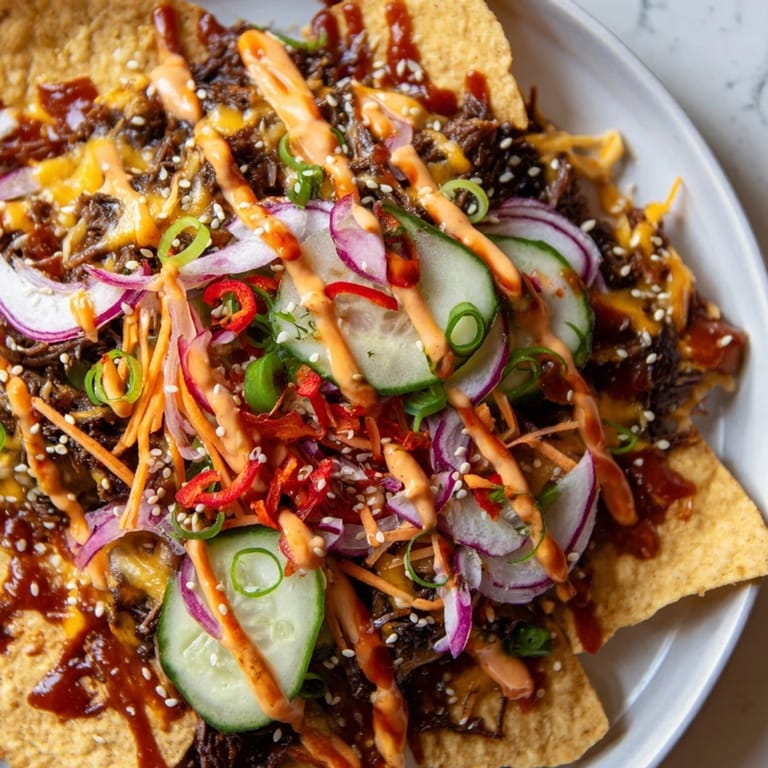
- While it's still hot, scatter the sliced red onion, julienned carrot, cucumber slices, and scallions across the top, then add the red chili if using. Sprinkle sesame seeds generously.
- Final flourishes:
- Top everything with chopped kimchi and fresh cilantro or shiso leaves. Drizzle with sriracha mayo or gochujang mayo if you like, and serve immediately with lime wedges alongside.
 Save
Save The moment that made me realize this recipe was special came when a friend who usually avoids spicy food ate half the platter and asked for the gochujang marinade recipe. It proved that when flavors are balanced and executed well, they convert even the skeptics.
Why Gochujang Is the Star
Gochujang brings complexity that no single hot sauce can match—it's got fermented depth, sweetness, and heat all working together. I've seen people assume it's just a spicy paste, but it's a complete seasoning that rounds out the beef and makes the whole dish feel intentional rather than chaotic.
The Cheese Strategy
Using two types of cheese matters more than you'd think. Mozzarella gives you those satisfying stretchy strands, while a cheddar blend adds sharpness that prevents the plate from feeling one-note. If you can find actual Korean pizza cheese or mozzarella-cheddar blends at a Korean market, grab them—they melt like dreams.
Timing and Serving
These nachos are best eaten immediately, when the cheese is still hot and the tortilla chips haven't started absorbing moisture. I always tell guests to grab a plate and dive in right away rather than letting them sit, which is the opposite of most shareable dishes.
- Pair with a crisp lager or cold soju if you're making this for a gathering.
- If you're feeding a crowd, you can prep everything except the cheese melt ahead of time and bake just before serving.
- Leftovers are manageable for a day in the fridge, but reheat gently in a 160°C oven rather than the microwave.
 Save
Save This recipe is my reminder that fusion food works best when you respect the traditions you're borrowing from while enjoying the fun of playing with them. I hope it becomes a go-to moment in your kitchen too.
Cooking Questions & Answers
- → What cut of meat works best for the marinated beef?
Flank steak or sirloin, thinly sliced, ensures tender, flavorful bites that cook quickly and absorb the marinade well.
- → Can I substitute the cheeses used in this dish?
Using mozzarella mixed with a mild cheddar or Korean blend maintains the melty texture and enhances the savory depth.
- → How can I make this dish vegetarian-friendly?
Replace beef with marinated mushrooms or jackfruit, and ensure the chips and sauces are vegetarian to keep layers full of flavor.
- → What are some good beverage pairings?
Pair with a crisp lager or chilled soju to balance the spicy, rich notes of the layered ingredients.
- → Is the spice level adjustable?
Yes, you can reduce or omit the red chili and sriracha mayo to soften heat while keeping bold flavors intact.