 Save
Save There's a particular magic that happens when you walk into a Parisian bistro on a cold evening and catch that first whiff of caramelized onions mingling with melted cheese and toasted bread. I spent an afternoon in a tiny corner café near Île de la Cité, watching the chef tend to enormous pots of soup with the kind of patience that only comes from making the same dish a thousand times. That's when I understood that French onion soup isn't rushed—it's a meditation, a slow transformation of humble ingredients into something that feels almost ceremonial.
Years ago, I made this for a dinner party when I was still convinced that cooking meant following shortcuts. I used fast-caramelized onions from a jar, thinking nobody would notice. My then-boyfriend took one bite and asked, without judgment, if I wanted to try it the real way together—the next Saturday, we spent two hours just tending to onions, talking about everything and nothing. That soup became the reason I stopped cutting corners in the kitchen.
Ingredients
- Yellow onions (4 large, thinly sliced): These are your foundation—their natural sugars caramelize into deep, complex sweetness that becomes the soul of the soup. Don't skip this step by using sweet onions; you need the regular yellow ones to get that proper color and depth.
- Leeks (2 large, white and light green parts only): They add a gentler allium note and a silky texture that balances the onion's intensity. Always split them lengthwise and rinse between the layers where dirt loves to hide.
- Shallots (3, thinly sliced): These bridge the gap between onion and garlic, adding sophistication without overpowering the soup.
- Garlic cloves (3, minced): Add this late in caramelization so it doesn't burn and turn bitter—a lesson I learned the painful way.
- Unsalted butter and olive oil (3 tablespoons and 2 tablespoons): The butter brings richness while the oil raises the smoke point; together they're the perfect vehicle for even caramelization without burning.
- Beef broth (8 cups, high-quality): This is worth spending a little extra on—cheap broth will make cheap-tasting soup, full stop. Vegetable broth works beautifully if you're going that route.
- Worcestershire and soy sauce (1 tablespoon and 2 teaspoons): These aren't about tasting salty or fermented; they're about amplifying umami in a way that makes people ask what your secret is.
- Dry white wine (1/2 cup): The acidity cuts through richness and the alcohol cooks off, leaving only sophistication behind.
- Fresh thyme and bay leaf: These herbs aren't just flavoring—they anchor the whole dish in something timeless and recognizable.
- Baguette, sliced into 1/2-inch rounds: Day-old bread works best because it toasts crisp without getting soggy immediately.
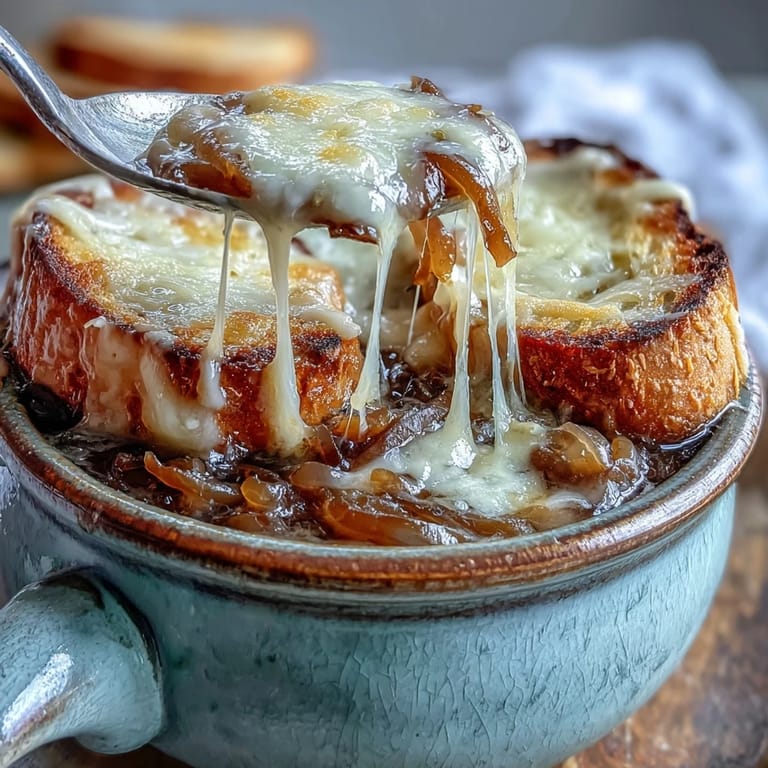
- Gruyère cheese (2 cups, grated): This is non-negotiable—its nutty character and melting quality are exactly what this soup deserves. Don't use pre-shredded if you can help it.
Tired of Takeout? 🥡
Get 10 meals you can make faster than delivery arrives. Seriously.
One email. No spam. Unsubscribe anytime.
Instructions
- Get your setup ready:
- Pull out your heaviest pot—cast iron or a good Dutch oven makes all the difference because you need even heat and nothing sticking to the bottom. Have all your alliums prepped and ready before you start heating anything.
- Begin the caramelization:
- Heat butter and oil over medium heat until they're dancing together, then add your onions, leeks, and shallots. This is where patience becomes an ingredient—you're looking for deep golden-brown, almost mahogany color, and that takes a solid 35 to 40 minutes of occasional stirring.
- Add the aromatics:
- When your onions are properly caramelized, add the minced garlic and stir constantly for just 2 minutes—any longer and it'll turn dark and bitter. You'll smell it immediately when it's right.
- Deglaze with wine:
- Pour in the white wine and scrape the bottom of the pot with your wooden spoon to lift all those browned, flavorful bits (this is called fond, and it's liquid gold). Let it simmer for a minute or two until the raw alcohol smell fades.
- Build your broth:
- Add the beef broth, Worcestershire sauce, soy sauce, fresh thyme, and bay leaf. Stir to combine, then bring everything to a gentle simmer—not a rolling boil, just a quiet, steady heating through.
- Let it mingle:
- Reduce heat and let the soup simmer uncovered for about 30 minutes, stirring occasionally so nothing settles to the bottom. This is when all those flavors start talking to each other.
- Season and adjust:
- Taste it now and add salt and pepper to your preference—remember that the cheese topping will add saltiness, so be gentle. Fish out and discard the bay leaf.
- Toast the bread:
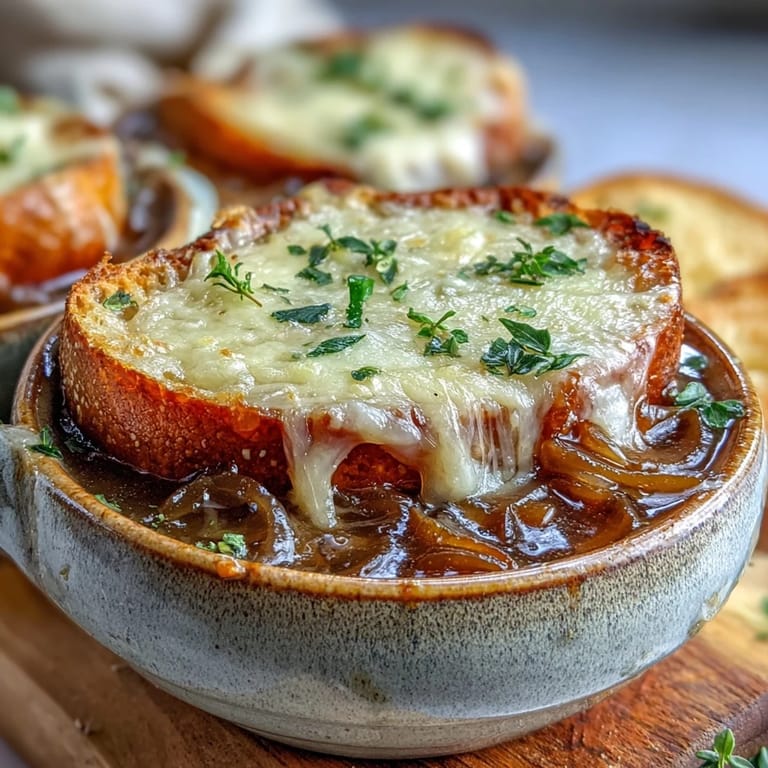
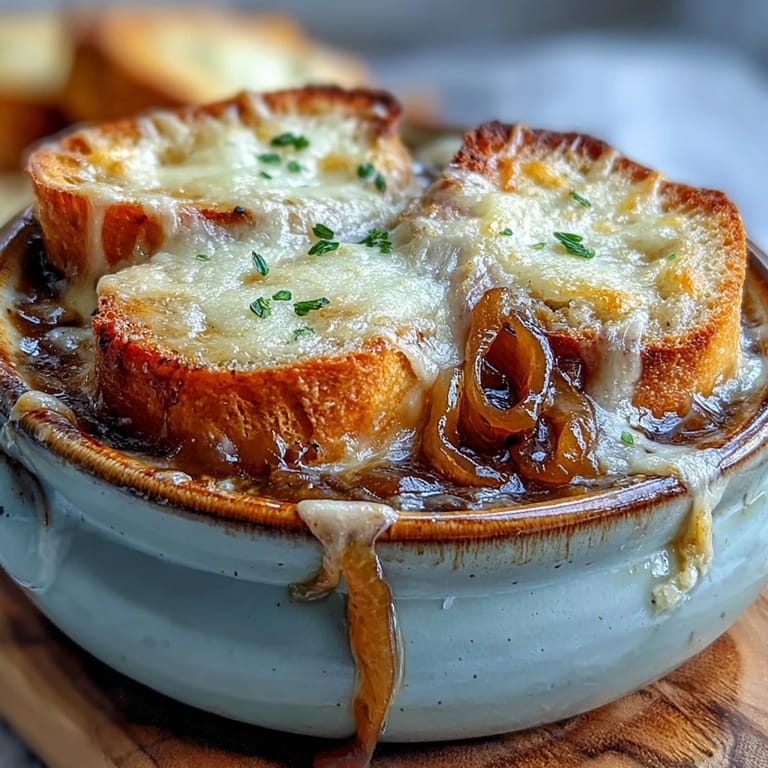
- Preheat your broiler and arrange baguette slices on a baking sheet. Toast them under the broiler for about 1 to 2 minutes per side until they're golden and crispy—they'll crunch, then soften as they soak in the soup.
- Build your bowls:
- Ladle the hot soup into oven-safe bowls (this is important—regular bowls will crack under the broiler). Top each with toasted baguette slices and a generous handful of grated Gruyère.
- Finish under the broiler:
- Place the bowls under the broiler for 3 to 5 minutes until the cheese is melted, bubbly, and just barely starting to brown on top. Watch it like a hawk because the difference between perfect and burnt is about 90 seconds.
- Serve with care:
- Pull the bowls out using oven mitts and let them sit for exactly one minute so the cheese sets slightly and nobody burns the roof of their mouth. A small garnish of fresh thyme on top is the final touch that says you cared.
 Save
Save I remember serving this to my grandmother on a snowy Christmas Eve, and she closed her eyes after that first spoonful like she was traveling somewhere. Later, she told me that her mother made soup just like this when she was homesick during the war, and suddenly this wasn't just my recipe anymore—it was a thread connecting three generations across decades and continents.
When Good Broth Makes All the Difference
The quality of your broth truly determines the ceiling on how good this soup can be. When I started using homemade beef broth or even high-quality store-bought versions, the entire character of the soup shifted—suddenly it tasted like something you'd eat in Paris, not something assembled from pantry staples. If you have time to make broth from bones and aromatics, this is the moment to use it.
The Secret of the Umami Layers
The Worcestershire and soy sauce might seem like odd additions to French soup, but they're not betraying the tradition—they're honoring it. These ingredients amplify the savory depth that classical French cooking has always pursued, just through a slightly different language. The combination creates a complexity that makes people say the soup tastes incredible without being able to identify what makes it so good.
Timing and Temperature Matter More Than You Think
This soup lives in the details of temperature and timing—rushing the caramelization or overcooking the cheese by two minutes changes the entire experience. The first time I made it, I thought I could skip ahead and use already-caramelized onions, thinking I was being clever. The result was a soup that tasted fine but felt hollow compared to one built with patience.
- Start with a cold pot and room-temperature ingredients if you want the most even caramelization without any parts burning.
- Keep your broiler at medium-high rather than maximum heat so the cheese melts beautifully without blackening the bread underneath.
- The soup actually tastes better the next day after the flavors have had time to settle and deepen, so don't hesitate to make it ahead.
 Save
Save This soup has a way of becoming the dish you make when you want to feel like you're taking care of someone, or when you want to take care of yourself. It's proof that the best food doesn't need to be complicated—it just needs intention and time.
Cooking Questions & Answers
- → Why does caramelizing onions take so long?
Caramelizing onions slowly draws out their natural sugars and transforms them into sweet, deeply flavorful strands. Rushing this process over high heat will burn the onions rather than caramelize them, resulting in bitter flavors instead of the rich sweetness that makes this dish so special.
- → Can I make this vegetarian?
Absolutely. Substitute high-quality vegetable broth for the beef broth and use a vegetarian Worcestershire sauce or omit it entirely. The result will still be delicious, though slightly lighter in flavor. You might want to add an extra splash of wine or a pinch of smoked paprika to maintain depth.
- → What cheese works best for the topping?
Classic Gruyère is traditional because it melts beautifully and adds nutty complexity. Swiss or Emmental make excellent alternatives with similar melting properties. For a more assertive flavor, try adding some aged Comté or a touch of sharp Parmesan mixed with your primary cheese.
- → Can I prepare this in advance?
The soup base actually improves after a day or two in the refrigerator as the flavors continue to meld. Prepare through step 5, cool completely, and store for up to 3 days. Reheat gently before adding the bread and cheese—the broiled topping should always be done just before serving for the best texture.
- → Why do some versions use bread directly in the soup?
Traditional French preparation sometimes places a bread round directly in the soup before adding cheese, creating a thicker, more porridge-like consistency. Our version keeps the bread toasted on top for a pleasant contrast between crisp crust and tender soup—feel free to try both methods to see which you prefer.
- → What wine should I use?
A dry white wine like Sauvignon Blanc, Pinot Grigio, or a dry French white works well. You want something acidic and crisp to cut through the richness of the onions and broth. Avoid sweet wines or heavily oaked Chardonnays, as they can overwhelm the delicate balance of flavors.