 Save
Save I discovered the magic of a grazing board the night I was supposed to host a dinner party but completely burned the main course. Standing in my kitchen with smoke still lingering, I realized my guests were arriving in an hour, and I had nothing but pride and a well-stocked pantry. That's when it hit me—why not lean into the chaos and create something that celebrated abundance instead of pretending at a formal meal? I pulled out my largest board, started arranging cheeses and fruits with theatrical flair, and somewhere between the third wedge of brie and the first cascade of grapes spilling over the edge, I understood that sometimes the most memorable meals aren't cooked—they're composed.
My aunt took one look at the first board I made for her book club and said, "This looks like something from a theater set," which was such a perfect observation that I've been chasing that exact feeling ever since. Now whenever I make one, I think about those velvet stage curtains, the way fabrics drape and flow, and how food can be both incredibly luxurious and wonderfully casual at the same time. That comment stuck with me more than any compliment about taste ever could.
Ingredients
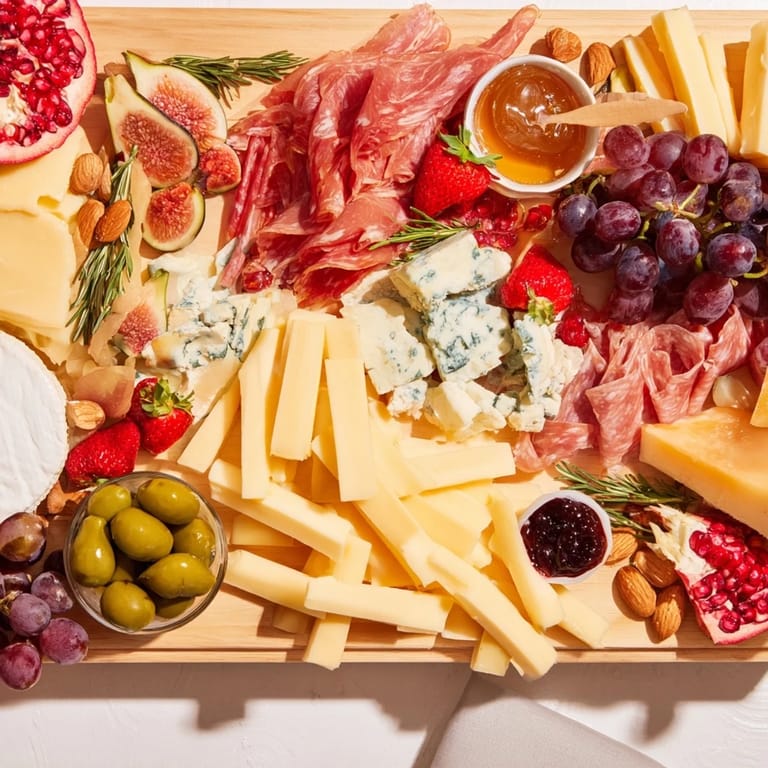
- Brie: Buy a whole wheel and cut it into generous wedges just before serving—it stays creamy longer this way and feels more intentional than pre-sliced versions.
- Aged Cheddar: Cut into sticks rather than chunks so they stand up tall and dramatic; the angular shapes catch light better on the board.
- Blue Cheese: Breaking it into uneven pieces gives it character and prevents it from looking too uniform or sterile.
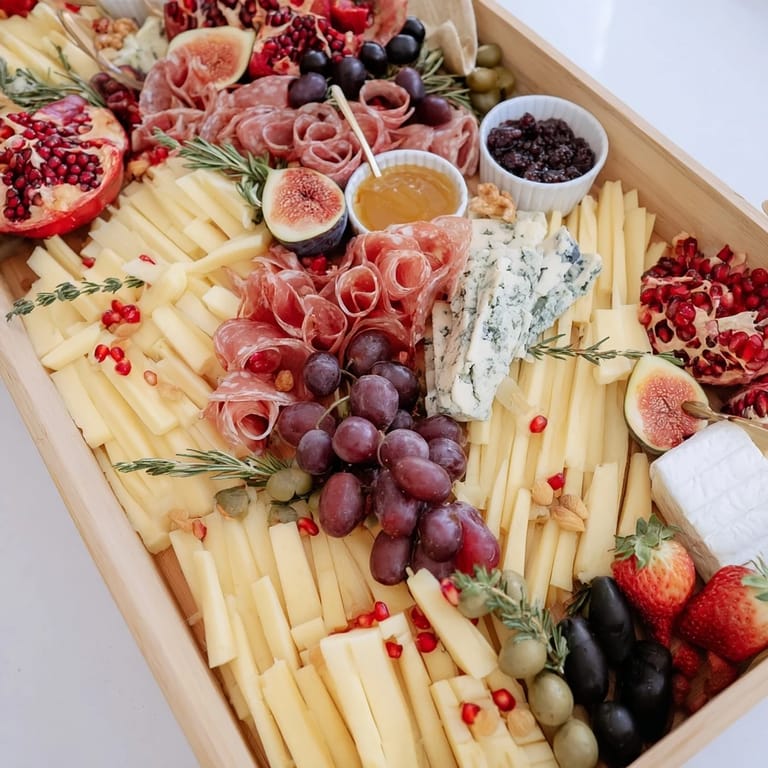
- Prosciutto: Drape it loosely like fabric rather than folding it into tight triangles—the whole point is to mimic curtains, after all.
- Soppressata: Fold the slices into quarters so they have visible layers and stack naturally without sliding around.
- Red Grapes: Leave them on the stem whenever possible because they photograph beautifully and guests can grab them without needing a fork.
- Fresh Figs: Halve them right before serving so the insides stay vibrant and don't oxidize to an unappealing brown.
- Strawberries: Leave the green tops on and halve them lengthwise for the prettiest presentation.
- Pomegranate Seeds: These are your jewels—seed them the day before and store them in the fridge so they're ready to scatter dramatically.
- Baguette: Slice it at an angle rather than straight across; angled slices look more intentional and sophisticated.
- Seeded Crackers: Choose ones with visible seeds for texture and visual interest that plain crackers can't match.
- Fig Jam: A small bowl of this is pure genius because it bridges sweet and savory and guests discover it organically.
- Honey: Drizzle some on the board itself, not just in the bowl, so it catches the light and invites exploration.
- Marcona Almonds: These buttery Spanish almonds are worth seeking out; they're roasted in oil and feel more luxurious than regular almonds.
- Olives: Mix green and black for color contrast and let pits stay in a small bowl so guests know to spit them out.
- Fresh Herbs: Rosemary sprigs tucked between ingredients smell incredible and add height variation that keeps the eye moving across the board.
Tired of Takeout? 🥡
Get 10 meals you can make faster than delivery arrives. Seriously.
One email. No spam. Unsubscribe anytime.
Instructions
- Choose Your Stage:
- Select a large wooden or marble board—something with character that will anchor the whole composition. Position it so that one edge hangs slightly over the table edge, creating natural drama and giving ingredients room to cascade without falling.
- Create the Foundation with Cheese:
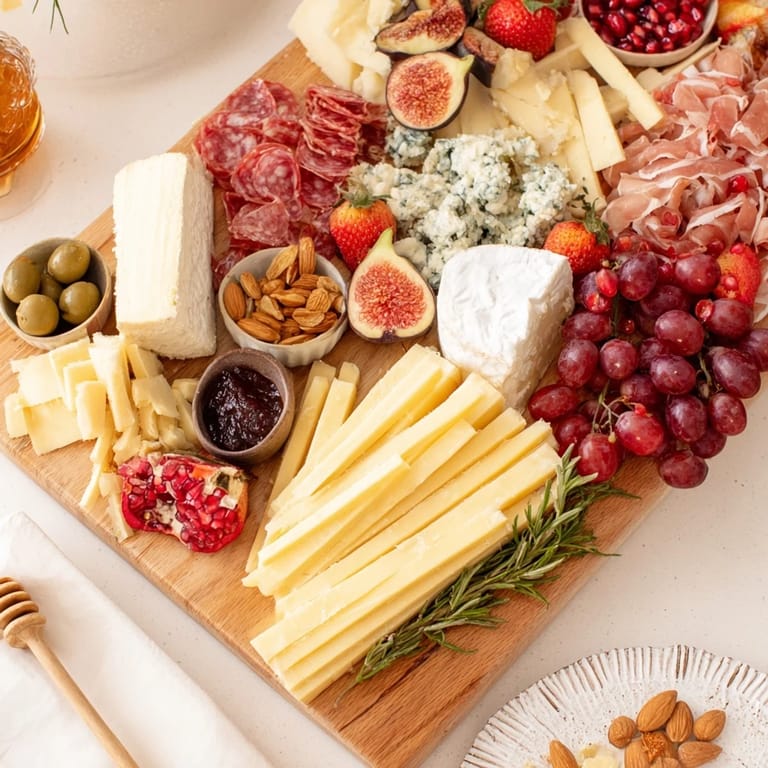
- Arrange your three cheeses in distinct sections, letting some pieces deliberately spill over the board's edge like velvet curtains at intermission. The key is intentional messiness—think placement, not perfection.
- Layer the Charcuterie:
- Drape and fold your prosciutto and soppressata so they pool and flow across the board with the same elegance as draped fabric. Let them overlap the cheese sections and drift toward the edges.
- Scatter the Fruit:
- Tuck grapes, figs, strawberries, and pomegranate seeds into the empty spaces, creating little trails that lead the eye across the board. Some should naturally rest on top of cheeses, some should drift off edges.
- Position the Bread and Crackers:
- Fan your baguette slices and crackers so they stand at slight angles, allowing them to overhang the board's edge without actually falling. They become architectural elements, not just sides.
- Nestle the Bowls and Extras:
- Place small bowls of jam, honey, olives, and almonds among the other ingredients, creating little discovery zones that guests explore as they graze. Surround them with herbs so the bowls feel integrated rather than tacked on.
- Garnish with Theater in Mind:
- Tuck fresh rosemary and thyme sprigs between ingredients for fragrance and height variation. Let some herbs trail off edges or stand upright for dramatic emphasis.
- Step Back and Breathe:
- Before serving, step back and let your eyes move across the whole board like you're seeing it for the first time. Adjust anything that feels too empty or too crowded, then trust your instincts.
 Save
Save I'll never forget the moment when my friend's eight-year-old daughter reached past the fancy cheeses to grab a pomegranate seed, popped it in her mouth, and said, "This is better than dessert," with such conviction that the entire table erupted. That's when I truly understood that grazing boards aren't about impressing people with sophistication—they're about creating a space where everyone finds their own version of delicious, whether that's the crumbly aged cheddar or those jewel-like seeds.
The Art of the Overhang
The cascading effect isn't just visual—it's actually functional. When ingredients flow over the board's edges, you create accessibility zones where guests can easily grab what they want without reaching across other people or feeling like they're disrupting some carefully curated arrangement. The overhang also creates shadow and depth that photographs beautifully and makes the whole composition feel less like a serving platter and more like an edible installation. Think of it less as "what will fit" and more as "where can this naturally want to fall."
Why This Works as Theater
The moment I renamed this in my head from "fancy cheese board" to "edible stage set," everything changed about how I approached it. Suddenly I wasn't worried about being perfectly neat or symmetrical—I was thinking about drama, visual movement, and creating a narrative that unfolded as guests explored. The colors should pop, the textures should surprise, and the arrangement should make people actually stop and look before they reach for food. It's the difference between a functional serving board and an experience.
Building Flavor Combinations
What makes this board brilliant is that it lets every guest build their own flavor story. The person who wants salty-sweet will pair aged cheddar with fig jam and a pomegranate seed. Someone else might stack prosciutto, brie, a strawberry, and a cracker into their own perfect bite. I've learned that the best boards aren't about the chef directing the experience—they're about providing a palette and trusting people to paint their own masterpiece.
- Try pairing the creamy brie with honey and crushed almonds for a simple but elegant combination.
- The blue cheese sings when you add fig jam—let guests discover this themselves or mention it casually as a suggestion.
- A single grape paired with aged cheddar and a seeded cracker creates a completely different flavor moment than fruit with brie.
 Save
Save Every time I make this board, I'm reminded that the best meals are often the ones that look like they took forever but actually took twenty minutes. There's something magical about creating something that feels expensive and dramatic without the pressure of actual cooking—it's pure creativity with a safety net.
Cooking Questions & Answers
- → How can I make this grazing board suitable for vegans?
Replace cheeses with plant-based alternatives and omit the charcuterie. Add extra fruits, nuts, and edible flowers for color and variety.
- → What breads pair well with this spread?
Sliced baguette and seeded crackers complement the creamy cheeses and fresh fruits beautifully, adding crunch and balance.
- → How should I arrange the ingredients for best presentation?
Layer cheeses and charcuterie so they drape over the edge, then tuck fruits and nuts between for a cascading, natural look.
- → Can this board be prepared ahead of time?
Yes, assemble shortly before serving to maintain freshness, especially with delicate fruits and herbs.
- → What drinks complement this board?
A crisp rosé or sparkling wine pairs wonderfully, enhancing the flavors without overpowering them.