 Save
Save I discovered this salad on a spring afternoon when I was trying to impress someone who said they only liked salads if they were "actually beautiful." Standing in my kitchen, I realized I had an abundance of green produce and a sudden inspiration: what if I treated the salad like a landscape painting, with layers and depth? That's when the Emerald Isle Greenscape was born—a dish that proved salads could be both a feast for the eyes and genuinely delicious to eat.
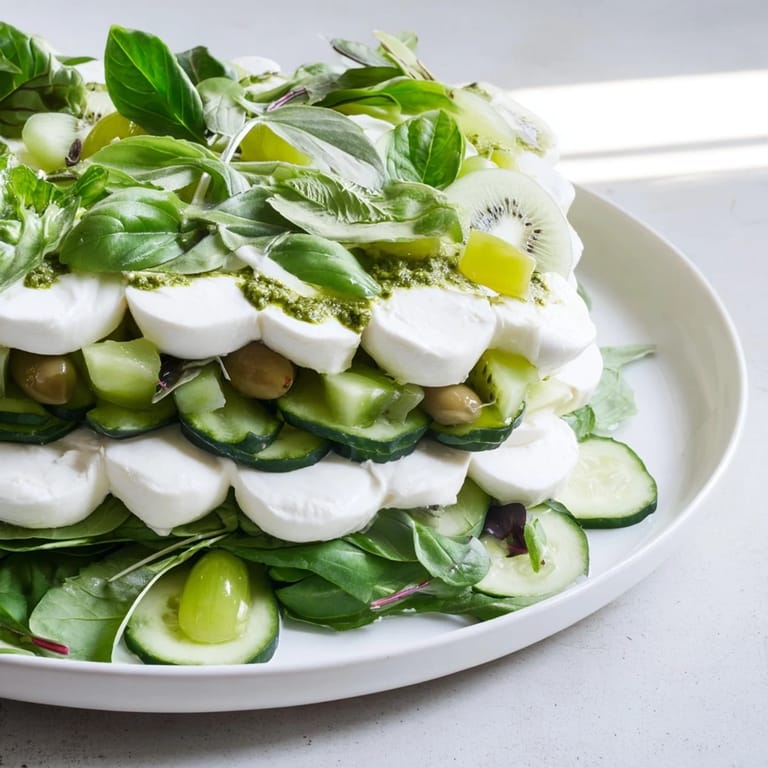
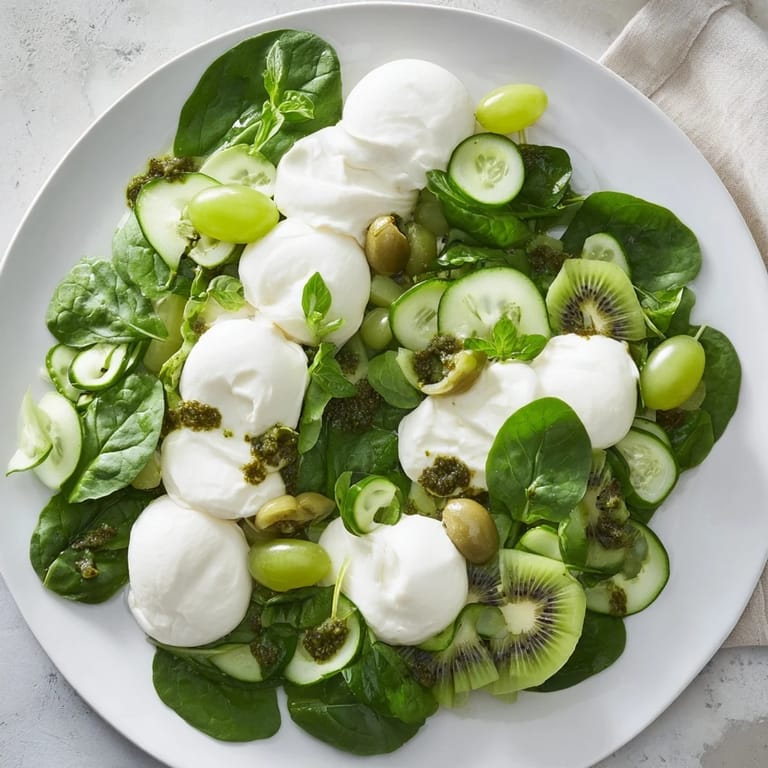
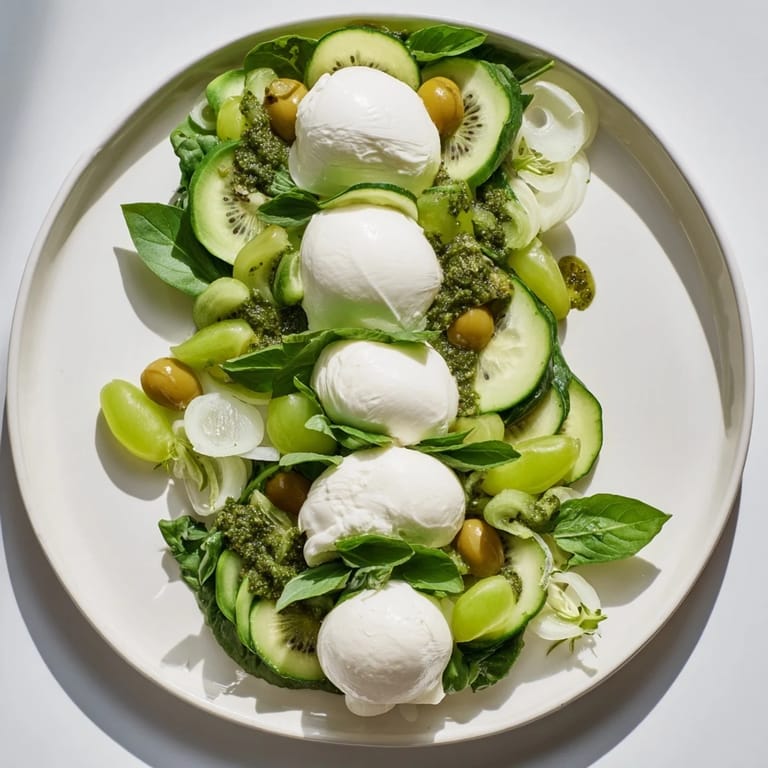
I remember making this for a dinner party last summer when my friend mentioned she was tired of boring salads. As I arranged those vibrant layers and created that meandering mozzarella river, I watched her face light up before she'd even tasted it. She took a bite and said, "This is what salad was supposed to be all along." That moment taught me that presentation and flavor don't have to be separate things.
Ingredients
- Baby spinach leaves: The soft, delicate foundation that serves as your green canvas. Fresh spinach wilts slightly when dressed, so arrange it last if you want maximum crispness
- Arugula: Adds a peppery bite that keeps the salad interesting and prevents it from feeling too mild. Don't skip this—it's the backbone of the flavor
- Cucumber, thinly sliced: Provides cooling freshness and those satisfying watery crunches. Slice thin enough to see light through them for that artistic effect
- Green bell pepper, diced: Sweet and crisp, this adds another texture layer. The dicing keeps pieces manageable and visually cohesive
- Kiwis, peeled and sliced: These jewel-like slices bring both tartness and a beautiful ring pattern. I learned to slice them last to prevent browning at the cut edges
- Green grapes, halved: Their sweetness balances the peppery arugula. Halving them helps distribute the flavor throughout instead of creating grape-heavy bites
- Green olives, pitted and sliced: Briny and salty, they anchor the entire composition. Don't use too many or they'll dominate—they're meant to be accents
- Fresh basil leaves: Scatter these throughout rather than mixing them in, so each bite has that fresh, herbal punch. Fresh basil releases its oils when touched, so handle gently
- Basil pesto, extra-virgin olive oil, lemon juice: The dressing should taste bright and herbaceous. Make sure your pesto is good quality—it's the star of this show
- Fresh mozzarella, torn into pieces: Room temperature mozzarella tastes creamier than cold. Tearing it by hand rather than cutting keeps the edges rustic and beautiful
- Crème fraîche or Greek yogurt: Optional but worth it—these add richness that makes the presentation feel even more luxe
Tired of Takeout? 🥡
Get 10 meals you can make faster than delivery arrives. Seriously.
One email. No spam. Unsubscribe anytime.
Instructions
- Build Your Green Foundation:
- Spread the baby spinach and arugula across your largest serving platter, creating a lush base. Don't worry about perfect coverage—you want that organic, garden-like look where colors peek through
- Layer Your First Vegetables:
- Arrange the cucumber slices and green bell pepper pieces over the greens, thinking about color variation as you go. Overlap the cucumber slices slightly, like roof tiles, for that artistic touch
- Add the Jewel Tones:
- Scatter the kiwi slices, grape halves, and olive slices across the salad with purpose. Step back and look at it—you want darker greens next to brighter greens for visual pop. This is where patience pays off
- Tuck in the Basil:
- Gently place fresh basil leaves throughout the salad, letting them catch the light. Don't crush them—they should feel delicate and alive
- Whisk Your Dressing:
- Combine the basil pesto, olive oil, and lemon juice in a bowl, whisking until it comes together in a smooth, glossy consistency. Taste it and adjust—lemon juice should make your mouth water a little
- Dress with Care:
- Drizzle the dressing evenly across the entire salad. I like to use a spoon to help distribute it rather than pouring from the bowl, which gives you more control
- Create the Mozzarella River:
- This is the showstopper moment. Arrange the mozzarella pieces in a meandering line across the salad, like a river cutting through a green landscape. Let some pieces overlap, and don't make it perfectly straight—nature isn't straight
- Add the Final Touch:
- If using crème fraîche or yogurt, dot small spoonfuls along your mozzarella river for extra richness. Serve immediately while everything is crisp and the colors are most vibrant
 Save
Save What I love most about this salad is how it breaks the unspoken rule that salads need to be humble. This one confidently says, "Look at me, I'm beautiful, and yes, I actually taste incredible." Serving it feels less like putting down a side dish and more like presenting edible art.
Why Presentation Matters Here
Most salads get tossed in a bowl before they hit the table, and honestly, we've all missed out because of it. This recipe asks you to resist that urge and instead think like a chef plating a special dish. When people see the layers of vibrant greens, the jewel-like kiwi slices, and that creamy mozzarella river, it creates anticipation. They're genuinely excited to taste something that looks this good. That excitement makes the flavors taste better—there's actual science behind why beautiful food tastes better—and it makes the whole meal feel special, even if you threw it together in your lunch break.
Making It Your Own
The beauty of this salad is that the framework stays the same, but the ingredients can shift with the seasons and your preferences. In summer, add fresh corn kernels or thin slices of green tomato. In spring, use fresh peas and young green beans blanched until just tender. Winter calls for thinly shaved fennel or green cabbage. I've even added sliced green apples for tartness and texture. The rule is simple: if it's green and tastes good, it belongs here. The mozzarella river and basil pesto keep everything cohesive no matter what else you add.
Pairing and Storage Tips
Serve this alongside grilled chicken or fish if you want to turn it into a main course, or keep it as a stunning side to any meal. For drinks, reach for a crisp Sauvignon Blanc that echoes the fresh herbs, or if you prefer non-alcoholic options, sparkling water with fresh lemon wedges works beautifully. If somehow you have leftovers, store the greens and vegetables separately from the dressing and mozzarella in airtight containers. It'll keep for a day, though it's truly best eaten fresh when the colors are most vivid and the textures are at their crunchiest.
- Prep your vegetables in advance and store them separately so you can assemble quickly before serving
- If making for a crowd, you can double or triple the recipe by using a larger platter and proportionally more ingredients
- The dressing can be made up to two days ahead and stored in the fridge, which saves you time on the day you're entertaining
 Save
Save This salad taught me that the everyday dinner table deserves as much love and attention as a fancy restaurant kitchen. It's a reminder that feeding people isn't just about nutrition—it's about creating moments, and sometimes those moments start with a salad so beautiful that people can't help but smile before they even taste it.
Cooking Questions & Answers
- → What greens are used in this salad?
Baby spinach and arugula provide a fresh, leafy base for the layered salad.
- → How is the creamy element incorporated?
Fresh mozzarella is arranged in a river-like line, optionally enhanced with crème fraîche or Greek yogurt for extra creaminess.
- → What dressing complements the greenscape layers?
A basil pesto-based dressing with olive oil, lemon juice, salt, and pepper blends herbal and citrus notes.
- → Can this salad accommodate dietary preferences?
Yes, use vegan pesto and plant-based cheese substitutes to make a vegan-friendly version.
- → What additional textures can be added?
Toasted pistachios or pumpkin seeds add a satisfying crunch to the salad.
- → How should this salad be served?
Serve immediately to enjoy its vibrant colors and fresh textures at their best.