 Save
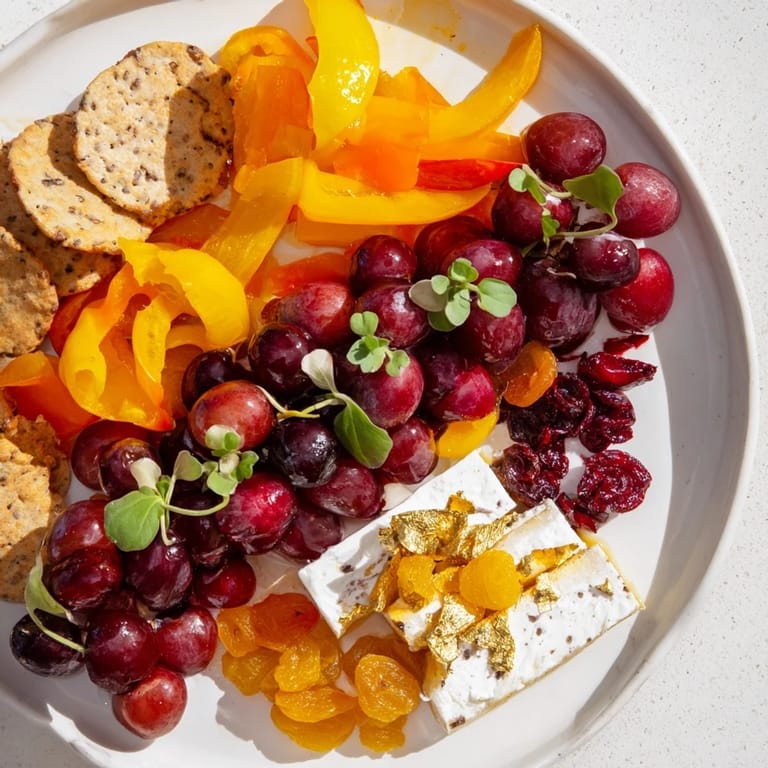
Save I'll never forget the first time I arranged a cheese board by color instead of tradition. It was for a gallery opening, and I wanted the table to stop people mid-conversation. That's when the Crimson & Gold Gala came to life—a platter so visually striking that guests photographed it before they even tasted it. What started as an artistic experiment became my signature move for any gathering that deserved something special.
My sister once said it was the only cheese board she'd ever eaten that felt like an event. She was right. When you arrange food this intentionally, with such visual confidence, people understand they're being invited into something thoughtful. That's the moment when appetizers stop being just appetizers.
Ingredients
- Fresh sweet cherries (1 cup, pitted): These are your anchor for the crimson side—their deep color is non-negotiable. Pit them right before serving to keep them pristine and jewel-like.
- Wine-soaked cheese, like Drunken Goat or Merlot BellaVitano (120 g): This is where the magic happens. The wine infusion gives you flavor and color in one slice. If you can't find it, a good aged gouda with a drizzle of red wine works beautifully.
- Dried cranberries (1/2 cup): Their tartness balances the richness and their wrinkled texture adds visual interest to the crimson block.
- Red grapes, halved (1/2 cup): They bridge the gap between the deep reds and medium tones. Halving them makes them easier to eat and creates a pattern.
- Pomegranate seeds (1/4 cup): These are pure luxury. They catch light and make the red section shine.
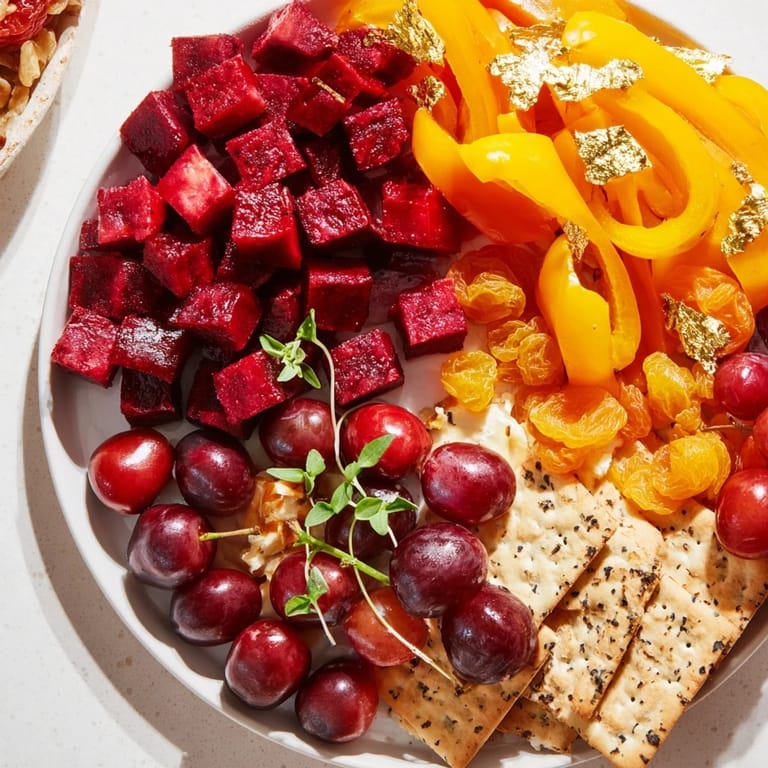
- Roasted yellow bell peppers (2 large): Roasting them yourself changes everything—the skin slides off, the sweetness intensifies, and you get that slight char that makes people ask for the recipe.
- Aged cheddar or gouda (120 g, cubed): Go for something with a bit of age. It should have character and color. These cubes anchor the golden side.
- Gold leaf–topped crackers (12–16): If you can't find them pre-dressed, plain water crackers give you control. The gold leaf is optional but transforms the entire presentation.
- Golden raisins (1/4 cup): Don't skip these—they add sweetness and texture variation that dried cranberries alone can't provide.
- Yellow cherry tomatoes, halved (1/2 cup): Fresh, bright, and they remind people this is actually a vegetable plate in disguise.
- Edible gold leaf sheets (optional): This is theater. It costs almost nothing and elevates everything it touches.
- Fresh basil or microgreens: A whisper of green between the two color blocks makes the reds pop and the golds glow.
- Olive oil and freshly ground black pepper: For the roasted peppers—don't skimp on either.
Tired of Takeout? 🥡
Get 10 meals you can make faster than delivery arrives. Seriously.
One email. No spam. Unsubscribe anytime.
Instructions
- Roast the yellow peppers until they surrender:
- Preheat your oven to 220°C (425°F). Place whole peppers directly on a baking sheet and let them roast for 10–12 minutes, turning them occasionally. You're looking for the skins to blister and char in places—that's how you know the sweetness has concentrated inside. Once they're blistered and soft, transfer them to a bowl and cover it with plastic wrap. Let them steam for 5 minutes. This is the secret: the steam loosens the skin so it slides off like butter. Peel away the charred skin, remove the seeds, and slice them into thick strips. While they're still warm, drizzle with olive oil and crack fresh pepper over the top. Let them cool completely.
- Dress the crackers with gold:
- If using edible gold leaf, follow the package instructions carefully. Gold leaf is delicate and dramatic—handle it like you're placing something precious, because you are. A light touch with a clean brush works best.
- Build the crimson block:
- On one half of your largest platter or board, arrange all the deep red elements in a tight, organized cluster. Start with the wine-soaked cheese slices as your base, then nestle the pitted cherries around them. Scatter the cranberries, halved grapes, and pomegranate seeds so each element is visible but they're packed closely together. Think of it as a jeweled mosaic—every inch should shimmer.
- Create the golden opposition:
- On the opposite side of the platter, build your bright gold section with the same intention. Arrange the roasted yellow pepper strips first, then add the aged cheese cubes. Position the gold leaf crackers at angles so they catch the light. Scatter the golden raisins and halved yellow cherry tomatoes throughout, making sure the colors build on each other.
- Finish with freshness:
- Nestle small bunches of fresh basil or microgreens in the space between the two color blocks. This thin green line does something incredible—it makes both the reds and the golds feel more vibrant by contrast.
- Serve with intention:
- Bring this to the table and pause for a moment. Let people see it before they eat it. Encourage them to build bites that cross the color line—a cherry with a roasted pepper, the wine cheese with a gold cracker. That's when they'll understand what you've made.
 Save
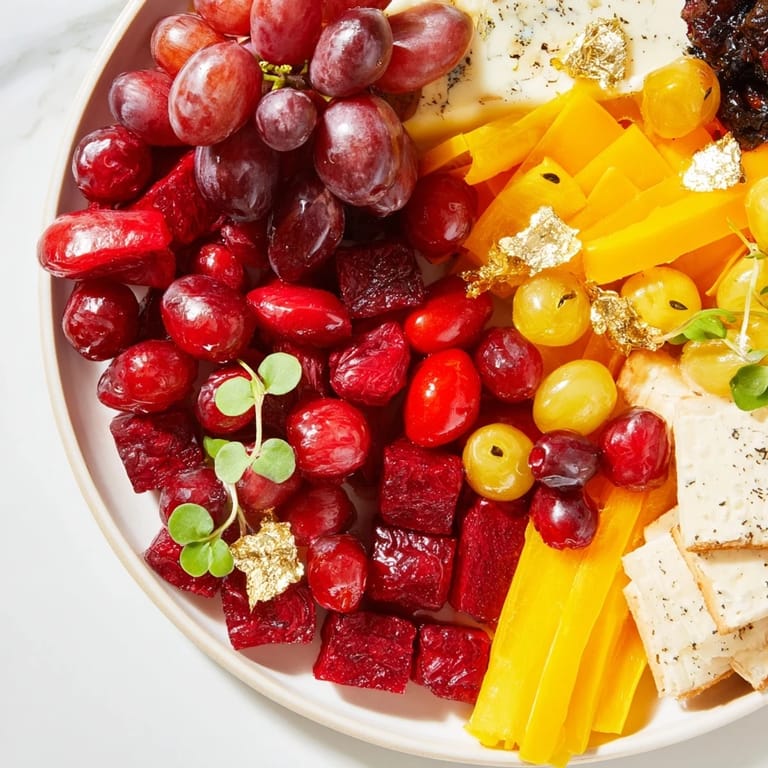
Save I remember watching someone spend ten full minutes photographing this platter before eating anything. She wasn't being pretentious—she was understanding that we eat with our eyes first, and sometimes food deserves that moment of pure appreciation. That's what this board gives you.
The Secret of Color Blocking
Color blocking on a platter isn't just about aesthetics—it changes how people experience the flavors. When reds and golds are separated, each color tastes more intense. Your brain registers them as distinct experiences. But the real magic happens when guests build bites that cross the color line, mixing wine-soaked cheese with roasted peppers, creating flavor combinations you didn't plan for but somehow knew would work. That's when an appetizer becomes a conversation.
Why Roasted Peppers Change Everything
I spent years buying pre-roasted peppers from jars, thinking they saved time. Then I roasted my own and understood what I'd been missing. When you roast a pepper until its skin blisters and chars, the sugars concentrate and caramelize. The flavor becomes deeper, more complex, almost wine-like. That's why they pair so perfectly with the wine-soaked cheese. They're not just a color—they're a flavor story. The 10 minutes of roasting is the difference between a nice board and one people remember.
Building a Board That Lasts
Timing is crucial for a board that looks perfect when guests arrive. The components can be prepared ahead—roast your peppers an hour early, pit the cherries 30 minutes before, cube the cheese. But don't arrange the board until 15 minutes before serving. The crackers will stay crisp, the cheese won't start to sweat, and the cherries won't weep their juice into the cheese. The salad is the only component that wants to be assembled early, giving the flavors time to meld. Everything else gets assembled when the board is about to go out.
- You can roast the peppers the morning of and store them in the refrigerator, then bring them to room temperature before assembling
- Have a damp cloth nearby to wipe your hands between elements—you want the board clean and the colors pure
- If pomegranate seeds aren't in season, pomegranate juice drizzled over a small cluster of dried cranberries creates the same visual impact and taste
 Save
Save This board isn't complicated, but it feels intentional. That's the whole point. When you arrange food this deliberately, with this much color confidence, you're saying something without words. You're saying you care about beauty and flavor in equal measure.
Cooking Questions & Answers
- → How do you roast the yellow bell peppers?
Roast whole yellow bell peppers at 220°C (425°F) for 10–12 minutes until skins blister, then steam, peel, and slice for a tender and sweet flavor.
- → Can I substitute the wine-soaked cheese?
Yes, you can use similar aged cheeses like gouda or cheddar soaked in your preferred red wine to maintain the intended flavor profile.
- → Is edible gold leaf necessary?
Edible gold leaf is optional; for a golden effect, turmeric or saffron threads can substitute to add color without altering flavor significantly.
- → What garnishes complement this platter?
Fresh basil or microgreens add a burst of color and a touch of herbal freshness that balances the rich flavors of the platter.
- → Can this platter be adapted for vegan preferences?
Use plant-based cheeses and crackers to create a vegan-friendly version without sacrificing texture or appearance.