 Save
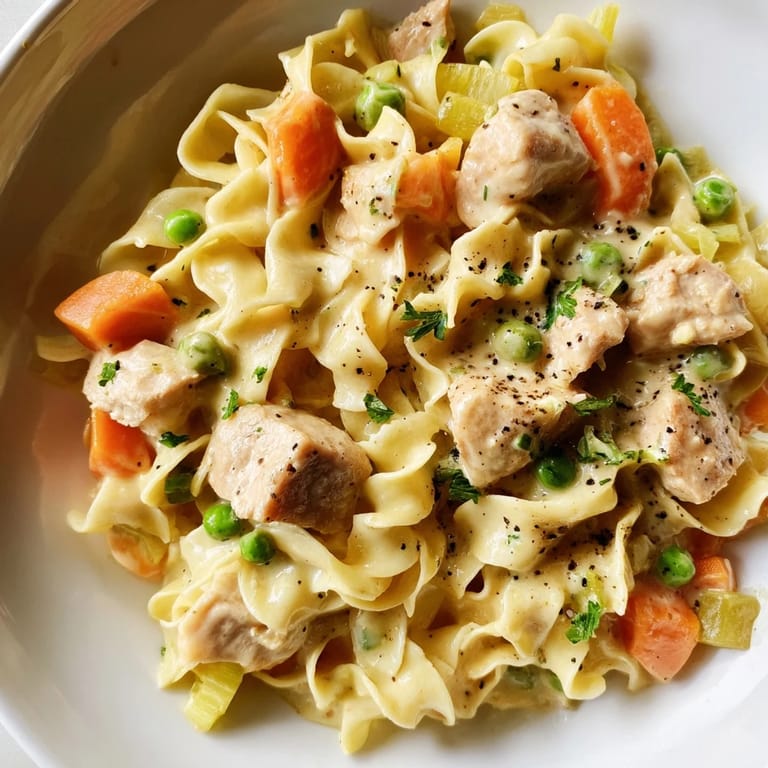
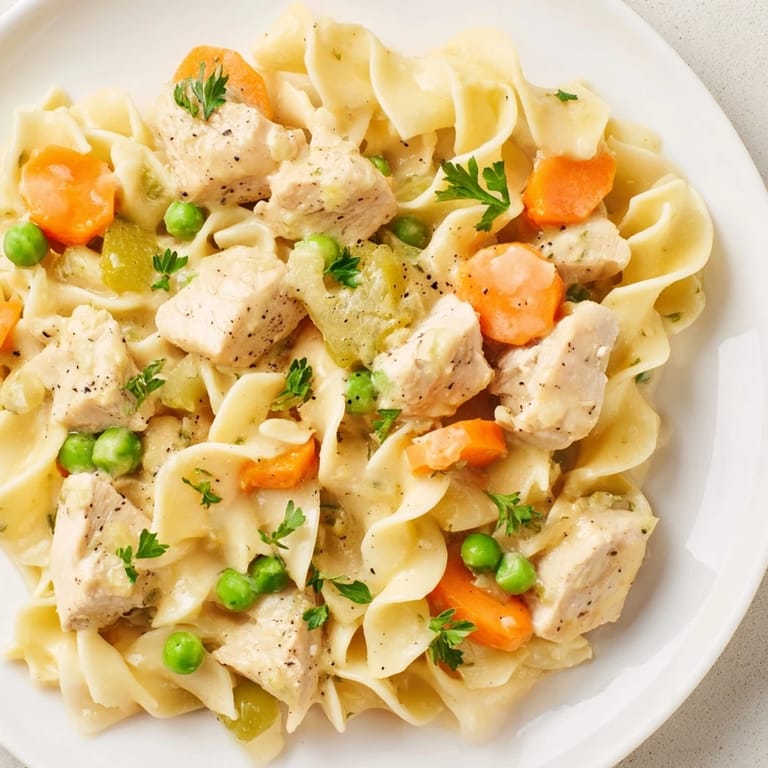
Save There's something about a bowl of creamy chicken and egg noodles that stops time. I learned this on a Tuesday night when my neighbor knocked on my door asking if I had any dinner plans, and three hours later we were still sitting at my kitchen table, forks in hand, just talking. The kind of meal that doesn't announce itself with fancy techniques or exotic ingredients, but rather wraps around you like a warm sweater. It's one of those dishes that tastes like care without requiring anything complicated.
I made this for my sister during her first week in a new city, when she still felt unsettled and exhausted. She sat at my counter watching steam rise from the pot, and when she tasted it, her shoulders actually relaxed. She's made it at least twice a month since then. Food has this quiet power sometimes—it doesn't fix things, but it tells someone they're looked after.
Ingredients
- Chicken breasts or thighs: Cut into bite-sized pieces so they cook quickly and distribute evenly through the sauce; thighs stay more tender if you're worried about dryness.
- Butter and olive oil: The combination gives you richness and a higher smoke point—use both or your pan won't behave.
- Yellow onion, garlic, carrots, and celery: This is your flavor foundation, so don't skip the garlic or rush the vegetable sauté.
- All-purpose flour: This becomes your roux, thickening everything into something luxurious; don't let it brown too much or it tastes bitter.
- Chicken broth, milk, and heavy cream: The milk keeps it from being too heavy, the cream makes it taste special, and the broth ties everything together with savory depth.
- Dijon mustard, thyme, parsley, and paprika: These aren't afterthoughts—they're what make this taste like comfort, not just butter and cream.
- Wide egg noodles: They're sturdy enough to hold the sauce without falling apart, and their surface area is perfect for catching that creamy goodness.
- Frozen peas and fresh parsley: The peas add color and sweetness at the last moment; the fresh parsley on top reminds you this isn't heavy, it's bright.
Tired of Takeout? 🥡
Get 10 meals you can make faster than delivery arrives. Seriously.
One email. No spam. Unsubscribe anytime.
Instructions
- Season and sear your chicken:
- Dust your chicken pieces with salt and pepper, then listen for that satisfying sizzle when they hit the hot butter and oil. You're not cooking them all the way through here—you just want them golden and sealed, which takes about 5 to 6 minutes, then set them aside.
- Build your flavor base:
- In that same pot with all the browned bits stuck to the bottom, toss in your chopped onion, carrots, and celery. Let them soften for 4 to 5 minutes until the onion turns translucent and the kitchen smells like home, then add your minced garlic for just one more minute.
- Make your roux:
- Sprinkle the flour over everything and stir constantly for 1 to 2 minutes—you want it to smell toasted and nutty, not raw. This is what's going to thicken your sauce and give it body.
- Create the cream sauce:
- Whisk in your chicken broth slowly at first, then add the milk and heavy cream, stirring until you have no lumps. Add your Dijon mustard, thyme, parsley, and paprika, then taste it and adjust the salt and pepper until it tastes right to you—this is important because store-bought broths vary in saltiness.
- Simmer until silky:
- Let it bubble gently for about 5 minutes, stirring now and then, until the sauce coats the back of a spoon and looks thick and glossy. You'll see it transform from thin and watery into something that actually clings to itself.
- Cook your noodles separately:
- While the sauce is simmering, boil your egg noodles in salted water according to the package instructions, then drain them and set them aside. Don't add them to the sauce early or they'll get mushy from sitting in the liquid.
- Finish with chicken and peas:
- Return your seared chicken to the sauce along with the frozen peas and let everything warm through for 2 to 3 minutes. The chicken finishes cooking in the gentle heat, and the peas stay bright instead of becoming little gray pellets.
- Bring it all together:
- Add your drained noodles to the sauce and toss everything until each strand is coated in creamy goodness. If it seems too thick, you can splash in a bit more broth or milk to loosen it up.
- Finish and serve:
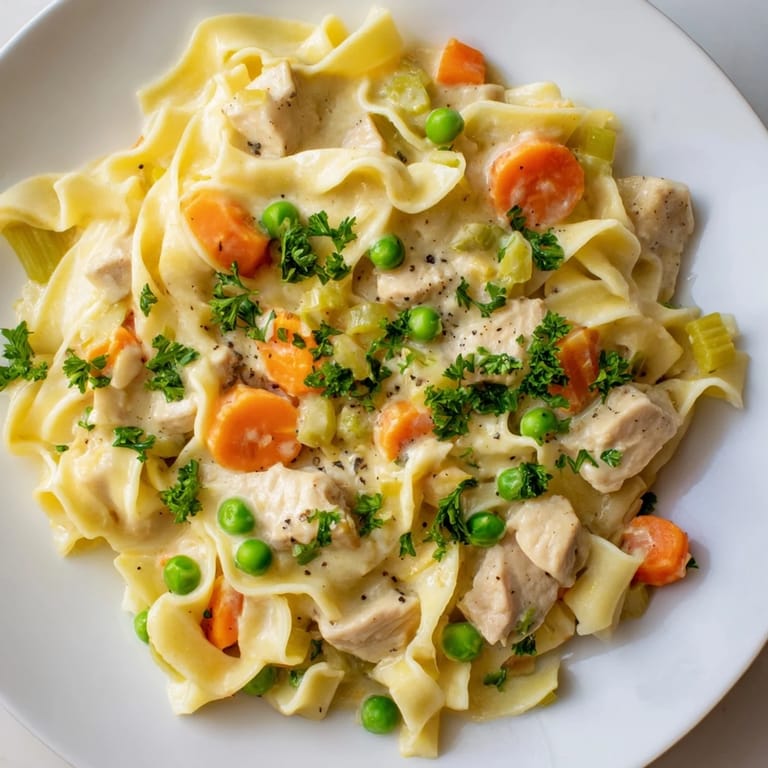
- Top with fresh parsley if you have it—it adds color and a little brightness that cuts through all that richness. Serve it warm in shallow bowls so people can gather around it.
 Save
Save I learned something important making this dish over and over—sometimes the simplest food teaches you the most about cooking. This recipe taught me that technique matters less than paying attention, that cream can be elegant instead of heavy, and that feeding someone well is one of the few things that never stops meaning something.
Why This Dish Works Every Time
The genius of this recipe is its structure. Each component—the seared chicken, the vegetable base, the roux-thickened sauce—builds on the last one, creating layers of flavor that feel more complex than the ingredient list suggests. The cream sauce doesn't overpower; it complements. The egg noodles aren't just a vehicle; they're part of the whole. There's a reason this style of cooking has lasted generations. It works because it respects both technique and taste.
Customizing Without Losing the Plot
The structure here is flexible enough to play with. Some nights I add a splash of white wine when I sauté the vegetables—it adds a subtle tang that makes the whole dish taste fresher. Other times I use rotisserie chicken because I'm tired or short on time, and it still tastes wonderful. Mushrooms are a natural addition if you want earthiness. The point is that you can adjust without breaking what makes this recipe work, as long as you respect the foundation.
Pairing and Serving Ideas
This dish is rich, so it needs something bright alongside it to feel balanced. I always serve it with a simple green salad dressed in something vinegary, or sometimes steamed broccoli tossed with lemon. The acidity wakes up your mouth between bites and keeps the meal from feeling one-note. A crisp white wine or even a cold glass of milk works if you're thinking about drinks.
- The sauce will thicken more as it cools, so don't panic if it seems slightly thin when you finish—it firms up naturally.
- Leftovers keep beautifully in the fridge for three days, and they actually taste better the next day when the flavors have gotten to know each other.
- If you're reheating, add it back to the stove over gentle heat with a splash of broth or milk to loosen it up again.
 Save
Save This is the kind of meal that reminds you why you cook at all. It asks so little and gives back so much.
Cooking Questions & Answers
- → What type of chicken works best?
Boneless, skinless chicken breasts or thighs are ideal for tender, evenly cooked pieces.
- → Can I use other noodles?
Wide egg noodles are preferred for their texture, but pasta like fettuccine can be substituted.
- → How do I ensure the sauce is creamy and thick?
Cooking flour into a roux before adding broth and dairy helps thicken the sauce smoothly.
- → Can I prepare this dish faster?
Using pre-cooked chicken, such as rotisserie, shortens cooking time without sacrificing flavor.
- → What vegetables complement this dish?
Carrots, celery, peas, and onions add sweetness and texture; mushrooms can be added for earthiness.