 Save
Save I'll never forget the first time I arranged a black and white platter for a gallery opening—I was nervous, honestly, thinking it sounded too austere. But the moment guests arrived and their eyes lit up seeing that dramatic contrast, I understood the magic of simplicity. There's something about bold monochromatic elegance that makes everyone feel like they're at something special. That night taught me that sometimes the most sophisticated dishes are the ones that whisper rather than shout.
I remember my friend Sarah's reaction when I brought this to her intimate dinner party—she kept saying it was 'too pretty to eat.' We laughed as people carefully photographed it before diving in, and within minutes it had completely disappeared. That's when I realized this platter isn't just appetizer; it's theater, and somehow it tastes even better when you feel like you're part of something beautiful.
Ingredients
- Black olives (Kalamata or Niçoise), 100 g pitted: These are your foundation of richness and umami—the pitting matters because you want clean, elegant pieces that sit flat. I learned to pat them dry on paper towels so they don't slip around during arrangement.
- Dark rye bread, 8 slices: Choose a dense, quality loaf that won't crumble when you cut it. This becomes your anchor, holding everything together both visually and texturally.
- Fresh mozzarella balls (bocconcini or ciliegine), 200 g drained: The drained part is crucial—excess moisture makes your platter weep and ruins the presentation. I drain mine 30 minutes ahead and pat them gently with paper towels.
- Fresh mozzarella, large ball sliced into 8 thin slices: This needs a sharp, hot knife to slice cleanly. Run it under hot water and dry it between cuts—game changer for clean edges.
- Black sesame seeds, 1 tablespoon: These add textural surprise and deepen the visual drama. They're slightly nutty and absolutely worth seeking out at an Asian market.
- White sesame seeds, 1 tablespoon: The perfect partner to black seeds, adding another layer of sophistication and a gentle toasted flavor.
- Blanched almonds, 16 peeled: Their creamy whiteness and mild flavor complement the cheese without competing. I keep mine in a cool place so they stay crisp.
- Black mission figs, 8 halved (optional): A whisper of sweetness that stops the platter from feeling one-note. They're optional because not everyone likes the surprise, but I always include them.
- Vanilla bean, seeds scraped: This is the secret—most people expect salt and olive oil, and then they taste that delicate floral note. It transforms the whole experience from expected to memorable.
- Extra virgin olive oil, 2 tablespoons: Use your best bottle. This isn't the time for cooking oil; this is about flavor and the way it catches the light on white cheese.
- Flaky sea salt, to taste: This matters more than regular salt—the larger crystals give you control and visual texture.
- Black pepper, freshly cracked (optional): A touch of heat that some people love and others prefer to skip. I'm in the 'add it' camp.
Tired of Takeout? 🥡
Get 10 meals you can make faster than delivery arrives. Seriously.
One email. No spam. Unsubscribe anytime.
Instructions
- Cut your rye foundation with intention:
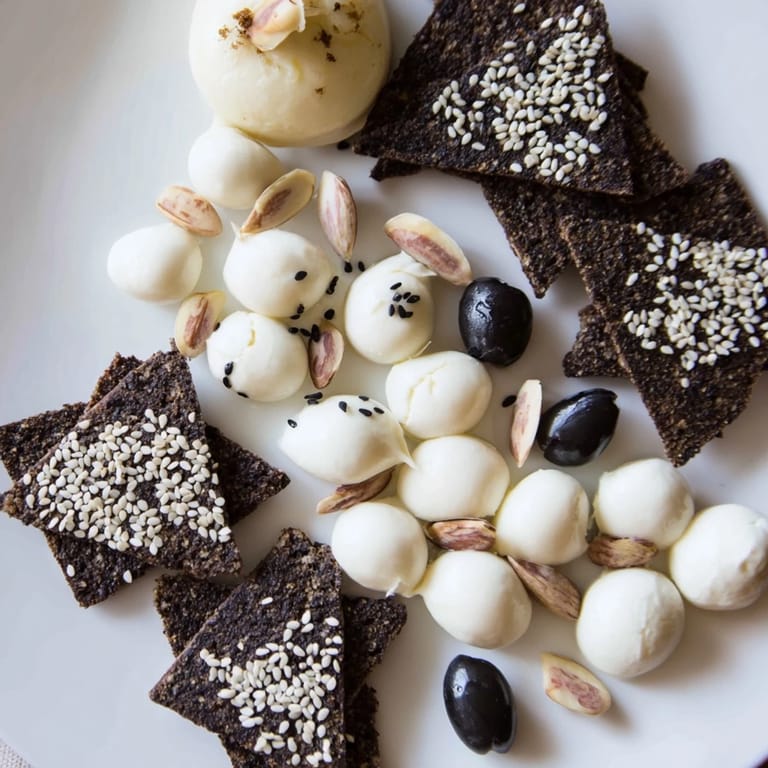
- Using a sharp knife, cut your dark rye bread into squares, triangles, or rectangles. Think about the size—I aim for pieces that feel substantial but elegant, about 2 inches across. Arrange them on your large platter in alternating rows or a checkerboard pattern. This becomes your stage, so take a moment and step back. Does it feel balanced? Good. You've just created the frame for everything else.
- Create your black and white rhythm:
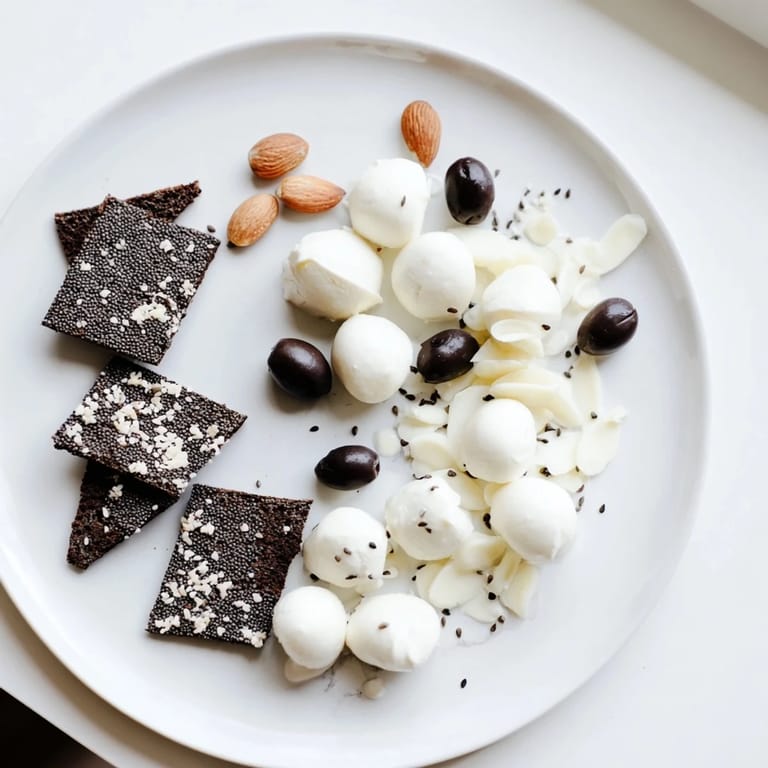
- Now comes the part where you become the artist. Place your drained black olives and mozzarella balls in alternating lines or circles, creating visual patterns that make sense to your eye. The contrast should feel intentional, almost like a dance between the two. Don't overthink it—trust that the colors will do the work for you.
- Layer in your mozzarella canvas:
- Slice your large mozzarella ball with that hot, sharp knife, creating clean, thin slices. Arrange these alongside the rye bread in geometric shapes—overlapping circles, organized rows, whatever speaks to you. These white surfaces become landing pads for your final touches.
- Dust with seeds for texture and surprise:
- Sprinkle black sesame seeds over the white mozzarella where you can see them catching light, then scatter white sesame seeds over the rye bread. This isn't random—you're layering flavor and creating visual depth. A light hand wins here.
- Add your sweet-savory moment:
- If you're using the figs, halve them and nestle them strategically throughout. They provide color variation and a flavor note that guests won't expect. I like placing them where they break up long lines of repetition.
- Cluster your almonds with care:
- Place your blanched almonds in minimalist clusters or gentle lines, letting them feel like punctuation marks rather than scattered thoughts. Their pale color adds brightness without chaos.
- Anoint with your finest oil:
- Drizzle your best extra virgin olive oil in a thin, artistic pattern across the entire platter. Some lands on cheese, some on bread, some on empty space—this is your signature. Season lightly with flaky sea salt. A whisper of black pepper if you want that edge.
- Add your secret flourish:
- Using the tip of your knife, gently scrape vanilla seeds from the pod and dot them artistically across the mozzarella slices. Watch people's faces when they taste this—they'll be trying to figure out what just happened to their palate in the best way.
- Serve in its moment:
- Bring this to the table immediately to keep everything crisp and fresh. The bread stays crackling, the cheese stays cool, and the moment stays magic. If you need to hold it, cover loosely with plastic wrap and refrigerate for up to an hour—but serve it at room temperature for full flavor.
 Save
Save There was this moment at my friend's engagement party when the whole room went quiet, just looking at this platter before anyone touched it. Someone whispered, 'It's almost too beautiful,' and the bride-to-be smiled and said, 'That's exactly the point.' Food stopped being fuel and became a feeling. That's what this dish does—it reminds people that we eat with our eyes first, and that matters.
The Art of Monochromatic Beauty
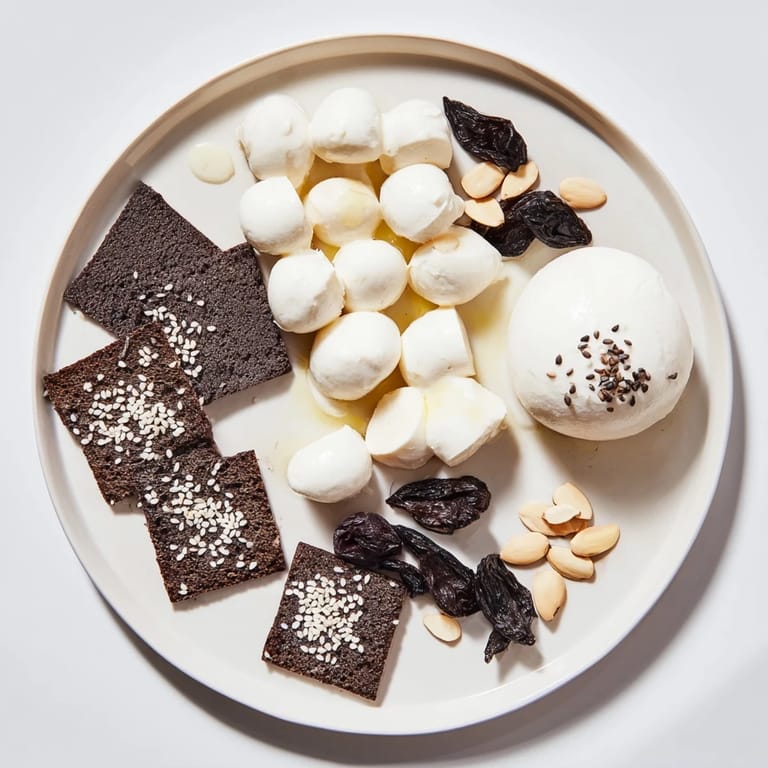
Black and white isn't minimalist—it's maximalist in its subtlety. When you remove color competition, every texture becomes louder, every shape more deliberate. I've learned that this color palette actually makes people taste more carefully because there's nothing else for their eyes to hide behind. The rye bread's grain becomes visible, the sesame seeds glimmer, and the mozzarella's creamy shine becomes the star. It's like cooking in HD.
Why Vanilla Belongs Here
The vanilla bean is my favorite secret in this recipe, and honestly, I almost didn't include it because it sounds strange. But here's what changed my mind: every dish needs a moment of unexpected grace. The vanilla doesn't announce itself loudly—it's there like a memory, like something your taste buds remember before your brain catches up. Combined with the salt, the cheese, and the olive oil, it creates this beautiful moment where savory meets subtle sweetness. It's the difference between a beautiful platter and an unforgettable one. Some guests won't even be able to identify what they're tasting, but they'll remember it.
Plating Philosophy for Maximum Impact
I used to overthink plating until I realized the simplest approach is often the most striking. Symmetry has power. Repetition has rhythm. When you commit to your pattern—whether it's rows, circles, or alternating squares—the whole arrangement gains authority. The eye follows your lead, and suddenly what's simple becomes sophisticated. This is why I arrange everything with intention rather than scattered instinct.
- Choose one geometric pattern and commit to it fully—half checkerboard never works as well as full commitment
- Step back after every few elements to see if the balance is calling for adjustment, then trust your eye
- The empty spaces matter as much as the ingredients, so don't feel compelled to cover every inch of platter
 Save
Save Every time I make this platter, I'm reminded that elegance isn't complicated—it's intentional. You're not impressing people with technique or exotic ingredients; you're impressing them with your willingness to take care with the simple things. That's the real sophistication.
Cooking Questions & Answers
- → What types of olives work best for this platter?
Pitted black Kalamata or Niçoise olives provide a rich flavor and firm texture that complement the other ingredients well.
- → How should the bread be prepared for the best presentation?
Dark rye bread slices should be cut into squares, triangles, or rectangles to create geometric patterns as a base for the platter.
- → Can this platter be prepared ahead of time?
Yes, assemble and cover it tightly; refrigerate for up to 1 hour to maintain crispness and freshness before serving.
- → What role do the sesame seeds play in this dish?
Black sesame seeds are sprinkled over the white mozzarella while white sesame seeds enhance the dark rye bread, adding both flavor and visual contrast.
- → Are there suggested pairings for this arrangement?
Dry sparkling wines or crisp Sauvignon Blanc complement the flavors and add refreshment to the elegant setup.
- → Is there a vegetarian aspect to this platter?
Yes, it features black and white ingredients like olives, mozzarella, figs, almonds, and bread, all suitable for vegetarian diets.