 Save
Save A friend handed me a container of black-eyed peas one afternoon and casually mentioned she'd made too much for dinner. Standing in my kitchen wondering what to do with them, I grabbed tahini from the pantry and started blending, more out of curiosity than anything else. Twenty minutes later, I was spreading this creamy, golden dip onto everything in sight—crackers, vegetables, bread. It tasted like comfort and sophistication had somehow decided to become friends.
I brought this to a potluck once, nervous it wouldn't hold its own against the heavier spreads and dips lining the table. By the end of the night, my bowl was empty and three different people asked for the recipe. There's something about the earthiness of black-eyed peas meeting the brightness of fresh lemon that just works.
Ingredients
- Black-eyed peas (2 cups cooked): Canned works beautifully if you're short on time—just rinse them well to remove excess sodium and any metallic aftertaste.
- Tahini (1/3 cup): This is your base, the thing that makes this creamy and rich; don't skip it or use peanut butter as a substitute, it changes the whole character.
- Extra virgin olive oil (2 tbsp): Quality matters here since you taste it directly; cheaper oils can leave a greasy feeling instead of smooth silkiness.
- Fresh lemon juice (2 tbsp): Always squeeze it yourself—bottled juice tastes harsh and one-dimensional where fresh lemon sings.
- Garlic (1 clove, minced): One clove is gentle; if you love garlic, add more, but start here so you don't overpower the delicate bean flavor.
- Ground cumin (1/2 tsp): This warm spice ties everything together and adds a whisper of Middle Eastern character without shouting about it.
- Salt (1/2 tsp): Begin with this amount and taste as you go; you can always add more but you can't take it back.
- Water (2-4 tbsp): Add gradually because tahini can be thicker or thinner depending on the brand, and humidity affects consistency too.
Tired of Takeout? 🥡
Get 10 meals you can make faster than delivery arrives. Seriously.
One email. No spam. Unsubscribe anytime.
Instructions
- Gather and prep:
- Drain and rinse your black-eyed peas if using canned, mince your garlic fine, and squeeze your lemon fresh. Having everything ready means the actual blending takes no time at all.
- Combine in the processor:
- Add peas, tahini, olive oil, lemon juice, garlic, cumin, and salt to your food processor bowl. The mixture will look thick and slightly grainy at this moment.
- Blend until dreams happen:
- Turn it on and let it run for a minute or two, then stop and scrape down the sides with a spatula. You'll watch it transform from chunky to creamy as the machine does its work.
- Adjust the texture:
- Add water one tablespoon at a time, blending between additions, until you reach that perfect spoonable consistency. Some days you'll need more water, some days less depending on humidity and your particular tahini.
- Taste and season:
- Have a small spoonful and really think about what you're tasting. More salt? More lemon brightness? Adjust freely until it sings.
- Plate like you mean it:
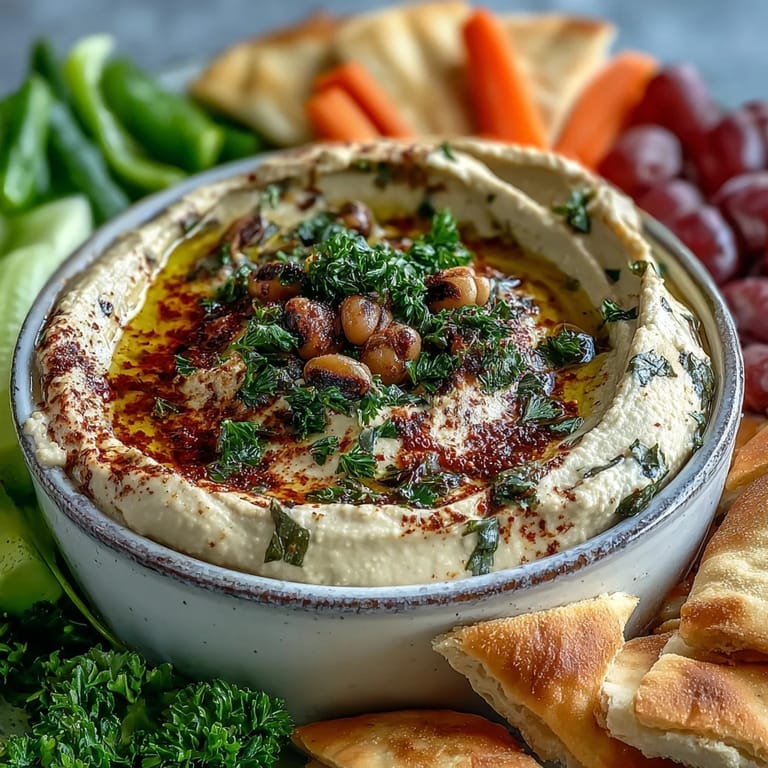
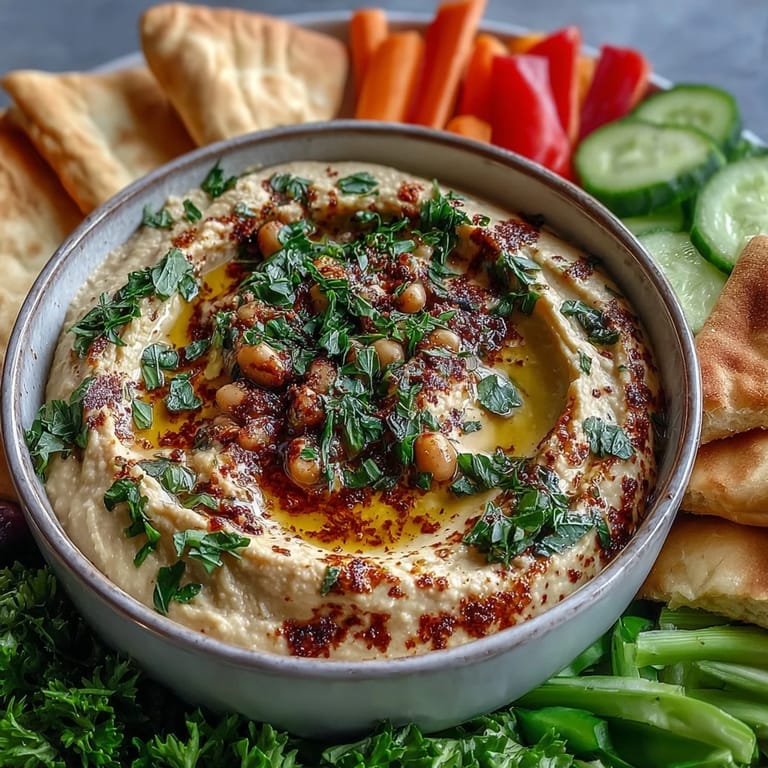
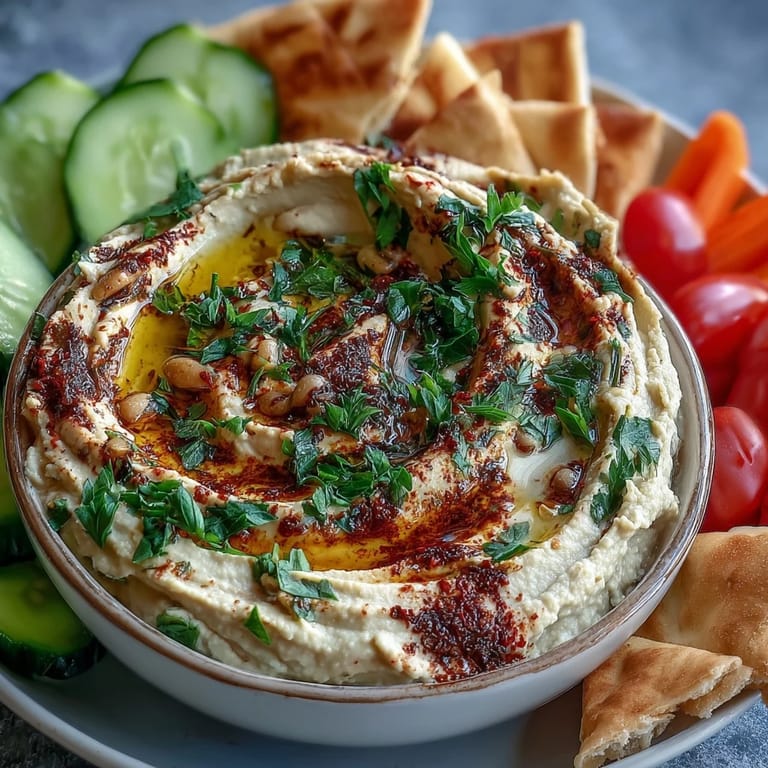
- Spoon your hummus into a serving bowl, drizzle generously with olive oil, and finish with a pinch of smoked paprika or sumac and some chopped parsley. That little garnish step transforms it from homemade to restaurant-worthy.
 Save
Save My neighbor tasted this once and decided it was her new go-to lunch, making a batch every week. She told me she loved having something nourishing that didn't feel like she was being good for herself—it just tasted like pleasure. That conversation reminded me that food doesn't need to choose between being healthy and being genuinely enjoyable.
Flavor Variations to Explore
Once you've made this basic version a few times and it feels natural in your hands, start playing. Roasted red peppers stirred in add sweetness and color; smoked paprika mixed into the base gives a deeper, almost smoky warmth; a tiny splash of sesame oil adds nutty richness. I've also tried swapping half the lemon juice for lime juice on summer days when the citrus feels brighter and more tropical. The beauty of this recipe is that it's forgiving enough to handle your experiments.
What to Serve It With
Fresh vegetables are the obvious route—crisp cucumbers, sweet bell peppers, celery sticks, cherry tomatoes—but don't stop there. Warm pita bread torn into pieces, sturdy gluten-free crackers, toasted bread chips, or even apple slices work beautifully. I've spooned leftovers onto grain bowls, mixed it into sandwich spreads, and even dolloped it onto roasted vegetables. The versatility is one of the reasons I make it so often.
Storage and Make-Ahead Tips
This hummus keeps beautifully in an airtight container in the refrigerator for up to four days, which makes it perfect for meal prep or impromptu entertaining. The flavors actually deepen slightly as it sits, so making it a day ahead isn't a problem—it's almost an advantage. If the texture firms up from sitting, let it come to room temperature for a few minutes or stir in a splash of water to loosen it back to creamy.
- Freeze for later: It freezes well for up to three months; just thaw in the refrigerator overnight before serving.
- Oil topping trick: Store a thin layer of olive oil on top of the hummus to keep it from drying out.
- Taste before serving: Cold hummus sometimes tastes flatter, so bring it to room temperature and adjust seasonings if needed.
 Save
Save This recipe has become one of those things I make when I want to feel nourished without effort, or when I want to impress someone with minimal fuss. It's honest food that asks so little of you but gives so much in return.
Cooking Questions & Answers
- → Can I use canned black-eyed peas?
Yes, simply drain and rinse one 15-ounce can. No cooking required, making this even quicker to prepare.
- → How long does this keep in the refrigerator?
Store in an airtight container for up to 4 days. The flavors actually meld and improve after a day.
- → What makes this different from traditional chickpea hummus?
Black-eyed peas have a creamier texture and slightly earthier flavor. They blend into an exceptionally smooth consistency.
- → Can I make this without tahini?
You can substitute with Greek yogurt for a lighter version, though the flavor profile will change. Tahini provides authentic richness.
- → Is this freezer-friendly?
Yes, freeze portions for up to 3 months. Thaw overnight in the refrigerator and stir well before serving.
- → What goes well with this spread?
Serve with carrot sticks, cucumber slices, bell pepper strips, warm pita, naan, or use as a sandwich spread in wraps.