 Save
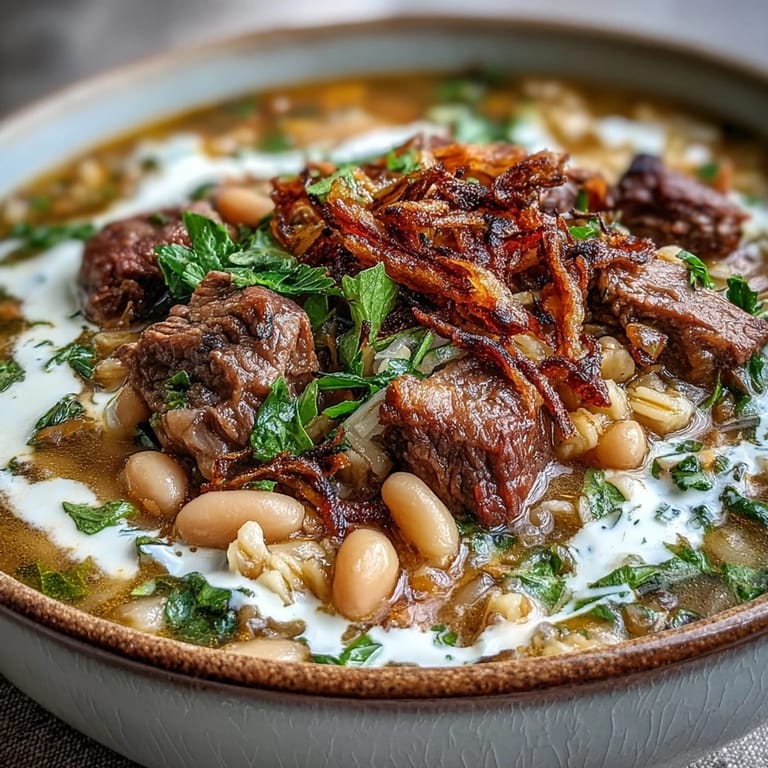
Save My first encounter with this soup happened on a cold Tehran afternoon when my neighbor insisted I taste what she'd been simmering for hours. The aroma alone—turmeric, fresh herbs, and something I couldn't quite name—drew me into her kitchen before I'd even finished knocking. She ladled it into a bowl, swirled cream across the top, and scattered those crispy mint-fried onions like golden confetti. That spoonful changed how I understood soup could be: not just warming, but layered with intention and soul.
Years later, I made this for a friend recovering from surgery, and watching her face as she tasted it reminded me why food matters. She ate slowly, deliberately, and afterward said it tasted like someone cared. That's exactly what this soup is—an expression without words, warmth in a bowl, the kind of dish that does the heavy lifting when you don't know what else to say.
Ingredients
- Beef stew meat, cut into 2 cm cubes (500 g): Smaller cubes mean they cook through and contribute richness to the broth; ask your butcher to cut them consistently so everything finishes at the same time.
- Pearl barley, rinsed (1/2 cup): Rinsing removes surface starch and helps the barley stay tender rather than gummy; it's what gives this soup its hearty backbone.
- Dried lentils, rinsed (1/2 cup): Brown or green lentils hold their shape better than red ones, which would dissolve into the broth and muddy the flavor.
- Dried white beans or cannellini beans, soaked overnight and drained (1/2 cup): Soaking isn't just traditional; it reduces cooking time and makes them digest more gently.
- Large onion, finely chopped (1): The finer you chop, the more they dissolve into the broth and become the foundation of flavor rather than chunks to navigate around.
- Medium carrots, diced (2): Cut them roughly the same size as your beef pieces so they cook evenly and look intentional in the bowl.
- Stalks celery, diced (2): Celery adds a subtle earthy depth that ties everything together without announcing itself.
- Garlic cloves, minced (2): More than this can overpower; less than this and you lose the aromatic warmth that makes this distinctly savory.
- Fresh parsley, chopped (1/2 cup): Add it at the end to preserve its brightness; cooking it away defeats the purpose.
- Fresh cilantro, chopped (1/2 cup): This is what separates a good soup from an authentic one—don't skip it or substitute.
- Fresh dill, chopped (1/4 cup): Dill adds an unexpected floral note that makes people pause and wonder what they're tasting.
- Fresh chives, chopped (1/4 cup): They're milder than raw onion but still sharp enough to cut through the richness.
- Dried mint (2 tbsp): Use some for the fried onion topping and reserve the rest for garnish if you'd like an extra layer.
- Sour cream (200 g): The tang balances the earthiness of the legumes; if you can find kashk, it's even more authentic and less heavy.
- Olive oil (2 tbsp): Use it to build flavor at the beginning rather than all at once.
- Butter (1 tbsp): For frying onions until they're shatteringly crisp and fragrant with mint.
- Ground turmeric (1 tsp): It's what gives Persian soups their golden hue and subtle warmth; don't use more or it becomes medicinal-tasting.
- Ground black pepper (1/2 tsp): Freshly ground makes a real difference here; pre-ground can taste stale.
- Salt (1 1/2 tsp, plus more to taste): Add most of it early so flavors have time to develop, then taste and adjust at the very end.
- Beef or vegetable stock (2 liters): Homemade stock will make this taste infinitely better, but quality store-bought works when you're short on time.
Tired of Takeout? 🥡
Get 10 meals you can make faster than delivery arrives. Seriously.
One email. No spam. Unsubscribe anytime.
Instructions
- Brown the beef to build a flavor foundation:
- Heat olive oil in a large pot over medium-high heat until it shimmers. Add beef cubes in a single layer and let them sit undisturbed for 2-3 minutes so they develop a golden crust; this is where the soup's savory depth begins. Don't crowd the pot or stir constantly—patience here pays off in flavor.
- Sauté the aromatics until they soften and sweeten:
- Remove the beef and add the remaining oil to the pot. Onions should turn golden and translucent over about 6 minutes; this is when they release their sweetness and stop tasting raw. Add garlic, turmeric, pepper, and salt, and let them toast for 1 minute until the kitchen smells like warmth and spice.
- Build the vegetable layer:
- Add carrots and celery, stirring occasionally for 3 minutes. You're not trying to soften them completely—just start the process and coax out their subtle flavors.
- Combine everything and let time do the work:
- Return the beef to the pot and add barley, lentils, beans, and stock. Bring it to a boil (you'll see it come alive and steam rise), then cover and reduce to a gentle simmer for 1 hour 30 minutes. Stir occasionally so nothing sticks, and the legumes cook evenly.
- Wake it up with fresh herbs:
- After 1 hour 30 minutes, add all the fresh herbs—parsley, cilantro, dill, and chives. Simmer uncovered for 10 more minutes so the herbs stay vibrant and the flavors marry. Taste and adjust salt; it should taste bright and savory, not heavy.
- Crisp the mint-fried onions while the soup finishes:
- In a small skillet, melt butter over medium-low heat and add a thinly sliced onion. Cook slowly, stirring occasionally, for about 10 minutes until it's deeply golden and crispy—rushing this step means soggy onions. In the last minute, stir in dried mint and let it toast just long enough to become fragrant.
- Finish and serve with intention:
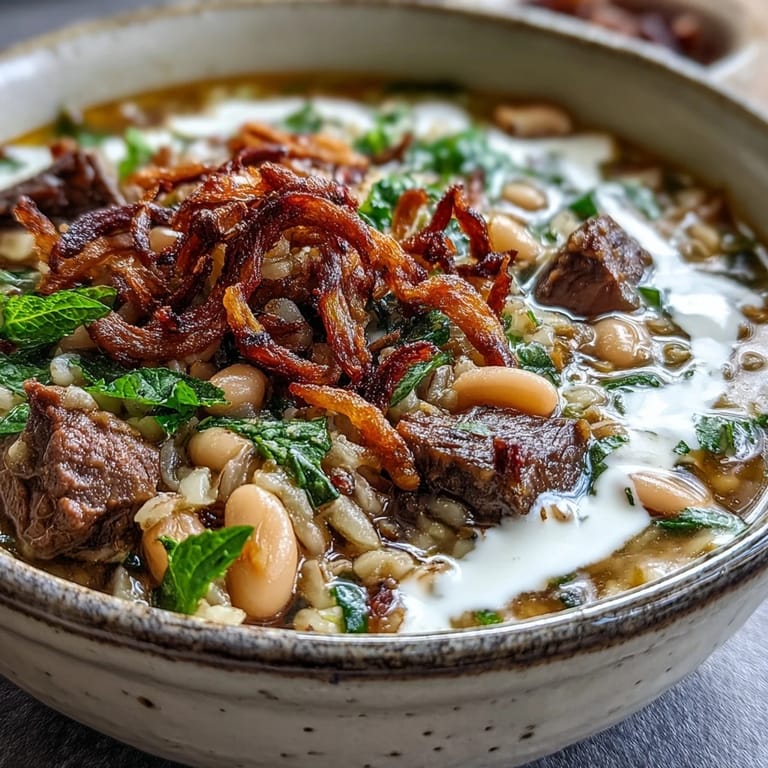
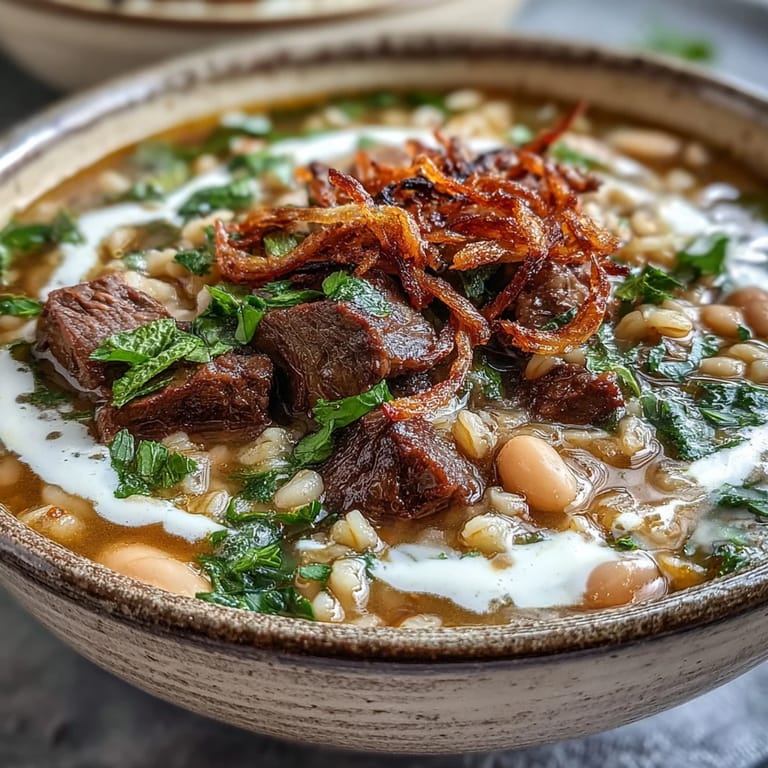
- Ladle the soup into bowls, swirl 1–2 tablespoons of sour cream across the top (it should ribbon through the soup), and scatter the mint-fried onions generously. Serve immediately while the onions are still crisp and the soup is steaming hot.
 Save
Save I learned once that food becomes memory the moment someone tastes it with gratitude. This soup has a way of slowing people down, making them sit, making them savor. It's the kind of dish that lingers in conversation long after the bowl is empty.
Timing and Patience
This soup rewards patience in ways that feel almost philosophical. The initial browning and toasting takes only minutes but matters enormously. The long simmer—1 hour 30 minutes—isn't wasted time; it's when the barley softens, the lentils break down slightly into the broth, and the beef becomes so tender it nearly dissolves. The beans gradually release their subtle creaminess. Rushing any of these steps results in something that tastes hurried. Good soup asks you to plan ahead, to start early, to let time do what you cannot.
The Art of Layered Garnishes
The toppings aren't afterthoughts here; they're essential. The sour cream's cool tanginess cuts through the rich, earthy soup and adds a textural contrast that makes eating interesting. The mint-fried onions provide a moment of crispness that collapses slightly as you eat, releasing their fragrance. Together, they transform a bowl of soup into an experience that engages multiple senses. This is why serving them separately rather than stirring them in before serving matters—you want each spoonful to have that element of surprise.
Making It Your Own
While this recipe is rooted in Persian tradition, there's room for your own kitchen wisdom. Some people add a pinch of cinnamon for warmth; others swear by a squeeze of lemon juice at the end. Spinach or beet greens stirred in at the last moment add color and a subtle mineral note. If you can't find fresh herbs, dried versions work (use roughly one-third the amount), though the fresh herbs truly make this dish what it is. The key is respecting the structure while letting your own preferences guide you.
- Vegetarian version: Simply omit the beef and use vegetable stock; the soup remains deeply satisfying.
- Make it ahead: This soup actually improves over 1-2 days as flavors deepen and marry together.
- Freeze with intention: Freeze the soup base without the fresh herbs, then add them when you reheat and serve.
 Save
Save Make this soup and you'll understand why it's been nourishing tables for generations. It's the kind of dish that asks you to slow down and reminds you why cooking for people matters.
Cooking Questions & Answers
- → Can I make this soup vegetarian?
Yes, simply omit the beef and use vegetable stock instead. The barley, lentils, and beans provide plenty of protein and substance.
- → What is kashk and can I use it instead of sour cream?
Kashk is fermented whey commonly used in Persian cooking. It has a tangy, slightly salty flavor that works beautifully in soups. You can substitute it 1:1 for sour cream.
- → Do I need to soak the beans overnight?
Yes, soaking dried white beans overnight helps them cook evenly and prevents them from staying tough. If you forget, you can use canned white beans instead.
- → How long does this soup keep in the refrigerator?
This soup keeps well for 4-5 days in an airtight container. The grains will continue to absorb liquid, so you may need to add more broth when reheating.
- → Can I freeze this beef barley soup?
Yes, freeze without the sour cream topping. Portion into airtight containers and freeze for up to 3 months. Thaw overnight in the refrigerator and reheat gently.
- → Why are the herbs added near the end of cooking?
Fresh herbs lose their vibrant flavor if cooked too long. Adding them in the last 10 minutes preserves their bright taste and color while still allowing them to infuse the soup.