 Save
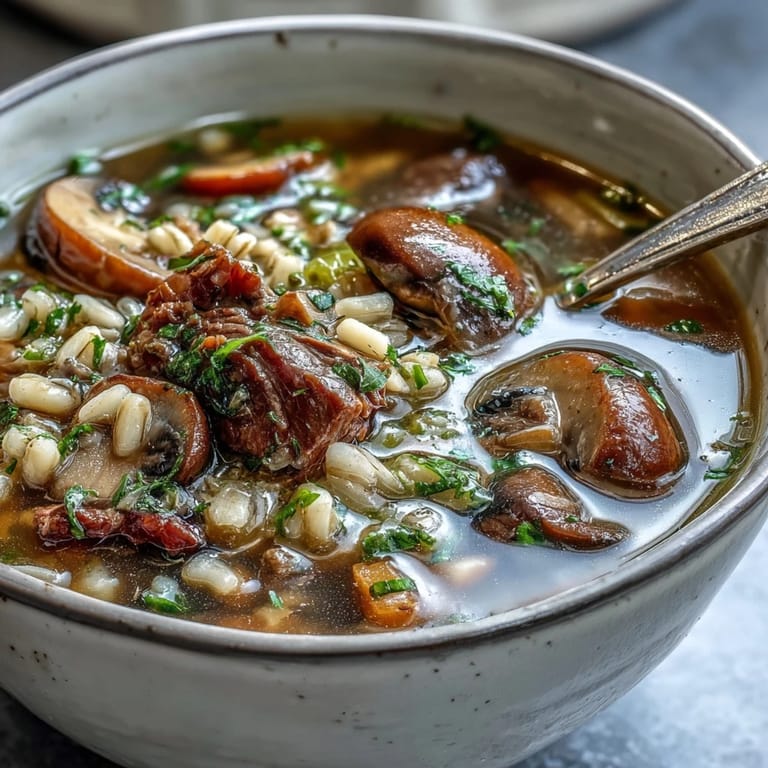
Save My neighbor knocked on my door one October evening with a steaming pot of beef and barley soup, and I remember thinking how the aroma filled my entire hallway before she even stepped inside. She'd made it for her son's first week of college, wanting to send him something that tasted like home, and when I asked for the recipe, she laughed and said it was her grandmother's secret weapon against cold weather and bad moods. That night, watching the steam curl from her pot, I understood why some foods transcend being just dinner—they're comfort in a bowl, the kind of thing you make when you want someone to know you're thinking of them.
I made this soup for my partner during one of those weeks where everything felt like too much, and watching him come home to the smell of it simmering on the stove shifted something in his shoulders right away. He sat at the counter while I finished it, and between spoonfuls, he started telling me about his day in a way he hadn't in weeks—something about the ritual of a home-cooked meal opens people up, I think. It became our Thursday night thing after that, something reliable and nourishing when life was demanding.
Ingredients
- Beef chuck roast, cut into 1/2-inch cubes: This cut has just enough marbling to stay tender during the long simmer, turning silky without falling apart; don't skip searing it properly, as those browned bits are flavor gold.
- Pancetta, diced: The smoky, salty backbone of this soup, rendering down to create a subtle richness that bacon can substitute if you're in a pinch.
- Baby bella mushrooms, sliced: They're earthier than button mushrooms and hold their shape better, soaking up the broth while adding that deep, savory note that makes people ask what the secret ingredient is.
- Yellow onion, diced: The foundation of nearly every good soup, sweetening slightly as it cooks and melting into the background.
- Carrots and celery: The supporting cast that builds layers of flavor; don't feel rushed when dicing them, as uniform pieces cook evenly.
- Garlic cloves, minced: A minute in the pot is all this needs to perfume the entire broth without turning bitter.
- Pearl barley, rinsed: Rinsing removes the starchy film and prevents cloudiness, plus it gives the grains a slightly better texture during cooking.
- Beef broth, low sodium: The quality here matters more than you'd think; a good broth is salty enough that you'll taste the difference, so don't grab the cheapest option.
- Tomato paste: Just a couple tablespoons add depth and acidity, brightening the heavy richness of the beef and pork.
- Bay leaves, thyme, and rosemary: These three work together like a quiet harmony, each one distinct but never competing, and they're the reason this smells like someone who actually knows how to cook.
- Kosher salt and black pepper: Taste as you go, because you'll likely need more at the end than you think.
- Olive oil: Use it to build flavor through the searing stage, not to drown anything.
Tired of Takeout? 🥡
Get 10 meals you can make faster than delivery arrives. Seriously.
One email. No spam. Unsubscribe anytime.
Instructions
- Crisp that pancetta first:
- Heat olive oil in your pot over medium-high heat and let the pancetta render for 3 to 4 minutes, listening for that gentle sizzle that tells you fat is releasing and browning. You're building a flavor base here, so don't rush it—remove it to a plate and let the rendered fat stay behind to work its magic on the beef.
- Sear the beef in batches:
- Season your beef chunks with salt and pepper, then add them to the hot fat in batches—crowding the pot is the enemy of browning. Each batch should take 5 to 6 minutes, developing a caramelized crust that adds sweetness and depth to the final broth.
- Build the aromatic base:
- Pour in the remaining olive oil if needed, then add your diced onion, carrots, and celery, letting them soften for about 5 minutes until they start to turn golden at the edges. Add the garlic and cook for just a minute more until the whole pot smells like the beginning of something delicious.
- Add the mushrooms and let them work:
- The mushrooms will initially absorb liquid like sponges, then suddenly release it all back into the pot as they brown, about 6 to 8 minutes of occasional stirring. This is when the soup starts to feel less like ingredients and more like something intentional.
- Deepen with tomato paste:
- Stir it in and let it cook for a minute, almost burning slightly into the bottom of the pot—that caramelization is where the complexity lives. Return the beef and pancetta, then add the barley, bay leaves, thyme, rosemary, broth, and water all at once.
- Bring to a boil, then slow down:
- Let it reach a rolling boil so you know everything is heating through evenly, then drop the heat to low, cover, and let it simmer gently for 1.5 hours. Stir occasionally, not because it needs it, but because you'll want to check on it and sniff the aroma.
- Finish and taste:
- Fish out the bay leaves, then taste carefully—you'll almost always need a bit more salt, and freshly ground pepper at the end adds a brightness that pre-ground can't match. Ladle into bowls and scatter fresh parsley over the top if you have it.
 Save
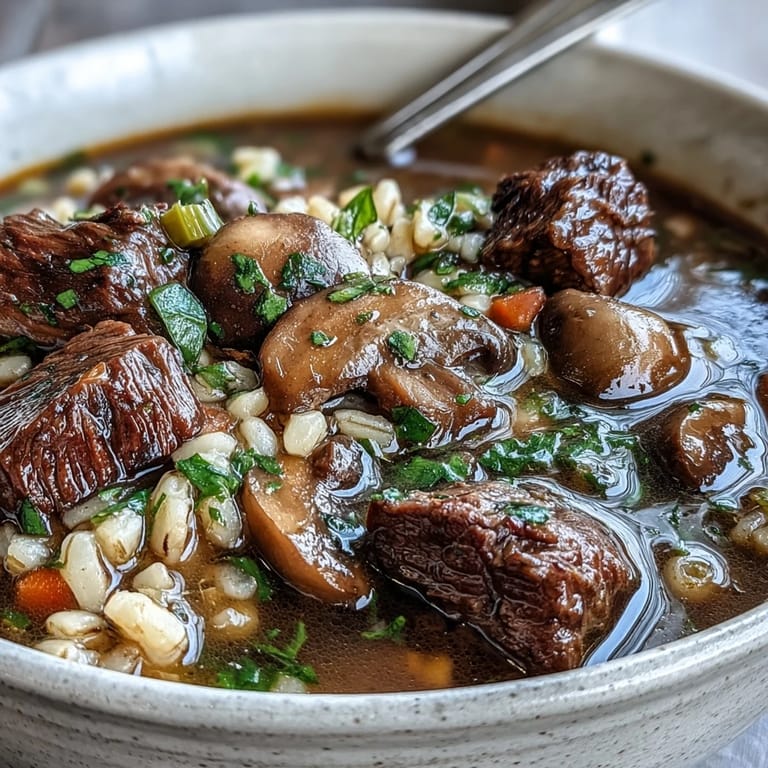
Save There's a moment around the 45-minute mark of simmering when you walk past the pot and smell something almost unrecognizable from what you started with—deeper, richer, more intentional. That's when you know the technique is working, when the individual ingredients have surrendered to becoming something unified and greater than themselves.
The Story Behind the Barley
I didn't always use barley in my beef soups; I defaulted to rice or noodles like most people do. But my grandmother mentioned once that barley was her mother's go-to during the Depression because it swelled up to fill bellies and added a subtle sweetness that didn't need sugar to taste comforting. When I finally tried it, I understood—barley has a texture that's almost creamy without being heavy, and it absorbs the broth flavor in a way that rice can't quite manage. Now I can't imagine making this soup without it.
Making It Your Own
This is one of those soups where you can adjust things based on what you have and what you love. Red wine adds brightness if you have a glass open, while extra mushrooms or a handful of diced potato won't throw off the balance. Some people swear by a splash of Worcestershire sauce or a pinch of smoked paprika, and honestly, they're not wrong—this soup is forgiving enough to handle your preferences and confident enough not to care.
Serving and Storage Wisdom
Serve this in shallow bowls so you get a good ratio of broth to solids in each spoonful, and always offer crusty bread on the side because that's the part where people look like they're really enjoying themselves. It keeps in the fridge for up to 4 days and actually freezes beautifully for up to 3 months, making it the kind of thing you can make once and eat well from all week.
- If the soup thickens too much after a few days, just add water or broth and taste again—barley and vegetables continue to absorb liquid.
- Reheat gently on the stovetop rather than blasting it in the microwave, which can make the beef tough and the barley mushy.
- Don't add fresh parsley until you're plating; it wilts and loses brightness if added too early.
 Save
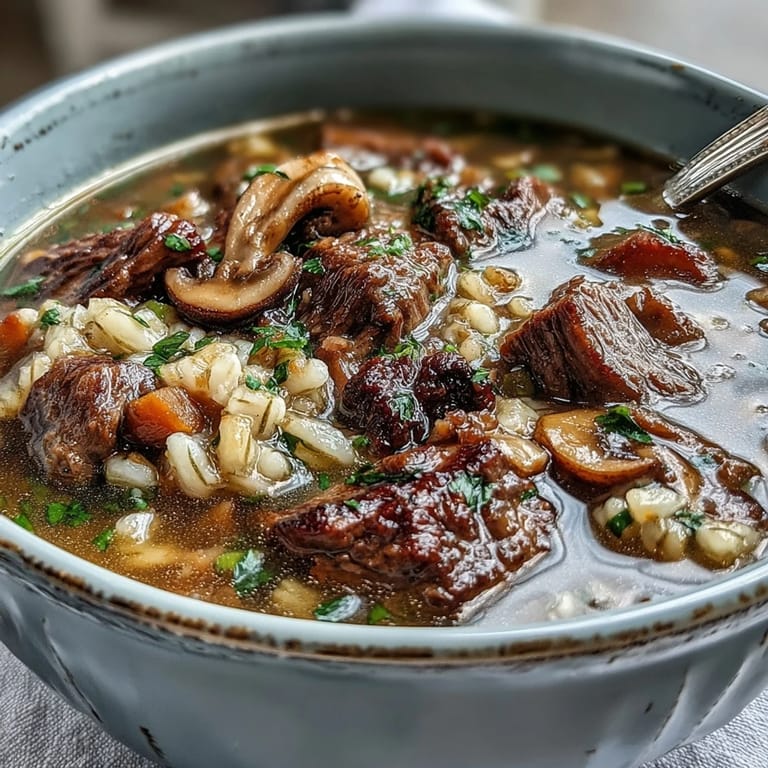
Save This soup proves that the best comfort food doesn't need to be complicated, just honest—good ingredients treated with respect and time. Make it, and you'll understand why my neighbor sent it as an act of love.
Cooking Questions & Answers
- → How long does beef and barley soup need to simmer?
The soup simmers for approximately 1.5 hours until the beef becomes tender and the barley is fully cooked. This slow cooking allows the flavors to develop and the beef to become melt-in-your-mouth tender.
- → Can I make this soup ahead of time?
Absolutely. In fact, the flavors improve after a day in the refrigerator. You can make it up to 3 days ahead and store it in an airtight container. Reheat gently on the stovetetop.
- → What cut of beef works best?
Beef chuck roast is ideal because it becomes tender during long simmering. Cut it into 1/2-inch cubes for even cooking. The marbling in chuck adds richness to the broth.
- → Is this soup gluten-free?
Traditional pearl barley contains gluten. For a gluten-free version, substitute with brown rice, quinoa, or gluten-free grains. Adjust cooking time accordingly as some grains cook faster than barley.
- → Can I freeze this soup?
Yes, it freezes well for up to 3 months. Cool completely before transferring to freezer-safe containers. Thaw overnight in the refrigerator and reheat on the stovetop.
- → What can I substitute for pancetta?
Regular bacon makes an excellent substitute. You can also omit it entirely for a lighter version, though you'll lose some of the smoky depth it provides.